What You Know Changes What You See
January 23, 2013 | Leave a Comment
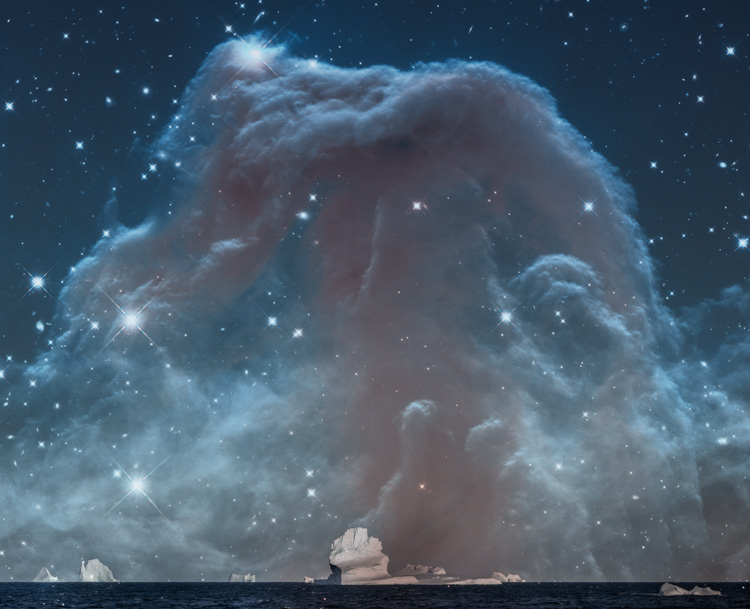
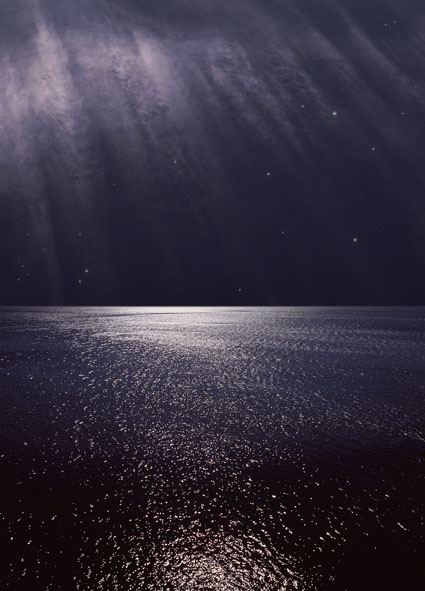
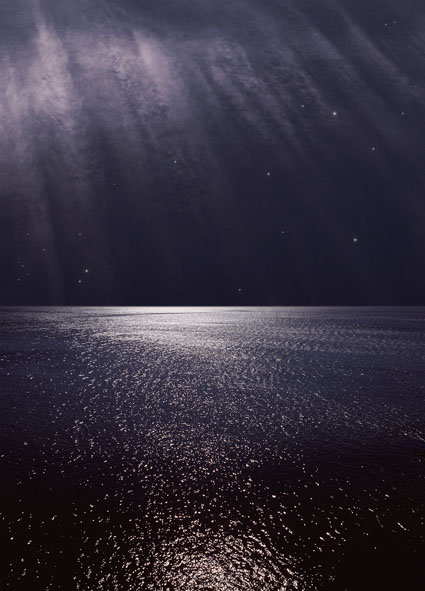
Nocturne / Correspondence XII, Newport, Rhode Island, 1999
While studying painting in college, I was given the assignment of painting night. After dark, I took my paint and canvas out into the night – and couldn’t see either. So I found a portable light source, which made them so bright that I couldn’t see beyond them. Next, I used a camera to make photographs to paint from and colors became distorted and moving objects blurred or disappeared altogether. I ultimately ended up painting from memory, drawing on all of my accumulated memories from these attempts to make the final images.
Much later, working with digital imagery, I returned to this challenge. Wanting to avoid the distortions I had encountered before I took a clue from Hollywood, shooting by day and color adjusting those images to look like night. Realizing that the hard multi-colored points of light rendered by the camera eye did not look like what I saw with my naked I, I began digitally drawing stars as I saw them.
I found other people’s reactions to these images fascinating. Knowing that long exposures were necessary to make photographs in low light, photographers would ask me, “How did you get these exposures?” Familiar with the relative relationship of specific stars in the sky, astronomers would ask me, “Where did you find these constellations?” What each viewer knew changed the way they saw, the questions they asked, and their final reaction.
In order to see more, to see more deeply, and to see in more ways, I find myself constantly challenging what I think I know and striving to learn more in as many ways as I can think of.
How many ways does what you know help you make stronger images?
How many ways does what you know get in the way of your making stronger images?
How many ways can you increase the positive and reduce the negative impacts of what you know on your image making?
Find out more about this image here.
View more related images here.
Read more The Stories Behind The Images here.

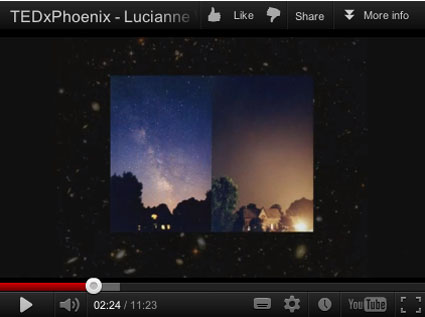
Look Up For A Change – Lucianne Walkowicz
December 9, 2012 | Leave a Comment
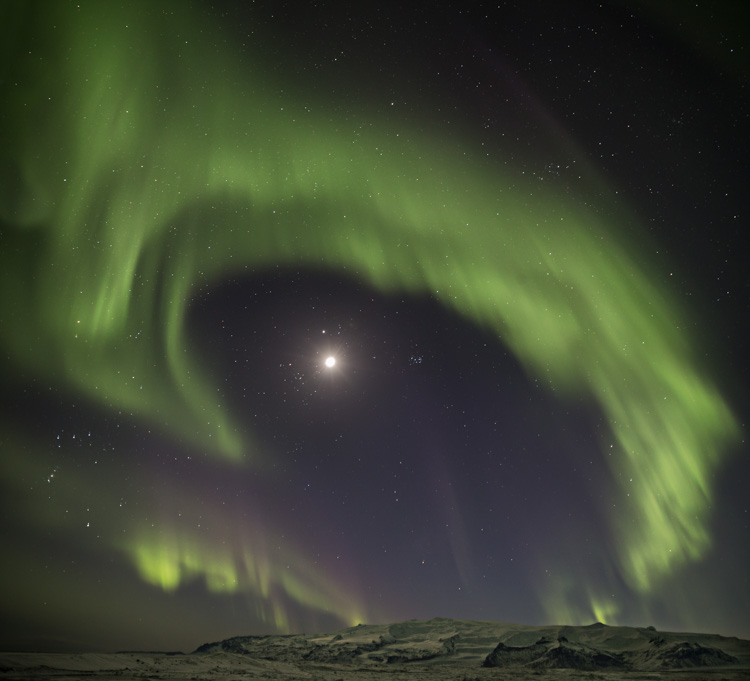
“TED Fellow Lucianne Walkowicz asks: How often do you see the true beauty of the night sky? At TEDxPhoenix, she shows how light pollution is ruining the extraordinary — and often ignored — experience of seeing directly into space.
Lucianne Walkowicz works on NASA’s Kepler mission, studying starspots and “the tempestuous tantrums of stellar flares.”
Read 13 Essential Tips For Night & Low Light Photography here.
Learn more about night photography in my digital photography workshops.
Hubble Site
August 5, 2010 | Leave a Comment
“Hubble Site contains a gallery of images harvested from the famous telescope for over 20 years. Images are free to download in a variety of sizes. You’ll also find out how color is added to each of the images, which are originally captured in black and white.”
Reflection – What Still Inspires Me After 10 Years
July 27, 2010 | Leave a Comment
What child hasn’t spent scattered minutes, accumulated into hours or even days, watching slowly unfolding clouds and the changing sky? Wondering what they were, are, and will be. Imagining bodies (either whole or in pieces, especially faces), animals (whether commonplace, exotic, or mythical), plants, landscapes, and even mechanical devices. Who doesn’t pause at the sight of the blazing colors of the morning and evening sky? How few pause long enough to see the stars begin to appear? How strange to think that the same sky is blue by day and black by night, studded with twinkling stars. Are we like this too? Why do so many adults cease to probe these mysteries as consistently and frequently and with as much curiosity as a child does? What do we lose when we lose the search? Read more
New Book – Reflection
July 21, 2010 | 3 Comments
“Reflection presents selections drawn from a powerful series of works, remarkable for their tranquility, clarity, and depth. Images of bodies of water and the skies reflected in them become metaphors for changing states of mind. Together, they chart a progression of consciousness moving from calming, to clearing, and finally to illumination. Throughout this progression a growing intensity builds as the gaze is focused more directly and deeply into the source of illumination. The images become mirrors for continued reflection, invitations to look, and look again, and to look at looking.”
Nocturne IV
October 24, 2009 | Leave a Comment

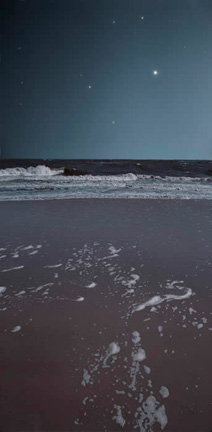
I’ve always been fascinated by photographs of the night sky. Telescopes are able to bring back details I could never have seen with the naked eye. Film exaggerates the colors of the stars, which are faint to the human eye. The lens often eliminates the tiny flares we see. When we draw stars, we don’t use circles, we usually use pentagrams. There’s a reason. I can understand that the twinkle and shimmer of the tapestries above would disappear in a photograph. Time is frozen in photographs. But that the photograph would be significantly different than what the human eye sees is fascinating to me. We’re taught to think that the camera records things as we see them. It does to a degree. But there are many points of divergence. It’s almost standard for us to defer to the photograph over our own experience. That’s something I’m wary of — or let’s say instead, acutely aware of …
Subscribe
Get the RSS Feed-
- Adventures
- Alumni
- Antarctica
- Antarctica 2009
- Apps
- Audio
- Books
- Business
- Calendar
- Canon Cameras
- Causes
- Cell Phone
- climate change
- Collected
- Color
- Composition
- Contests
- Conversations
- Creativity
- Destination
- Disclosure
- Discount
- Drawing
- DVDs
- eBooks
- Editing
- Environment
- Epson Print Academy
- Equipment
- Event
- Exercises
- Exhibit
- Experiment
- Exposure
- Green Actions
- Greenland
- Guest Blog
- Huffington Post
- iceland
- Images
- Influences
- Inspiration
- Interviewed
- iPad
- iPhone
- Lecture
- Lighting
- Lightroom
- Magazine
- Map
- Masterworks In My Collection
- Media
- Meditation
- Multimedia
- Namibia
- News
- Optical Illusions
- Packing
- People
- Photographer's Favorite Quotes
- Photographers
- Photographers – Q&A
- Photographers On Photography
- Photographers Video Conversation
- photography
- Photoshop
- Postcards
- Printing
- Published
- Q&A
- Quotes
- R/Evolution
- Radio
- Reading
- Requests
- Review
- Reviewing
- Science
- Screensaver
- Sculpture
- Seminar
- Sharpening
- Slideshow
- Social Causes
- Social Networks
- Software
- Special Guest
- Special Offer
- Statements
- Storytelling
- Technique
- Technology
- The Making Of The Print
- The Stories Behind The Images
- Travel
- Uncategorized
- Video
- Video – Artists
- Video – Creativity
- Video – Lightroom
- Video – Photographers
- Video – Photography
- Video – Photoshop
- Video – Quick Tips
- Website
- Winners Of The Day
- Workshop Giveaways
- Workshops
- Writing
- X-Rite i1Photo Pro
Archives
-
- May 2013
- April 2013
- March 2013
- February 2013
- January 2013
- December 2012
- November 2012
- October 2012
- September 2012
- August 2012
- July 2012
- June 2012
- May 2012
- April 2012
- March 2012
- February 2012
- January 2012
- December 2011
- November 2011
- October 2011
- September 2011
- August 2011
- July 2011
- June 2011
- May 2011
- April 2011
- March 2011
- February 2011
- January 2011
- December 2010
- November 2010
- October 2010
- September 2010
- August 2010
- July 2010
- June 2010
- May 2010
- April 2010
- March 2010
- February 2010
- January 2010
- December 2009
- November 2009
- October 2009
- September 2009
- August 2009
- July 2009
- June 2009
- May 2009
- April 2009
- March 2009
- February 2009
- January 2009
- December 2008
- November 2008
- October 2008
- September 2008
- August 2008
- July 2008
- June 2008
- May 2008
- April 2008
- March 2008
- February 2008
- December 2007
- September 2007
- April 2007
- March 2007
- February 2007
- December 2006
- November 2006
- October 2006
- August 2006
Categories
Blogroll
Topics & Friends
WP Cumulus Flash tag cloud by Roy Tanck requires Flash Player 9 or better.