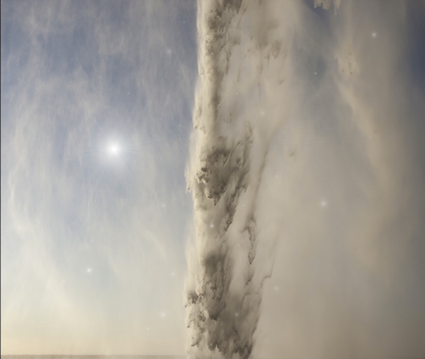
Alumnus Sam Krisch – The Creative Curator
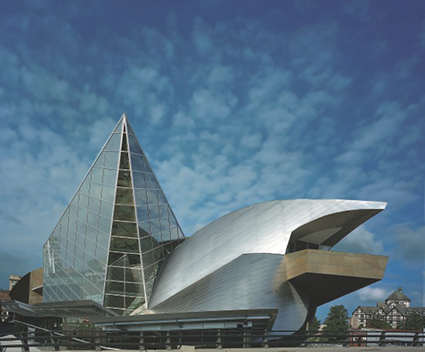
TMA - Exterior 4 copy

Image courtesy of Taubman Museum

This is a guest post by Sam Krisch, a John Paul Caponigro Next Step Alumnus who lives and works in Roanoke, Virginia. He has curated an exhibition entitled Paul Caponigro and John Paul Caponigro: Generations which will be showing at the Taubman Museum of Art through March 28, 2015. An exhibition of his work Sam Krisch: Elements will open at Virginia Tech’s Center for the Arts on December 5, 2014.

             About 18 months ago I was asked to join the staff of the Taubman Museum of Art in Roanoke, Virginia as an adjunct curator of photography.  The position was part-time and my job was to act as a proposer and organizer of exhibitions and to meet with others in the curatorial staff to discuss and plan our future programs.  The Taubman Museum opened in 2008 and was a successor to several art museums in Roanoke, a small railroad heritage city in the Blue Ridge Mountains of Virginia. The facility consists of nine galleries, an exploratory gallery for children, a theatre and an auditorium. It shows all kinds of art including painting, sculpture, ceramics, decorative arts, film, folk art and photography. In recent years it has exhibited works by Dorothea Lange, Edward Burtynsky, Alan Cohen, Civil Rights Photographers of the 1960s, Roanoke Times Photojournalists and several local photographic artists. The notes for one of its current exhibitions “Beg, Borrow and Steal” states that photography “plays a significant role in much of the work, which is represented in the exhibition by artists John Baldessari, Barbara Kruger, Sherrie Levine, Robert Longo, Richard Prince, David Salle, and Cindy Sherman; all of whom are using manipulated photographic images to create dense collages or appropriating stereotypical portraits in humorous ways.”
           It has been a valuable experience. I have learned that curating is a basic skill that all artists need to use in evaluating their work. We need to examine our artistic influences, create collections and bodies of work, see their evolution over time. Peer review also is vital in artistic growth and again is another data point in the personal curating process. Professional curating is an extension of this skill.
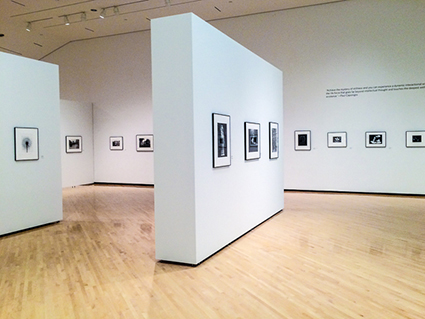
generations (4 of 9)
The Speed Curators
For the past several years I have taught workshops in digital creativity. We use mobile phones as a basis for this practice, but we always start with an exercise in “speed curating.”This is valuable because people start to learn the elements that attract their eye and verbalize those aspects. Recently, I have had the pleasure of participating in leading continuing education programs for art teachers at the Taubman Museum. Some of it has been adapted from my mobile photography courses, but the speed curating exercise is a vital part of the day.
The exercise begins with about 200 5”x 5”of my iPhone prints spread out on tables in the library. I tell the group “I am setting a timer for 6 minutes. During this time you can look BUT YOU MAY NOT touch the images. Don’t touch. Your assignment will be to choose between 6-8 images that work together and that you will present as if you are a gallery or museum curator. After that you will have 6 minutes to collect your images and then we will take them in the next room.”
It is always interesting to see the personalities at play. Some aggressively grab images and others hang back only to be disappointed that some of their favorites have already been taken. They have to either rethink their collections or find similar images. This mimics a curator’s dilemma of sometimes not being able to get all the works he or she wants and having to substitute work.

In the board room we talk about why we have chosen our images. The art teachers are used to talking about their own work as well as the work of their students. Each has a different idea and a different style. Some strictly look for artistic elements such as composition, contrast, color and form. Others use the images to tell a personal story or struggle that they are working through. Some even use song lyrics or musical references. All bring their own creative views to the collections. The act of rejecting and culling is as valuable as the act of inclusion. The same is true whether curating personal work, a personal collection of other artists, or for an institution.

Campbell Gunn, a fellow alumnus of John Paul Caponigro’s workshops, has created a portable collection of curated work. He finds photographers that he admires and organizes them in a collection on his iPad. Campbell says: “I simply create a dropbox master folder with subfolders for each photographer I am interested in and then as I find images that I think are instructive for my own visual reference library I copy them across. Then I have a Lightroom catalog that I use as a database which then syncs with an iPad app called PhotoMgrPro. The theme is developing ‘visual literacy’ or a ‘pattern language’. As with all languages, if you have a basic vocabulary and understand grammar, you can combine words or phrases to create new sentences (or in this case images) – without falling into the trap of being derivative or repetitive. It helps you find your own voice by understanding what it is in others voices that resonates most.”It is important to note that you should only copy low res images for this collection, keep them for your private use, and don’t copy images from books. Copying images from books is against the law in some countries.
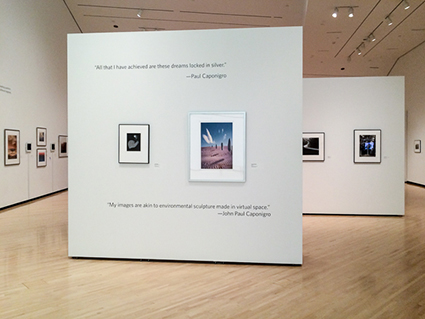
generations (1 of 9)
From Two Generationsto “Generations
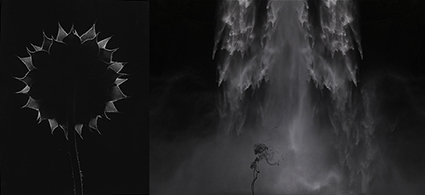
When I started curating I had a number of ideas for photography exhibitions and busily contacted artists and curators from other institutions to attempt to work up presentations for our curating committee. My projects were competing with space and scheduling of other exhibitions in other media. The Taubman Museum keeps variety and balance in its programming and even within each medium is careful not to overdo one type of painting or one type of photography. For example, a fine documentary photography exhibition that may of been available to us was discouraged by the committee because of recent documentary exhibitions. The committee was interested in the Paul Caponigro and John Paul Caponigro exhibition that had shown several times in other institutions and encouraged me to explore this work.
I was delighted because not only has the Caponigros’work strongly influenced my own,  but John Paul is my mentor and friend and there was a comfort level that was valuable in planning this exhibition. The Caponigros were very gracious in making their personal collections available to us and sent us a list of the works that had been exhibited.
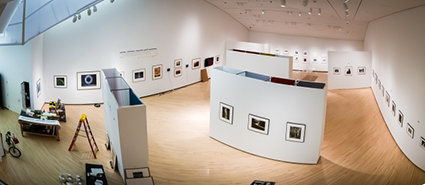
We found a slot in our gallery schedule that worked and it was one of our larger galleries. Our Deputy Director of Exhibitions and I walked into the gallery and realized that we could have a very sterile show. It is a large room with almost 200 feet of wall space and is an average of 40 feet wide. I saw a long row of father on one wall and a long row of son on the other. The room would have very little flow, very little interest. We needed more work, we needed a better design.
_53A2042
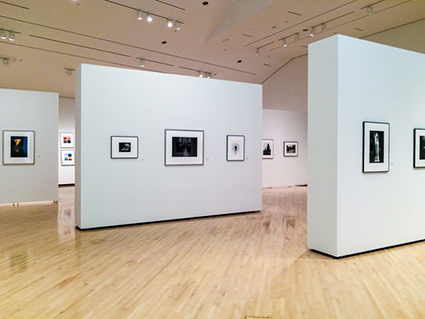
With help from the artists and our Exhibitions staff we came up for a design for the gallery that included temporary interior walls to add interest and variety to the presentation. The walls allow for a dialogue between the two artists. Some of the interior walls have images by father and son that are related, others have a single artist in direct contrast with the other.
generations (7 of 9)
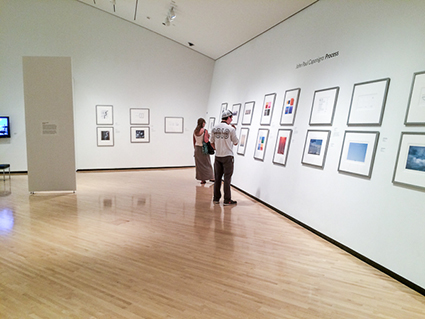
I am a fan of John Paul’s book Process and he had prepared some of the images in that book to form a framed presentation that was ready to display. We thought that it would be very useful for educators to have JP’s thoughts and illustrations on his show in its own separate section. Although the images were set, it became a challenge to provide text within our guidelines for display. Our solution was to take quotes from the book—under fifty words a piece—and let the images and text guide the viewer through that part of the exhibition.
           With the addition of the Process materials we had a show that embraced both the artists and the artistic process, the two generations of vision and work, and the generation of ideas.  We also designed the exhibition in a way that would help slow people down during their walk through the gallery and stimulate discussion—perhaps even argument—about the merits of each artist’s work and their use of two of photography’s main technologies. It has become an illustration of photography’s history, the creative process, and for many their first exposure to two major artists.
generations (3 of 9)
Find out more about Sam Krisch here.
Find more Alumni Success Stories here.
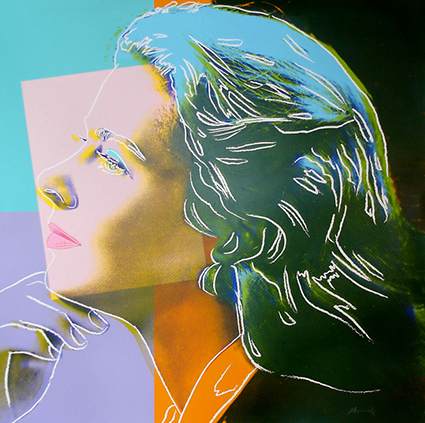
Exhibit – Andy Warhol / The Photographs

d6044f86-3d67-460c-920e-935ef680a269
The Exhibit
February 27 – May 10, 2015
The Southeast Museum Of Photography
Daytona, Florida
In 2008, the Southeast Museum of Photography was one of 183 institutions designated to receive a selection of Warhol’s photographs through the Andy Warhol Photographic Legacy Program in honor of the Warhol Foundation’s 20th anniversary. In the spring of 2014, an additional donation of nine photo screen-prints were donated through this program. Through highlights from both donations, this exhibition showcases Warhol’s Polaroids, black-and-white prints, and photo silk-screens to provide a glimpse into the inner workings of this iconic figure in 20th century American art and his complicated relationship with the medium of photography.
The Opening
Friday, February 27, 6:00 – 8:00 pm
Lecture, Book Signing and Exhibition Opening Reception with Catherine Zuromskis, author of Snapshot Photography: The Lives of Images.
“An avid photographer, collector and photographic subject, Warhol incorporated photography into almost every aspect of his aesthetic and social experience.” – Catherine Zuromskis from Snapshot Photography: The Lives of Images, 2013
Learn more about this exhibit here.
Learn more about the Warhol foundation and their programs here.
Explore quotes by Andy Warhol here.
Watch a BBC documentary on Andy Warhol here.

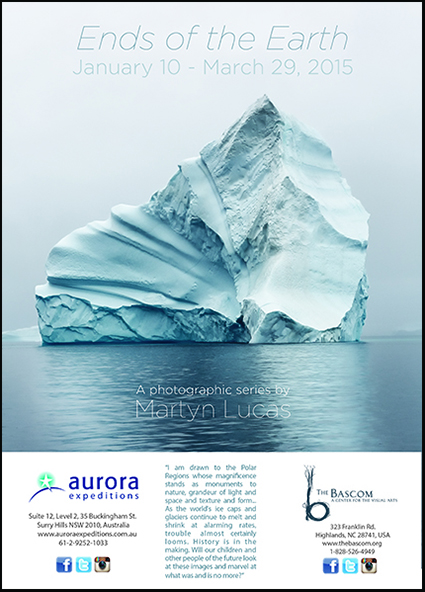
Alumnus Martyn Lucas' Exhibit Ends Of The Earth

martyn_lucas
 
“Ends of the Earth is a dramatic, photographic voyage of the world’s ice caps and glaciers that depicts the magnificent beauty of the frozen landscape in large format color images.
Martyn Lucas grew up in England and was first introduced to photography by his father, a photographer who taught him composition, contrast, and how to perfectly capture a landscape.  Lucas’ natural talent for landscape photography has led him all over the world, seeing and preserving each new place through the lens of a camera.
Inspired by the Polar Regions, Lucas has quite literally travelled to the Ends of the Earth to photograph the world’s ice caps and glaciers.  These photographs, each breathtakingly beautiful, leave the viewer stunned as they are given the rare opportunity to see the vastness of Antarctica: the coldest, driest, and windiest place on Earth.  Carefully photographing the urgency of global warming and the ice melting at alarming rates, Lucas has been able to present the unseen dilemmas of the world’s climate system.
Like viewing something out of a dream, this haunting exhibition promises to deliver the extreme beauty and silence of the frozen tundra, as seen through Martyn Lucas’ artistic vision.  Each work complements the others when viewed as a whole, and yet each is a distinct work of art on its own.
The artwork of this incredible photographer is nothing short of captivating, revealing the massive size of the ice and the strong current and movement of the icy water.  Viewers are welcome to come celebrate this incredible exhibition January 10, 2015 for the opening of Ends of the Earth, located in the Bunzl Gallery.  Visitors of The Bascom also invited to Martyn Lucas’ Artist Talk and Reception Saturday, March 21, 2015 from 5 to 7 pm at The Bascom.  Experience the wonder of Martyn Lucas’ Polar Regions photography through this breathtaking assemblage of photographs. ”
For more information, please contact The Bascom at 828.526.4949 or visit www.thebascom.org.
Find out more about this exhibit here.
Find out more about Martyn Lucas here.
Read more Alumni Success Stories here.
Alumnus Sam Krisch's New Exhibit Elements

Krisch_425

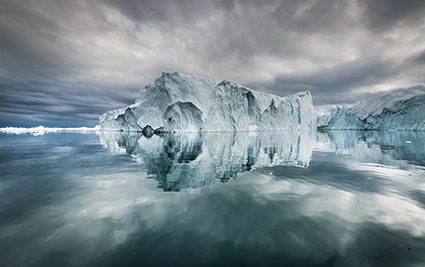
Disko Bay #4, 2013

Sam Krisch’s new exhibit Elements opens at Virginia Tech in Blackburg, Virginia Friday, December 5, 2014 (5-7 pm) and runs through Sunday, February 1, 2015.
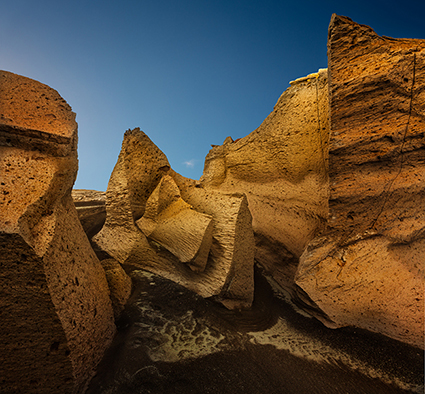
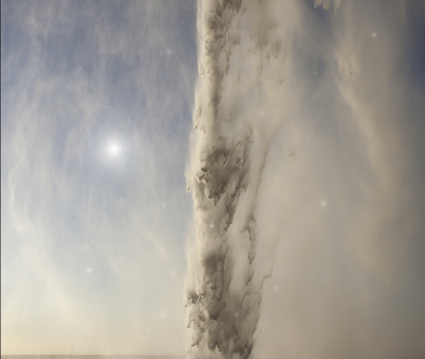
“The sheer power and splendor of nature in far-away places is the subject of Sam Krisch’s photographic practice. Over the last five years, Krisch has journeyed to remote locations ranging from the Mohave Desert to Antarctica to capture stunning images of ice formations, the raw force of turbulent waters, and empty expanses of desert landscapes. This exhibition presents a selection of the artist’s digital photographs created between 2013 and 2014, in which his approach to composition verges on the abstract, taking the work beyond documentation into a world of pristine, yet daunting, beauty. These are gorgeous, even idyllic landscapes, tinged nonetheless with the terrifying knowledge that these worlds are slipping away in an irreversible trajectory caused by human forces. Krisch lives and works in Roanoke. He is the adjunct curator of photography at the Taubman Museum of Art.”
Find out more about the exhibit Elements here.
Find out more about Sam Krisch here.

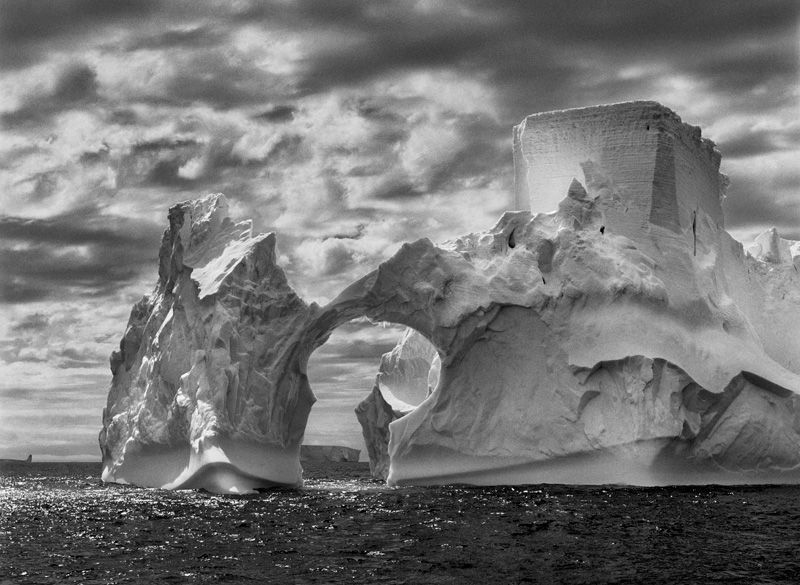
Exhibit – Sebastiao Salgado's Genesis – ICP NYC

salgado_genesis
Sebastiao Salgado’s must see exhibit Genesis is on display at ICP (NYC) September 19 – January 11, 2015.
“Genesis is the third long-term series on global issues by world-renowned photographer Sebastião Salgado (born Brazil, 1944), following Workers (1993) and Migrations (2000). The result of an eight-year worldwide survey, the exhibition draws together more than 200 spectacular black-and-white photographs of wildlife, landscapes, seascapes, and indigenous peoples—raising public awareness about the pressing issues of environment and climate change. ICP is proud to be the first U.S. venue of this momentous exhibition, which is curated by Lélia Wanick Salgado.”
View Salgado’s TED talk here.
View Salgado’s talk The Photographer As Activist here.

Exhibit – Wynn Bullock at High Museum Atlanta

831.624.2801
June 14, 2014 – January 18, 2015
“This exhibition represents the most comprehensive assessment of photographer Wynn Bullock’s (American, 1902-1975) extraordinary career in nearly forty years. Bullock worked in the American modernist tradition alongside colleagues and friends Edward Weston, Harry Callahan, and Ansel Adams. This show presents the rare opportunity to see over 100 works of art by this innovative photographer.
The arc of Bullock’s innovative achievements is surveyed in Wynn Bullock: Revelations through more than 100 prints, from his early experimental work of the 1940s, through the mysterious black-and-white imagery of the 1950s and color light abstractions of the 1960s, to his late metaphysical photographs of the 1970s. Wynn Bullock: Revelations coincides with a major gift from the Bullock Estate to the High Museum, making Atlanta one of the largest repositories of Bullock’s work in the country.
Bullock’s work was guided by an intense interest in the mid-twentieth-century dialogue about the structure of the universe and humanity’s place within it. Drawn to the spirit of experimentation that marked scientific and philosophic endeavors of his day, Bullock used knowledge about quantum physics, special relativity, and the space-time continuum as a reference point for his own intuitive and deeply personal explorations of the world. Photography for Bullock was a way of meditating on the frightening and exhilarating idea that there is much more to the world than is commonly understood through ordinary perception, and he was passionate about conveying that revelation to others through his work.”
Find out more about this exhibit here.
Find out about the book Revelations here.
A concurrent exhibit Radiant Energy in Atlanta at Lumiere Fine Art Photography Gallery  features contemporary prints from three Collector Edition Portfolios produced by Lumiere in cooperation with the Bullock family estate – Classic Black & White, Color Light Abstractions, and Seascapes.
Find out more about this exhibit here.
Read a collection of quotes by Wynn Bullock here.
Find out more about Wynn Bullock here.

Two Generations Exhibit – 8/6-30 At MMW Rockport, Maine

2Gen_425

Aug 6 – Sep 1

Aug 28 4- 6 pm  Gallery Talk

Maine Media Workshops, 18 Central Street, Rockport, Maine, 04856

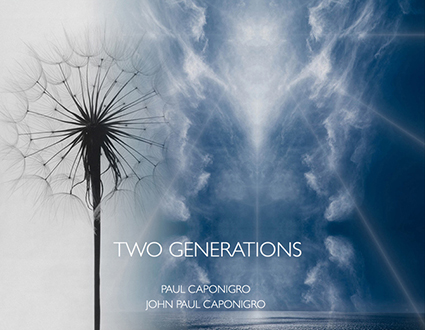
“The works of father and son Paul Caponigro and John Paul Caponigro are featured in the photographic exhibit “Two Generations”.  Over twenty images by each artist highlight the two careers of this family of artists. Responding to interest in seeing their work together the show “Two Generations” was assembled and first exhibited in Rockport Maine at CMCA. Now it returns to Rockport at MMW fully updated.

The juxtaposition of traditional darkroom images and the more contemporary digital photographs may seem startling at first.  Both artists utilize a different medium and a different vision. Paul is a traditional straight shooter and John is a process artist. After careful inspection what is more apparent are the similarities, the vestiges of the fact that this is the work of father and son. it is apparent each artists work influences the other and many of their key interests are the same. Both artists share a deep reverence for nature, a love of stone, a fascination with the subtle palettes of the natural environment, and a strong dedication to their craft.”

Find directions and contact info here.

Preview the ebook Two Generations here.

2Gen_eBook_425

Exhibit – New Work 2014 – Aug 2 & 3

Incubation_I_425

John Paul Caponigro’s Open Studio | New Work 2014 is open to the public for one weekend only – August 2nd and 3rd from 10 am to 5 pm with a talk by the artist at 2 pm. (Afterward, visits by appointment are available.)

This annual event unveils new highlights from the artist’s recent international travels north of the Arctic Circle and south of the Antarctic Circle with stops along the way in Iceland, Argentina, Morocco, and Namibia. Amid images of glowing auroras, crashing glaciers, colliding icebergs, thundering waterfalls, smoldering volcanoes, shimmering salt flats, shifting dunes, you’ll find the oldest desert, the largest salt flat, the windiest continent, the fastest moving glaciers, the wildest seas and more, all portrayed through the eyes of this unique artist.

This is a rare opportunity to view the artist’s new work presented in his own private studio / gallery. Come enjoy prints, drawings, paintings, books, and conversations with the artist during this very special event. Many of these items have never been seen before and some are often not made public.

For more information including previews, reviews, statements, audio, video, and press kit email info@johnpaulcaponigro.com.

Click here for directions.

View the slideshow here.

2 Exhibits In 1 – Around The World & Process – Aug 3-4

1_C_003
Enjoy two inspiring exhibits by internationally acclaimed artist John Paul Caponigro – Around The World & Process.
Around the world unveils new highlights from his recent international travels north of the Arctic Circle and south of the Antarctic Circle with stops along the way in Iceland, Argentina, Bolivia, and Namibia Amid images of glowing auroras, crashing glaciers, colliding icebergs, thundering waterfalls, smoldering volcanoes, shimmering salt flats, shifting dunes, you’ll find the oldest desert, the largest salt flat, the windiest continent, the fastest moving glaciers, and more, all portrayed through the eyes of this unique artist.
Process displays many aspects of the artist’s creative process, both analog and digital – writing, drawing, painting, photography. John Paul shows how each discipline contributes to the completion of his finished works of art. This exhibit shows how artist’s get there is just as important as where they arrive and reveals that the creative process is a never-ending journey of discovery that offers many insights along the way.
The book Process is now available in print and electronically. It shows many more works than can be displayed and shares the personal insights of the artist. Preview it online at johnpaulcaponigro.com/store.
John Paul Caponigro’s Annual Exhibition 2013: Around The World and Process is a rare opportunity to view this artist’s work presented in his own private studio / gallery. The exhibit is open to the public for one weekend only – August 3rd and 4th from 10 am to 5 pm with a talk by the artist at 2 pm.
Come enjoy prints, drawings, paintings, books, and conversations with the artist during this very special event.
Preview select new works online here.
For more information including directions, previews, reviews, statements, audio, video, and press kit visitwww.johnpaulcaponigro.com or email info@johnpaulcaponigro.com.
Get directions here.