Top climate scientist James Hansen tells the story of his involvement in the science of and debate over global climate change. In doing so he outlines the overwhelming evidence that change is happening and why that makes him deeply worried about the future.

James Hansen has made key insights into our global climate and inspired a generation of activists and scientists.

Find resources on climate change recommended by top scientists here.


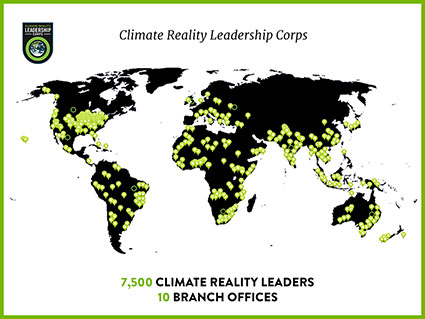
“What can change in a day? Everything. On September 14, the world will focus its attention on the truth about the climate crisis. For 24 hours, we will all live in reality. Pick a faraway place or a city near you. Make it yours for one day. We’re hitting every time zone — but only once. 7 p.m. in your time zone. Choose a location and get involved.

Climate Reality hosts an amazing 24 hour event. 24 presenters. 24 time zones. 13 languages. 1 message.”

Find more information on Climate Reality here.


People in science, business, government, and military are all keeping their eye on the Arctic.

The rapid changes the Arctic is experiencing is one of the reasons photographing the region has been so high on my priority list.

Find out about my Greenland workshop / cruise here.

Find out about my Antarctica workshop / project here.

James Balog leads an historic photographic project the Extreme Ice Survey.
As a result surprising new data comes to light every year.
It’s a brilliant use of photography and contribution to our global community.

Find out about my Greenland workshop / cruise here.

Find out about my Antarctica workshop / project here.

The rapid changes Greenland is experiencing is one of the reasons photographing Greenland has been so high on my priority list.

Greenland has a huge impact on global climate and sea levels, like Antarctica.

Visit my blog this weekend for more updated information on Greenland.

Find out about my Greenland workshop / cruise here.

Find out about my Antarctica workshop / project here.

AAASExhibitInviteEmail

Gary Braasch’s large-scale color photographs from the book  “Earth Under Fire: How Global Warming is Changing the World”  ( a book called “essential reading for every citizen” by Al Gore ) are currently on exhibit.

A companion exhibit for kids, parents and school groups, “How We Know About Our Changing Climate” will highlight how scientists study climate change and how youth can learn to be citizen scientists. Includes kids taking action, in the films “Young Voices on Climate Change,” produced by Lynne Cherry

The opening is tonight November 18.

The exhibit runs from November 12 – March 15, weekdays 8-5 at …
American Association for the Advancement of Science
1200 New York Avenue NW
Washington DC 20005

Find a preview and and the book here.
Read Gary Braasch’s insights on global warming here.

aseachange

Sat., Sept. 26, 2009, 8 pm, Planet Green Network airs A Sea Change.

A Sea Change documents an extremely pressing issue, acidification of the world’s oceans. It’s an often overlooked aspect of climate change. Essentially, it’s getting harder and harder for marine life to form shells because the oceans are rapidly becoming more acidic. The point of no return is projected by scientists to be less than 50 years away.

Look for Planet Green content on cable, Direct TV, and more. It’s the  first & only 24-hour eco-lifestyle TV network. A Sea Change airs as part of Planet Green’s “Reel Impact” series. They’re in terrific company: also airing are An Inconvenient Truth, Who Killed the Electric Car, and No-Impact Man.

Tell your friends. Email your representatives. The oceans aren’t on the table at the upcoming summit COP-15. That needs to change.

Find out more about this issue at worldchanging.com.

Michael Morrison is fascinated with how our world works, the nature of awareness and perception, the experience of wonder and beauty, and the central role humanity now plays in Earth’s evolution—and the future of Civilization. With a scientific background, his passion lead him to earn the first degree in Earth System Science at the University of New Hampshire and serve as the Scientific Coordinator for the Greenland Ice Sheet Project Two (GISP2), which produced a detailed, 100,000 year history of climate—a history that revolutionized our understanding of climate. His research activities have taken him to the the South Pole, the Transantarctic Mountains, Mt. Erebus, Alaska, The Himalayas, and the highest point on the Greenland Ice Sheet. He is anticipating an ice coring expedition to the Andes in 2010.

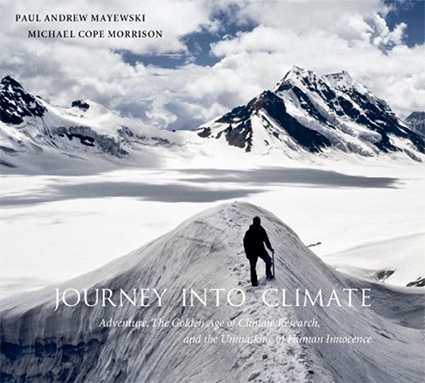
Though he loves and values scientific discovery, he finds that the beliefs at the core of our behavior are intriguing and stubborn beasts, not always responsive to simple facts. He believes creative expression is central not only to meaning and joy in life, but to the trajectory Civilization will take moving forward from here. Following belief, creativity, circumstances, and the digital revolution in imaging, Michael now offers fine-art digital imaging and printing services in Santa Fe, New Mexico and is co-authoring a book of photographs and stories from research expeditions with Dr. Paul Mayewski, a world-class climate scientist and the Chief Scientist of GISP2.

“Graphs, tables, and didactic discourse are important, but are not fully able to reach our collective conscious on the level called for by our time in history. This is the domain of creativity—playful, beautiful, surprising, and innovative—it reaches deep into our psyches, dreams, and motivations. Into our beliefs …”

Read more here about his personal experiences, what he’s learned, and his thoughts on what we can do.

Read more

HOME – The Movie

September 1, 2009 | Leave a Comment

On June 5, 2009, Yann Arthus-Bertrand’s powerful new movie was released. A non-commercial venture this movie is free to everyone with an internet connection. It breaks the mold. The message is timely, succinct, and powerful.

The opening lines say it all. “Listen to me. Please. You’re like me. Homo sapiens. A wise human. Life. A miracle in the universe appeared 4 billion years ago and we humans only 200,000 years ago. Yet we have succeeded in disrupting the balance that is so essential to life. Listen carefully to this story, which is yours, and decide what you want to do with it.”

Arthus-Bertrand says, “It’s time to believe what we know.”
Belief leads to action.
What will you do?

Find lots of ideas here.

Find organizations here.

See Yann Arthus-Bertrand’s TED talk here.

Find out more about / watch HOME here.

Jim Balog’s Extreme Ice Survey breaks new ground photographically.

I visited one of the locations featured in this video recently, Jokullsarlon – Iceland’s glacial lagoon, where I saw changes, and heard of even bigger changes from people who have lived there a lifetime and studied it closely. 40 years ago the ice went to the sea. 30 years ago the lagoon became more visible. Twenty years ago it retreated more. Ten years ago the lagoon was half as long. Today the area is experiencing more dramatic change. Things always change, but glaciologist provide data that things are changing faster than ever today. Fascinating! It’s worth paying attention to.

Find more climate change resources here.

Get priority status in my 2010 Iceland workshop.
Email info@johnpaulcaponigro.com.

Gary Braasch has photographed climate change more extensively than any other photographer. His book Earth Under Fire is a definitive work on the subject.

Find out about Gary Braasch here.
Find out about Earth Under Fire here.

Gary and I have been talking at length on many subjects. Here’s the second installment of our conversations.

John Paul Caponigro

What recommendations do you have for the average citizen to start taking a more active role with respect to these issues?  What would you suggest to other photographers to increase the effectiveness of their advocacy efforts?

Gary Braasch

The people I met on my climate change documentary project really mean something to me.  Beyond all the scientists and local guides, at this point those who mean the most are the ones who are living with the change but did not cause it …  Read more

Gary Braasch has photographed climate change more extensively than any other photographer. His book Earth Under Fire is a definitive work on the subject.

Find out about Gary Braasch here.
Find out about Earth Under Fire here.

Gary and I have been talking at length on many subjects. Here’s the first installment of our conversations.

John Paul Caponigro

Tell me about climate change.  And tell me about your book – Earth Under Fire.

Gary Braasch

In June 1997 I was stuck in a cold tent on the Alaska tundra with fellow nature photographer Gerry Ellis.  We had come to photograph caribou and other tundra animals, but for these weeks, anyway, we saw very little.  But while we read our books in the tent and talked of life and photography, we also chatted about the major issues in nature and conservation.  What were we going to do in coming years: what locations, what species, what issues were going to be the most important to photograph?.  And also, who was going to hire, publish and pay us for this? Read more

Climate Change

August 4, 2009 | Leave a Comment

We need to shift our focus away from politicians to scientists – the real experts. I’ve encountered professional scientists, from climatologists, geologists, glaciologists and biologists, to name a few, who have shared data that indicates the polar regions are undergoing rapid change and this heralds dramatic global changes. Though there’s debate about why things are changing, how much they’re changing, how fast they’re changing, and whether we’ve seen this kind of change before, I have yet to meet a single scientist who debates that climate change exists. The scientific communities understanding of climate change is advancing at a very rapid rate; old models and predictions are continually being updated based on better and better information. There is growing concern in the scientific community. We need to make funding relevant scientific research to get more high quality information one of our highest priorities.

Publicly, the debate has shifted from “Does climate change exist?” to “How much does man contribute to climate change?”. We need to seriously consider another very practical issue, whether climate change is influenced by man, a little or a lot, given that it exists, “What are we doing to prepare for climate change?” Climate always changes. And climate changes human history.

Find information from the experts here.
Find what you can do to help right now.


Antarctica is a place of stunning grandeur. Furthest south. Most isolated. Coldest. Windiest. Highest. Driest. Lowest biotic diversity. No indigenous cultures – ever. Largest ice mass. Triples in area seasonally. Produces 90% of the earth’s iceberg mass. Contains 68% of the world’s fresh water. Global climate regulator. Global climate indicator. Global territory for scientific research. It’s simply fascinating!

Read more about it here.

Find out about my exhibit here.

Stay tuned daily for more resources.

Get priority status in my Antarctica 2011 workshop.
Email info@johnpaulcaponigro.com.

Interested in finding substantial information on climate change from authoritative resources? Geal information from real scientists at realclimate.org. It has great links too. It’s excellent!

Check out realclimate.org now.

Interested in getting substantial information on climate change from authoritative resources?

I’ve reached out to a number of sources to compile this list of resources – the American Museum of Natural History, journalist Gary Braasch, climatologist Michael Morrison, and others.

Enjoy!

Find them here.

Jim Balog has been doing an absolutely fascinating photographic project. He and a team of glaciologists have put cameras around the world and set them to take exposures every hour. The changes they’ve tracked have been astonishing – even to the most learned scientists! You’ve never seen anything like this. Few people have. Until now. This project is important photographically – it’s extended the way photographers work and think about developing projects. The focus on movement/change represented by still photographs, many presented as time lapse series moves us ever closer to blurring the lines between still and video. It’s a project of historic proportions in so many ways.

This project presents important evidence in the quest to understand climate change. Here’s the bottom line. “Over 100 million people live within three feet of sea level—the very amount that experts expect seas to rise by 2100. Cities will spend trillions on coastal defenses, low-lying regions such as Florida and Bangladesh will be devastated, and many island nations will cease to exist. Overall, the consequences will test our ability to adapt like never before.” The debate is not whether climate change is happening. 90% of scientists agree it is. The real debates are how much, how fast, how much is geophysical, how much man contributes, what we can do about it, and are we prepared to react to it.

Watch Extreme Ice here.

Learn more about James Balog here.

Balog ends the series in a place that has captivated me – Iceland.
Check out my Iceland workshop here.

See my work in Antarctica. Images. Text. Book.

Extreme footage from James Balog’s Extreme Ice Survey.


This year, Earth Hour has been transformed into the world’s first global election, between Earth and global warming.

For the first time in history, people of all ages, nationalities, race and background have the opportunity to use their light switch as their vote – Switching off your lights is a vote for Earth, or leaving them on is a vote for global warming. WWF are urging the world to VOTE EARTH and reach the target of 1 billion votes, which will be presented to world leaders at the Global Climate Change Conference in Copenhagen 2009.

This meeting will determine official government policies to take action against global warming, which will replace the Kyoto Protocol. It is the chance for the people of the world to make their voice heard.
VOTE EARTH by simply switching off your lights for one hour, and join the world for Earth Hour.

Saturday, March 28, 8:30-9:30pm.

Find out more here.

And here.


Climate change? Green house gases? Black balloons? How do you discuss and display what’s invisible? These public information commercials by the Victorian Government, Melbourne are simply first rate. They’re a testament to the power of images to concentrate big ideas into tiny packages in truly memorable ways. They’re artfully done. Art and socio-political relevance? Incompatible? Tell it to William Blake! Better yet, tell us what you think here. Comment!

Today, you can attend my Canon sponsored lecture “Antarctica” at the Peabody Essex Museum (Salem, MA) today at 3:15-4:15pm. It’s free!

Read my Antarctica essays here.

See my Antarctica images here.

Subscribe

Get the RSS Feed  

Subscribe by Email


    Categories

  • Archives

  • Blogroll

    Topics & Friends