Unlocking The Secrets Of The Creative Process – A Conversation Between Eric Meola & John Paul Caponigro
August, 2017

Eric Meola

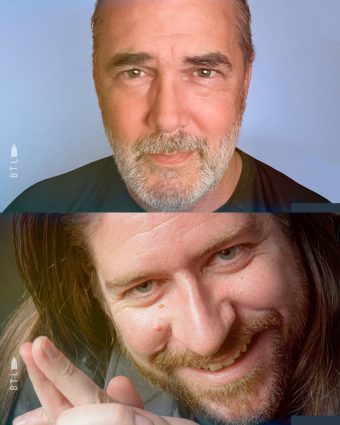
What is the process of creativity? Where does it come from, and how does it evolve? Recently, photographer and PPD contributor Eric Meola raised those questions in an interview with photographer and educator John Paul Caponigro, whose work will soon be featured along with his father’s in a major new exhibition at the Taubman Museum in Roanoke VA, “Paul Caponigro and John Paul Caponigro: Generations.” Today we publish part one of the interview, in which Caponigro and Meola talk about chaos, self-doubt, reflection, serendipity, failure, discipline, and the myriad facets of interaction that lead to creativity and art. Look for the rest of the interview in upcoming editions of PPD.

At a recent workshop in Maine, the noted National Geographic photographer Sam Abell asked his students to photograph a poem—to illustrate the words with images. Abell wanted the students to think about the relationship between two methods of describing imagery, and the challenges posed by interpreting words and images in our minds through photography. The dichotomy between words and images has haunted me throughout my career, and then a few months ago, a nearly 200-page PDF attachment of an e-book called Process arrived in my email as a gift from photographer-lecturer-educator John Paul Caponigro —or JP, as his friends call him. I glanced at a few pages, then put it aside on my computer’s desktop to look at later. I had met JP on several occasions—first in California before we were both scheduled to do lectures, and then again in Iceland, Antarctica, and the Atacama desert while participating in Digital Photo Destinations workshops (www.digitalphotodestinations.com). I had only a few sketchy things to go on—that JP had graduated from Yale, that his father was the photographer Paul Caponigro, that he had grown up in New Mexico, and that he took a few weeks off to go to Italy every year.

So one day, when I got a call from my somewhat inebriated photographer-friend Arthur Meyerson and an equally inebriated JP as they joyfully celebrated the close of a Maine Photo Workshop, I told JP that I had not only read Process but that I wanted to interview him about it. I had a lot of questions: How was his famous father? Did his mother really design Ernst Haas’s book The Creation? And most importantly, what the hell was Process really about? After all, we live in the age of iPhone photography, when nearly 300 million photographs are uploaded to Facebook every 24 hours.

In the book Invisible Republic: Bob Dylan’s Basement Tapes, critic Greil Marcus describes the process that led to Dylan’s collection of more than 100 mostly unreleased songs; the music evolved from—in Marcus’s words—“a laboratory where, for a few months, certain bedrock strains of American cultural language were retrieved and reinvented.” Few photography workshops explore the creative aspects of photography as a constantly evolving set of inputs—reading, writing, sketching—that manifest themselves in the way we make images. I recognized that many of my inputs had much in common with what JP was discussing, but I wanted to know more about him and why he always seemed to be “looking away” from the image in front of us. Or was he?

Our conversation, which begins below, took place over an extended period via email, while JP was with his family in Italy.

EM: I’m fascinated by your approach to seeing, to “living” photography, which you refer to as “process.”   

JP: Art arises out of a life lived—it’s an extension of ourselves, our creative process grows and changes as we do. Art is not something separate from life. Art intensifies life.  Some cultures don’t have a word for art, considering the items/events produced that we might call art to be an overflowing of life. Seen from that perspective, everyone is an artist. So the follow-up questions would be: What kind of artist and how well do they do it?

EM: Your father is Paul Caponigro, a master landscape and still-life photographer. He once said, “It’s one thing to make a picture of what a person looks like; it’s another thing to make a portrait of who they are.” That applies to all photography, doesn’t it—from landscapes to journalistic images to portraits?

JP: Exactly. Representation is not reproduction. We make portraits of people by recording light reflecting on their bodies—often only a portion of their bodies, usually from one angle and at one moment in time. Does such an image record their changing state through time, their history, their web of relationships, their ideas, their feelings, etc? It’s important to recognize the limited nature of our creations. In representation. it’s important to recognize the gap between what we create and what’s referenced. This doesn’t make these types of images less valuable; for many people they’re the most valuable. Perhaps those limitations can be used for effect?
Read More

My Colorful But Not So Colorful Photographic Upbringing

Caponigros_425
Enjoy this new interview where I discuss my photographic upbringing with Jill Waterman on B&H’s Explora blog.

“When it comes to photographic dynasties, the name Caponigro holds a privileged position at the top of the list. The father/son duo of Paul and John Paul Caponigro are masters of their respective crafts, spanning many years and a broad reach, from the muted tonalities and classical elegance of Paul’s large-format landscapes to John Paul’s complex, ethereal digital composites.

In 2016, B&H Photo hosted father and son as invited speakers at the B&H OPTIC Conference, where they both presented their work to great acclaim. Offstage, they also chatted about art, nature, and spirit with the Explora podcast team. After recently drawing inspiration from this archived content, we decided to take a deeper dive into the family history and respective working methods of these legendary artists in celebration of Father’s Day.
We caught up with John Paul Caponigro in a conversation over Zoom, and we present excerpts from our chat below, with their 2016 OPTIC presentations and podcast audio interspersed with the text.”
Your father makes large-format photographs of landscape and nature. Outside of his artistic practice, did he or your mother make family snapshots when you were growing up?
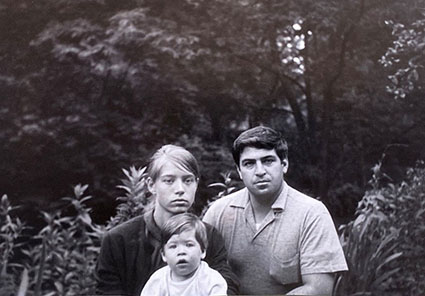
When I was young, photography seemed to be a serious thing. It seemed like there were very few snapshots, but there were a few and both of my parents seem to find more as the years go by.
I think my mom had an Olympus 35mm with roll film. I don’t even remember whether Dad had film rolls or not at that time. He did later when I started doing some things. But, when I was younger, it didn’t occur to me to ask why Mom would send her film to the drugstore and get these little 3 x 5″ prints. I was just watching what they were doing.
Do you have any early memories of your father teaching you about art or photography?
There are many stories. One time, Dad started talking about the color of the black-and-white prints he was making. “What color?” I asked. He then showed me how papers and developers and toners offered different subtle colorations, and how that changed the spatial dynamics within them, and our emotional responses to them. After that, I never thought of black-and-white or gray as colorless. You could even say they’re my favorite colors.
But, when you think of my father, just remember, there is no routine. He had certain papers and developers that he would favor. But he was very much interested in how each one had special characteristics, and wanted to become familiar with that, almost like becoming familiar with the tone of an instrument, matching the image with the characteristics of the paper / developer combination. He printed like his mother cooked, to taste. I remember getting the first pizza lesson from my grandmother. And she says, “Now you take a handful of salt,” and I’m like, “Nona, your hand is this big, and my hand is this big. So, give me your hand.” And I poured the salt from her hand into the measuring cup, and said, “OK, I’m going to write that down.”
So, it’s much more of a print-to-taste kind of thing. He just wasn’t so technical. But it’s hard to say that, because he did his homework. My dad really stripped-down Ansel Adams’s zone system into something that was very practical and approachable. He had done all of that, and then at a certain point, he liberated himself. You know, the technical can become an obsession. It can be what drives the show. And, he’s enough of an artist to want to let the emotion, and then the perception, drive the process.
You met many important photographers and artists as a youth, who were friends of your father’s. Are there any memorable stories you can share from these encounters?
My father used to tease Ansel Adams that he had a cloud stick in his bag. So being a kid of 6 or 7, I went looking for it. I was young enough to believe in magic, and I was really disappointed to find out it was just a joke. Decades later I got my own cloud stick—Adobe Photoshop.
I was too young to take one of Ansel’s workshops, but I certainly watched him on opening nights, and evenings at dinner, and so many other times. As a kid, Ansel and Eliot Porter were two of my heroes because they were so involved with environmental organizations. But, also the fact that Ansel had this whole workshop program in the middle of Yosemite Valley, it was really quite magical. And then he would invite other artists to come in; he had created his own community. There aren’t that many workshop programs out there like that, still today. It might have been the only one at that point. It was pretty neat to see that whole thing.
My relationship with Eliot Porter came out of my mom designing most of his books after a certain point. He lived right down the road, in Tesuque, New Mexico. He was tremendously influential to me in so many ways. He had such a keen, scientific mind, and this endless curiosity, this restlessness, this activeness socially, or at least environmentally. He was just a super guy.
You’ll find much more on B&H including two videos and a podcast.

.

New Interview – Find Your Way

FindYourWay_425

Shortly after the opening of my new exhibition Land Within Land, Scott David Gordon recently interviewed me for his podcast Austin Talks. He picked up on many of the ideas I shared during my gallery talks … and ran with them.
As he said, “If you are looking for a technical discussion on Photoshop and cameras to choose this is not the one. We had a fairly philosophical conversation about many subjects including defining a mission in life, being present, nature, spirit of place, creativity, play, and how to find your own way as an artist and a human. I love how thoughtful and specific he is with his words and wisdom. It’s no wonder he is a sought-after lecturer and teacher.”
I hope you enjoy our conversation!
Find out more about Scott David Gordon here.
Listen to more Austin Talks here.

All About The Image – The Interview

Antarctica_UnasPaps

All About The Image’s Woodrow Walden did a short and sweet interview with me by email recently.
You can read the final results here.
And you can compare the rough cut Q&A version here.

Personal

WW    Have you always known you wanted to be an artist, or did you have other aspirations as a child?

JPC    Art has always been a part of my life but I didn’t commit to making it a career until graduating from high school. At one point, I seriously considered becoming a marine biologist.

WW    You were raised in a very artistic household. Your Father of course, is photographer Paul Caponigro, and your Mother is graphic designer Eleanor Caponigro. How much influence would you say that had on your decision to become a photographer and eventually a photo-based digital artist?

JPC   Both of my parents have had a tremendous influence on me. They laid my foundations in photography (dad) and painting (mom).

WW   What was your first camera?

JPC    I don’t remember. The most significant camera I remember receiving as a gift was one of the two Dierdorff cameras my father used to photograph the megalithic monuments in the British Isles.

WW   How old were you when took your first photo and what was the subject and do you still have it?

JPC   I don’t remember. I remember my first significant moment in photography was photographing a black cat in an Irish field with my mother when I was less than four years old – and the amazed look on my mother’s face when the cat couldn’t be found in any of the several images we took.

Read More

15 Questions Answered

6_ExhalationI_1997_425
Alumni Dianne Morton interviewed me as part of her graduate studies.
She asked great questions, which I recommend you answer yourself.
Here are my answers.
What inspired you to become a photographer?
I was always driven to make images – even before I could talk. I was fascinated with two things about photography in particular; one, photography can be used to explore abstraction and metaphor; two, two people using the same equipment side-by-side can make very different images that reflect their personal natures. Pursuing painting first, the invention of Photoshop was my personal tipping point that made photography my primary medium.
Which photographers influenced or currently influence you?
Early influences include my father, Eliot Porter, and Ansel Adams. Photographers who challenge my current thinking in stimulating ways include Richard Misrach, Edward Burtinsky, Chris Jordan and Joel Peter Witkin. Many of my most important artistic influences come from people working in media other than photography – painters, filmmakers, sculptors, writers and even composers/musicians.
I’ve written quite a bit about my influences on my blog – and I plan to write more. It’s a useful process I recommend to everyone.
What motivates you to continue making photographs (intellectually or emotionally)?
I love doing the work. It’s endlessly challenging and rewarding.
Is there one particular piece of advice you could give to someone who has just picked up a camera for the first time?
Get clear about what you want to do and why. Only pursue opportunities that further that in some way. Make plans but stay flexible so you can make the most of every new opportunity.
How did you get from being an aspiring photographer to actually doing it full time, for a living?
I decided to do it and worked hard to make it happen. I made a plan. I pursued new opportunities that supported my long term goals. I didn’t plan to write, make public presentations, lead workshops, or consult for corporations; those opportunities presented themselves and they’ve all contributed to my overall success and the fulfillment of my long term goals.
Where do you think you have succeeded or failed?
I’ve succeeded in being a positive influence on the medium of photography and making positive contributions to many members of the photographic community. I haven’t succeeded in making substantial contributions that address my environmental concerns – yet.
What’s in your camera bag and what technology/software do you use?
Canon 5DMKIII and Lightroom/Photoshop. See my website for more on the tools I use,.
What is one thing you will never get tired of photographing?
Nature.
What is one thing you do NOT like to photograph?
Medical trauma.
Jump back in time….what would you do differently if you could?  Do you have a cautionary tale?
I’d steal a little time every day to work on my most important goals. Compound interest pays big dividends. Big chunks of time are hard to find and often compromised or stolen completely. I’m still trying to get this right. Practice makes better. No matter where we are, I recommend we all start practicing this now.
Among your works, which one is your favorite?  Why?
Exhalation I. It heralded a personal break through when my creative voice became stronger and clearer. I’ve had more responses to that image than any other, some of them very personal and touching.
Here’s a link to something I wrote about Exhalation I.
If you could sit across any one photographer with a big cup of awesome coffee, and talk photography/shop for an hour, who would it be and what would you talk about?
What a great question! It has so many possible answers. The final decision would be based on how honest the other person would be and how much they would be willing to reveal. And an hour’s not enough. How about an evening with dinner and wine?
I’d like to sit down with Alfred Steiglitz and Minor White and go further/deeper with the concept of equivalence. I have a feeling part of the solution would be to explore White’s mention of resonance.
I’d like to sit down with Eliot Porter (and possibly Ansel Adams at the same time, if there was total trust and no posturing), to review the history of photographers making environmental contributions and brainstorm ways of making more effective environmental contributions today (if he/they were up to date on what’s happened since his/their death). But then, after engaging this question, I realize I should do this now with Robert Glenn Ketchum. Maybe I should even write a book about it. See what a great question that was?
What’s your favorite quote?
“The only real voyage of discovery consists not in seeking new landscapes but in having new eyes.” – Marcel Proust
Above all, what inspires your art the most?
Nature.
Finally, can you sum up your photography in just four words?
Creative Conscientious Environmental Interaction
Enjoy more interviews here.