Enjoy The Best Photographs Of 2025 With These Top 39 Resources
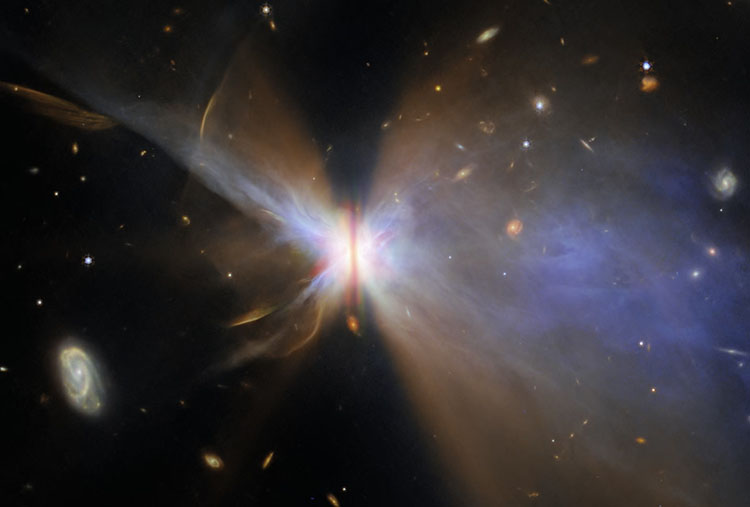
ESA / Webb, NASA & CSA, M. Villenave et al.


Enjoy viewing 2025’s top photography collections!


News

Time’s Top 100 Photos Of 2025

NYT Year In Pictures

Independent Photo

Magnum Photographer’s Selection 2025

World Press Photos Of 2025

Guardian Photos That Defined 2025

CNN 2025 In Pictures

Washington Post Best Pictures Of 2025

NYT Visual Journalism

Atlantic 2025 In Photos

Atlantic Hopeful Images Of 2025


Nature

Nature The Best Science Images Of 2025

Hubble’s Pictures Of The Week 2025

BBC Best Nature Photography Of 2025

Big Picture 2025

Forbes Best Close-Up Photography Of 2025

World Nature Photography Awards 2025

National Geographic Wildlife

National Wildlife Photo Contest Winners 2025

Smithsonian 15 Winning Images From 2025’s Wildlife Photographer Of The Year

Comedy Wildlife Awards 2025

Audubon Photography Awards 2025

Bird Photographer Of The Year 2025 Winners

Dog Photographer Of The Year 2025 Winners

Popular Science’s 22 Landscape Photographer Of The Year Award


Travel

National Geographic Picture Of The Year

BBC Travel Images That Transported Us In 2025


Sports

BBC The Best Sports Photos Of 2025

NYT’s 2025’s Big Sporting Moments

Reuters 2025’s Best Sporting Moments

Getty 2025 Sports Pictures Of The Week


Entertainment

Getty Best Entertainment Photos Of 2025

LA Times Best Entertainment Photos Of 2025

Billboard’s Best Photography Of 2025

AP Biggest Entertainment Moments Of 2025


Photo Books

Aperture PhotoBook Awards 2025

2025 Lucie PhotoBook Awards

LensCulture Favorite Photo Books Of 2025

Smithsonian’s 10 Best Photo Books Of 2025
 

Explore past years here.

Making Virtual Contact Sheets

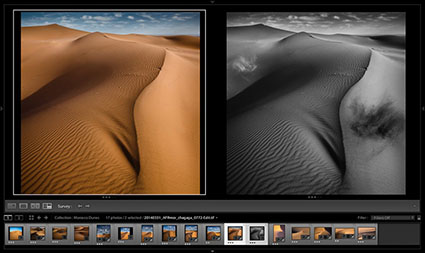
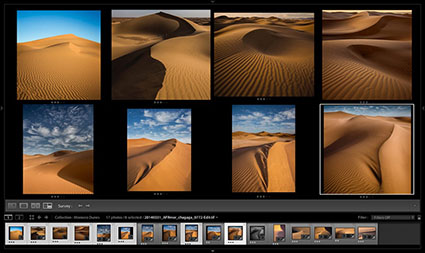
2_Contact_Morocco_Dunes

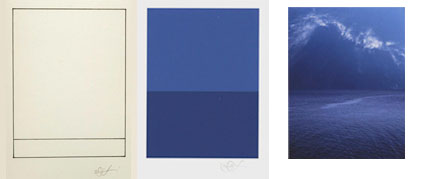
3_Contact_Morocco_Concept

Using Smart Collections in Lightroom speeds up the process of gathering and revisiting these images. I use Smart Collections―1 Star, 2 Stars, 3 Stars, 4 Stars, 5 Stars, and 3+ Stars. These Smart Collections are critical for focusing and accelerating my visual thought process, helping me to make the most of a location in a short amount of time. I can see what’s working and what’s not, correct mistakes, figure out what it’s going to take to up my game, identify missing shots, and seek out the ones that will bring a set of images together. Smart Collections serve as a chronology of all the ranked images I’ve made. They create a unique kind of journal. Most importantly, they start the process of assembling bodies of work.

I use Collections for assembling like images to develop projects, typically grouping selected images by location or theme. Unlike Smart Collections, I find Collections’ support for a manual sort order essential. Manual sort orders enable me to create image pairs and sequences, continuities that bind groups of images together into bodies of work. (For more on Continuity, Bodies of Work, and Developing Personal Projects, download my free PDFs at Creativity / Storytelling resources here.

Unlike when I used film, where I had to make physical contact sheets to select images, I rarely print my virtual contact sheets. It’s curious to call them by the traditional name “contact sheets,” because they’re not made by contacting film to paper. But, they’re no less essential to my creative process; if anything, they’re more important. Virtual Contact Sheets allow me to edit images at higher levels of thinking. I even use them to select and sequence images for slideshows, exhibits, and books.

I save virtual contact sheets, and sometimes I even save different states of a single contact sheet. I take screenshots of Lightroom’s display of my curated Collections. So many people requested to see them that I started sharing them on my blog. Having to make remarks about my virtual contact sheets helped me obtain an even better understanding of my creative process and my results.

See more Contact Sheets here.

Read more about my Contact Sheets on B&H.

Read about Seth Resnick’s Contact Sheets on B&H.

Smithsonian Features My Process Sketches They've Collected

processsketches_correspond
The National Museum of American History’s Blog features preliminary sketches, both physical and digital, that detail my creative process while developing images for my series Correspondence.
Line drawings, pastels, and digital sketches were all used to explore possibilities before committing to the final composited results.
“… by exposing the time and planning the photographer took to create his final print, these sketches highlight the fact that today’s works of art, though digital, nevertheless do not simply fall from the sky. In a world that is increasingly instant, this documentation of a digital art photographer’s process reminds us of the importance of slowing down and going through experimental drafts before committing to a final decision, a timely reminder for artists and patrons of the arts alike.
Despite the time-saving advantages technology affords us, or perhaps because of them, it’s safe to say we’ll always want to know where things come from and how they are made. An idea’s journey from conception to realization will always be something we want to know, and as Caponigro’s attention to process shows us, even the digital world strives to leave its trace …”
Read more on the NMAH blog here.