Color! – A Conversation With Eric Meola @ Santa Fe Workshops


Wednesday, Dec 10 @ 8pm EST, 2026

Creativity Continues at Santa Fe Workshops with a conversation about Color!
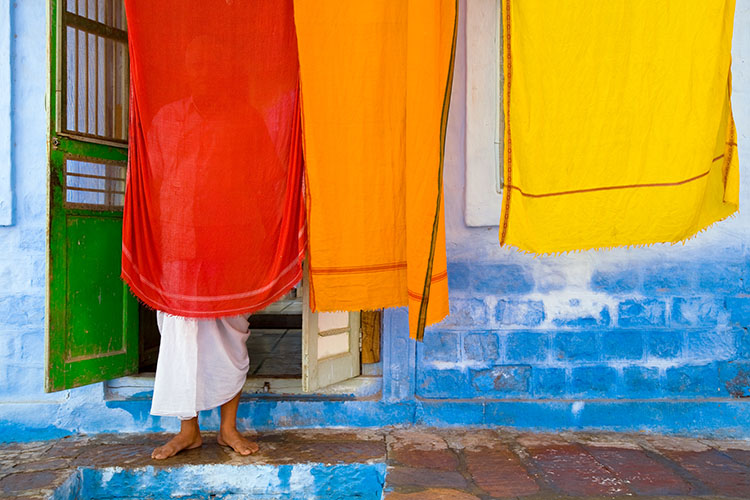
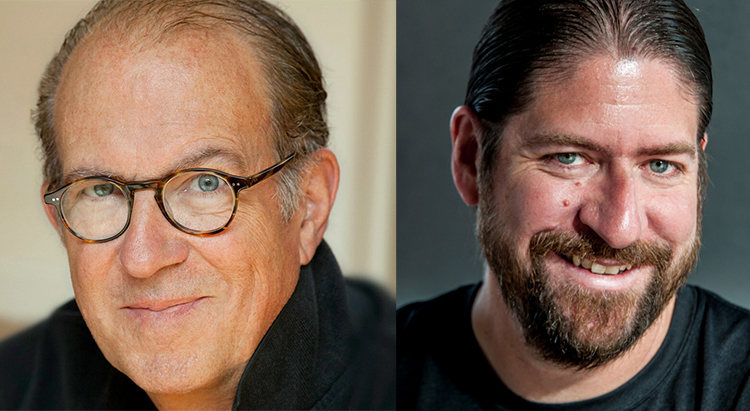
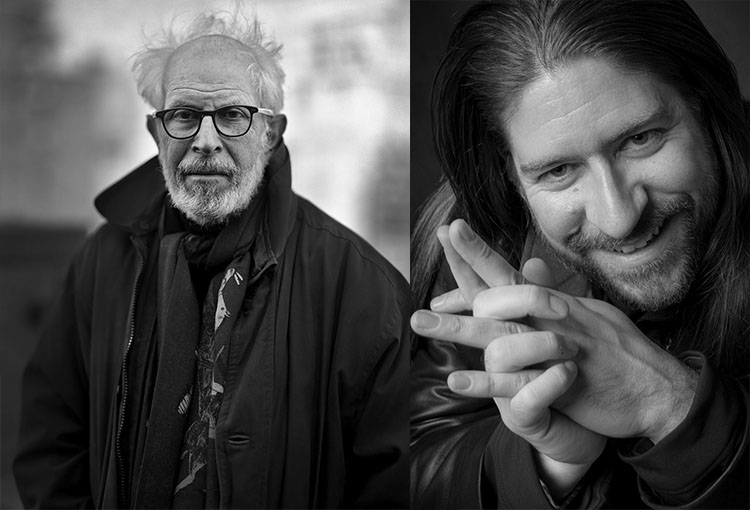
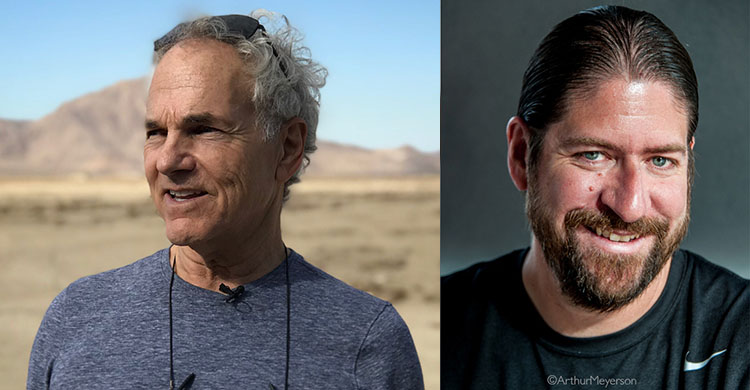
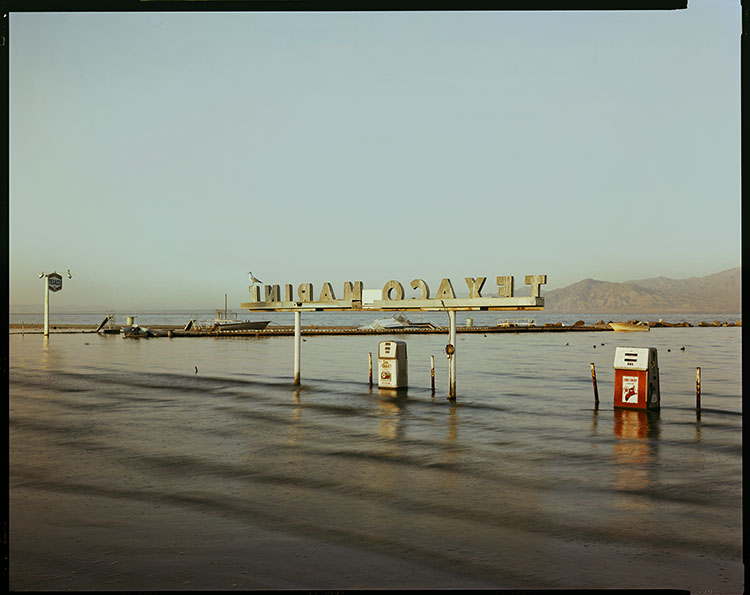
Savor a deep dive with two photographic masters, Eric Meola and John Paul Caponigro.

Our hour of inspiration will begin with a short presentation of images.

Next, Eric and John Paul will share and discuss their insights about color. After hearing their insights about how other artists use color and how they use color, you’ll leave inspired to explore how you use color (even if you’re a black-and-white photographer).

Finally, we’ll finish with a lively question-and-answer session open to all participants.

Color is such a deep subject, and these artists’ passion for color is so strong, it’s sure to run long.

Join Santa Fe Workshops’ worldwide community of photographers and writers as Creativity Continues.
_

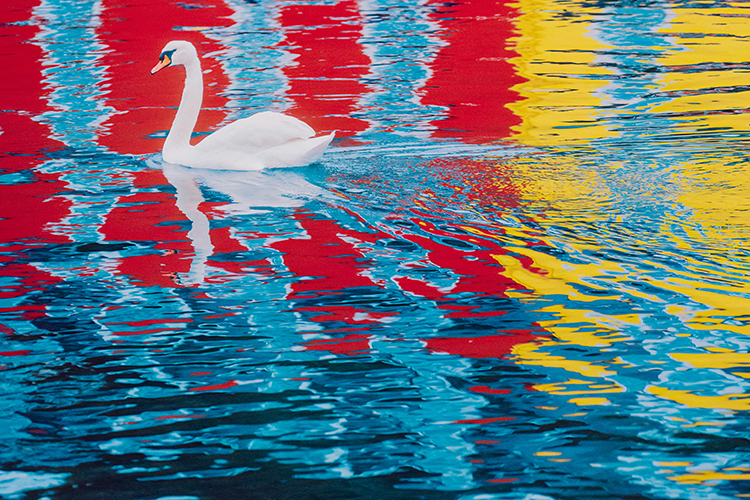
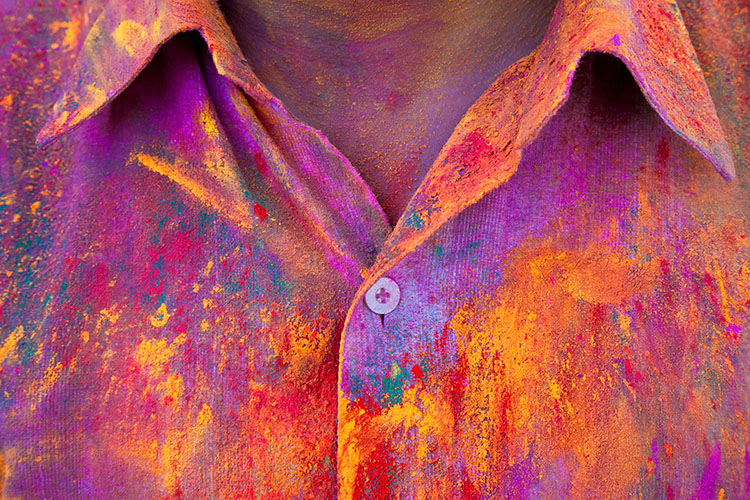
Photographer Eric Meola’s new book, BENDING LIGHT: The Moods of Color, showcases his use of light and color throughout his career. In a five-decade career that defines the use of color as art, Meola examines the history of color and redefines it in the medium of photography. In dozens of stories and anecdotes, he recounts his journey using color, its symbolism, and how it affects our moods. “Light and color are my subject as much as the subject itself. They resonate with our moods, reflect our emotions, and define the way we see.”

Eric Meola studied photography at the Newhouse School of Journalism at Syracuse University and graduated with a B.A. in English Literature. Meola’s photographs are included in the archive of the American Society of Media Photographers, the National Portrait Gallery in Washington, D.C., the International Center of Photography in New York, and the George Eastman Museum. His previous books include Last Places on Earth (GRAPHIS, 2004), Born to Run: The Unseen Photos (Insight Editions, 2006), INDIA: In Word & Image (Welcome Books, 2008), and FIERCE BEAUTY: Storms of the Great Plains (IMAGES Publishing, 2019). He has received numerous awards, including “Advertising Photographer of the Year” in 1986 from the American Society of Media Photographers, a “Power of the Image” George Eastman award in 2014, and, in 2023, he received a Lifetime Achievement Award from the Professional Photographers of America.


View 12 Great Photographs by Eric Meola

Read 14 Great Quotes By Photographer Eric Meola.

Read our short Q&A

Read our extended conversation.

Discover more by Eric Meola.


Unlocking The Secrets Of The Creative Process – A Conversation Between Eric Meola & John Paul Caponigro

August, 2017

Eric Meola

What is the process of creativity? Where does it come from, and how does it evolve? Recently, photographer and PPD contributor Eric Meola raised those questions in an interview with photographer and educator John Paul Caponigro, whose work will soon be featured along with his father’s in a major new exhibition at the Taubman Museum in Roanoke VA, “Paul Caponigro and John Paul Caponigro: Generations.” Today we publish part one of the interview, in which Caponigro and Meola talk about chaos, self-doubt, reflection, serendipity, failure, discipline, and the myriad facets of interaction that lead to creativity and art. Look for the rest of the interview in upcoming editions of PPD.

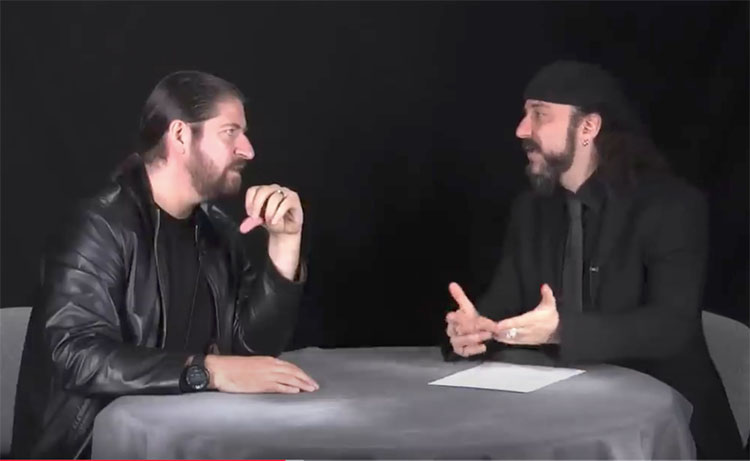
At a recent workshop in Maine, the noted National Geographic photographer Sam Abell asked his students to photograph a poem—to illustrate the words with images. Abell wanted the students to think about the relationship between two methods of describing imagery, and the challenges posed by interpreting words and images in our minds through photography. The dichotomy between words and images has haunted me throughout my career, and then a few months ago, a nearly 200-page PDF attachment of an e-book called Process arrived in my email as a gift from photographer-lecturer-educator John Paul Caponigro —or JP, as his friends call him. I glanced at a few pages, then put it aside on my computer’s desktop to look at later. I had met JP on several occasions—first in California before we were both scheduled to do lectures, and then again in Iceland, Antarctica, and the Atacama desert while participating in Digital Photo Destinations workshops (www.digitalphotodestinations.com). I had only a few sketchy things to go on—that JP had graduated from Yale, that his father was the photographer Paul Caponigro, that he had grown up in New Mexico, and that he took a few weeks off to go to Italy every year.

So one day, when I got a call from my somewhat inebriated photographer-friend Arthur Meyerson and an equally inebriated JP as they joyfully celebrated the close of a Maine Photo Workshop, I told JP that I had not only read Process but that I wanted to interview him about it. I had a lot of questions: How was his famous father? Did his mother really design Ernst Haas’s book The Creation? And most importantly, what the hell was Process really about? After all, we live in the age of iPhone photography, when nearly 300 million photographs are uploaded to Facebook every 24 hours.

In the book Invisible Republic: Bob Dylan’s Basement Tapes, critic Greil Marcus describes the process that led to Dylan’s collection of more than 100 mostly unreleased songs; the music evolved from—in Marcus’s words—“a laboratory where, for a few months, certain bedrock strains of American cultural language were retrieved and reinvented.” Few photography workshops explore the creative aspects of photography as a constantly evolving set of inputs—reading, writing, sketching—that manifest themselves in the way we make images. I recognized that many of my inputs had much in common with what JP was discussing, but I wanted to know more about him and why he always seemed to be “looking away” from the image in front of us. Or was he?

Our conversation, which begins below, took place over an extended period via email, while JP was with his family in Italy.

EM: I’m fascinated by your approach to seeing, to “living” photography, which you refer to as “process.”   

JP: Art arises out of a life lived—it’s an extension of ourselves, our creative process grows and changes as we do. Art is not something separate from life. Art intensifies life.  Some cultures don’t have a word for art, considering the items/events produced that we might call art to be an overflowing of life. Seen from that perspective, everyone is an artist. So the follow-up questions would be: What kind of artist and how well do they do it?

EM: Your father is Paul Caponigro, a master landscape and still-life photographer. He once said, “It’s one thing to make a picture of what a person looks like; it’s another thing to make a portrait of who they are.” That applies to all photography, doesn’t it—from landscapes to journalistic images to portraits?

JP: Exactly. Representation is not reproduction. We make portraits of people by recording light reflecting on their bodies—often only a portion of their bodies, usually from one angle and at one moment in time. Does such an image record their changing state through time, their history, their web of relationships, their ideas, their feelings, etc? It’s important to recognize the limited nature of our creations. In representation. it’s important to recognize the gap between what we create and what’s referenced. This doesn’t make these types of images less valuable; for many people they’re the most valuable. Perhaps those limitations can be used for effect?

Read More

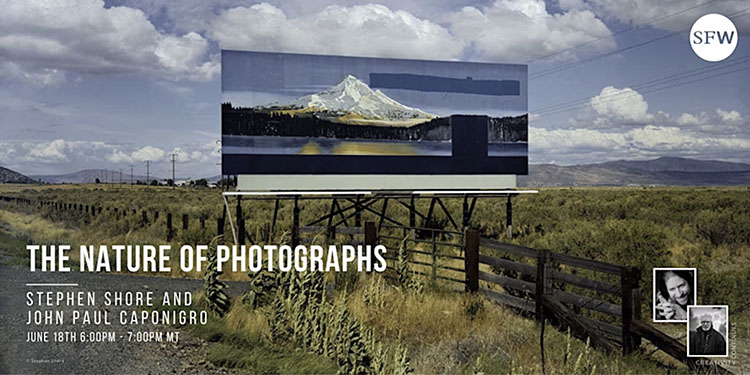
June 18, 8 PM EST – The Nature of Photographs – Stephen Shore & John Paul Caponigro

Wed, June 18, 2025 > 8:00 PM – 9:00 PM EST

Santa Fe Workshops collection of free online events, Creativity Continues features a summer evening with fine-art photographers Stephen Shore and John Paul Caponigro. In this special hour of inspiration, Stephen and John Paul take a deep dive into perception, addressing what’s special about photographic vision, how it influences everyday seeing, and how intention and awareness make dramatic differences for creators, their creations, and the people who view them.

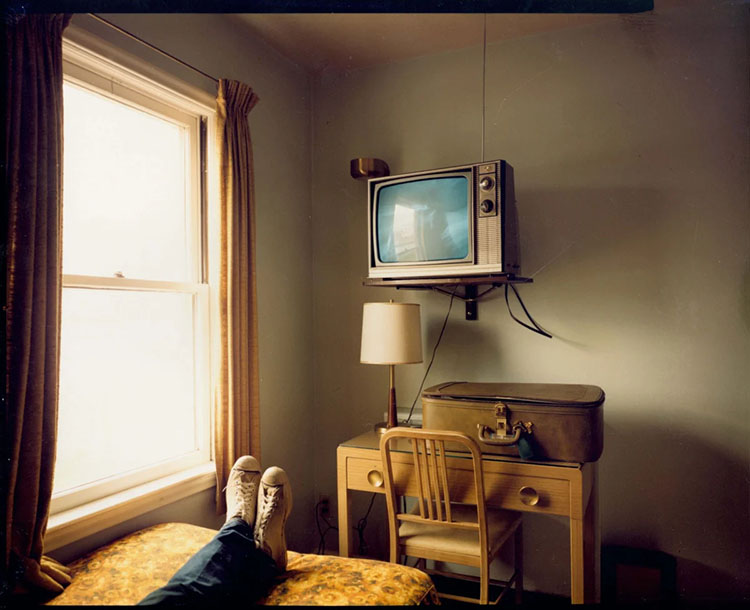
Stephen says, “A quote that I like very much comes close to explaining my attitude about taking photographs – ‘Chinese poetry rarely trespasses beyond the bounds of actuality… the great Chinese poets accept the world exactly as they find it in all its terms and with profound simplicity… they seldom talk about one thing in terms of another, but are able enough and sure enough as artists to make the ultimately exact terms become the beautiful terms.’”

Stephen and John Paul conclude their conversation with a lively Q&A session with the webinar audience. Even if you can’t make the live event, a recording of it will be available for all those registered.

Creativity Continues is a program that collectively develops creative voices by offering connection and encouraging expression. Because the goal is to engage all within our creative community, we encourage you to extend invitations and share Santa Fe Workshops Creativity Continues events with anyone who expresses an interest.

View 12 Great Photographs By Stephen Shore.

Read 13 Great Quotes By Photographer Stephen Shore.

Listen to Stephen Shore here.

Explore Stephen Shore’s books here.

Visit Stephen Shore’s website.

A Wide-Open Book With Cig Harvey & John Paul Caponigro – Dec 4 @ 8 PM EST

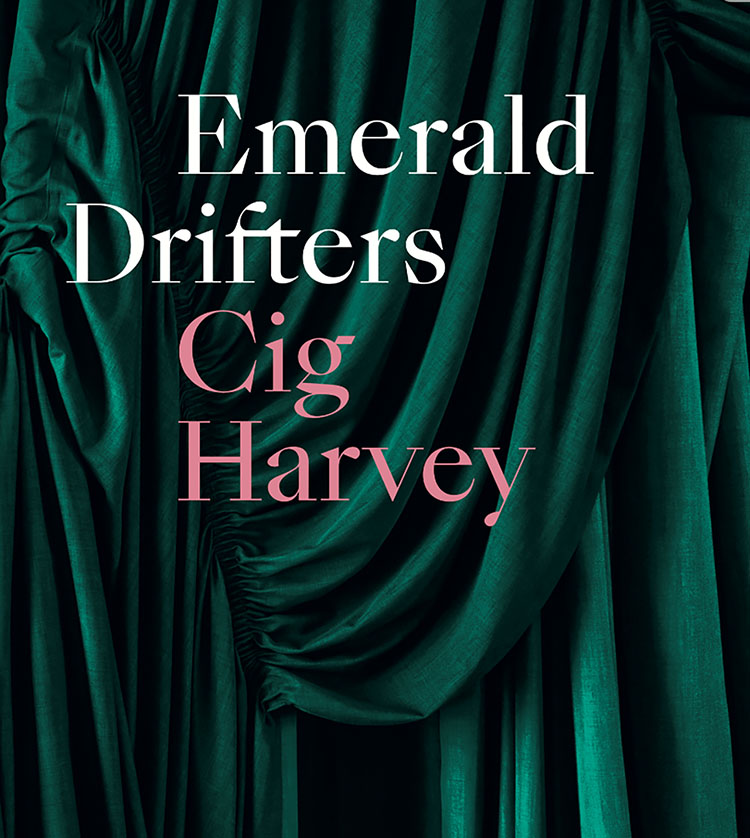
Find out about Cig’s new book
Emerald Drifters.

Enjoy the replay of this lively conversation.

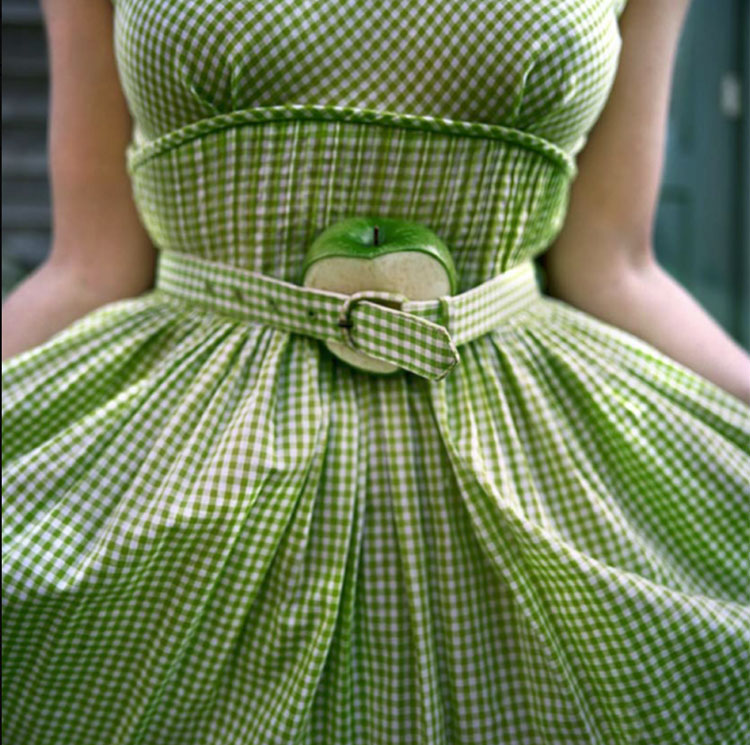
Online Dec 4 at 8 pm EST, join fine-art photographers Cig Harvey and John Paul Caponigro. In this special hour of inspiration, Cig and John Paul celebrate their deep passions for color, share how they develop projects, discuss the many ways synergy can be struck between photographs and words, and finally, find a unique kind of fulfillment in the form of the book.

Cig and John Paul end their conversation with a lively Q & A session with the webinar audience. If you can’t make the live event, a recording will be available for everyone registered.

“Through prose, poetry, recipes, and lush imagery, Harvey’s work is a fierce reminder that there is a joy to be found in the small details surrounding us; blink, and you will miss them,” says Gunslei Yalcinkaya of Aesthetica Magazine.

Join Me For A Conversation With David Brommer – Tuesday, May 21 @ 6 pm EST

Join me Tuesday, May 21 @ 6pm EST on Zoom – Register here.

Photographer David Brommer (Suspect Photography) will guide what is sure to be an animated, wide-ranging, and thoughtful conversation about photography and creativity. David has a knack for asking the questions that most need to be asked.

I’ll share new work. We’ll talk about the importance of printing your images. After that, anything could happen.

It’s been ten years since our last extended conversation. Enjoy it here as a prelude of more to come.

On Beauty – An Inspiring Evening With Photographer Richard Misrach


Read our View Camera Conversation here.

Read Quotes by Richard Misrach here.

View 12 Great Photographs by Richard Misrach.

View more Creativity Continues events at The Santa Fe Workshops.


On Beauty – An Inspiring Evening With Photographer Richard Misrach

Wednesday, December 13, 2023 – 6:00-7:00 pm (Mountain Time)

Register here.

Creativity Continues at Santa Fe Workshops with On Beauty, a conversation between Richard Misrach and John Paul Caponigro.

Our hour of inspiration will begin with a short presentation of images by Richard Misrach.

Next, Richard and John Paul will discuss the role of beauty in art (and specifically photography) as a source of nourishment for individuals and as a force for social change.


“Beauty can be a very powerful conveyor of difficult ideas.” – Richard Misrach

“It’s hard for art to really solve problems but I’ve come to believe that art is an important way of communicating, not only with current generations, but future generations.” – Richard Misrach


Finally, we’ll finish with a lively question-and-answer session open to all participants.

Join Santa Fe Workshops worldwide community of photographers and writers as Creativity Continues.

Richard Misrach is one of the most influential photographers of his generation. In the 1970s, he helped pioneer the renaissance of color photography and large-scale presentation that are in widespread practice today. Best known for his ongoing series, Desert Cantos, a multi-faceted approach to the study of place and man’s complex relationship to it, he has worked in the landscape for over 40 years.

His most recent book Notations (Radius) explores the beauty of photographic negatives.

Register here.

Read our View Camera Conversation here.

Read Quotes by Richard Misrach here.

View 12 Great Photographs by Richard Misrach.

View more Creativity Continues events at The Santa Fe Workshops.

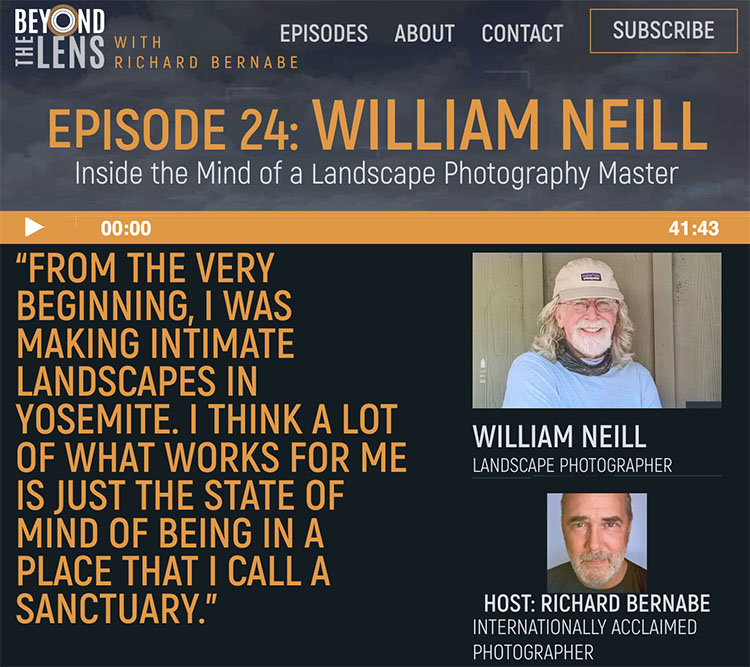
Enjoy William Neill In Conversation With Richard Bernabe On Beyond The Lens

“In this episode (Beyond The Lens), Richard ventured into the mind of William Neill to find out what inspires him, what gives his work such emotional depth, his passions, persistence and creativity, and more. William touches upon his time working in American landscape photographer and environmentalist Ansel Adams’ gallery, sharing what inspired him to photograph Yosemite. He explains why he puts experiencing a place above the results.”

Listen here.

Learn more about William Neill here.

Read a quick Q&A with William Neill here.

Read quotes by William Neill here.

How To Strike Up A Lively Conversation With Your Images

Decades ago, my friend Jeff Schewe asked me, “We both know how to do a lot of things to our images but how do you decide what to do to your images?” My response surprised him, “Talk with them.” Let me expand on that for you, as I did for him so many years ago.

We often deepen our relationship with other people by having a conversation with them. We can do the same with images. Even though they don’t speak, we can speak for them. There are many ways to do this.

Write

Before I go into more detail, let me offer you a crucial piece of advice. Make sure you write this stuff down as you go. You won’t be able to remember everything you come up with and the act of writing will allow you to come back to it and pick up where you left off, help you find more insights, forge deeper connections, and increase the chances that you’ll act on it.  All of these benefits happen more strongly when you write by hand but that’s slower and not as easily retrieved, so more often than not, I use the notes app on my phone, which can be accessed from any of my devices. I recommend you try many ways of taking notes to determine which ways work better for you.

Conversations start with questions. Ask a lot of questions. Then answer them as if you were the image. Write that down.

Ask Questions

Conversations start with questions. Ask a lot of questions. Ask way more questions than you ever thought to ask. I usually set my goal at 100. Why? The goal of this exercise is to get beyond the obvious and the conventional. Sure, ask those questions too but go well beyond them. Ask the kinds of “crazy” questions kids ask. (What does this image eat?) Pretend you’re someone or something else and ask the questions he/she/they/it might ask. (If you’re the frame … Who put these things in me? And why did they put me here?) Imagine you are the work of art and ask the questions it would ask if it could. (What do I have to do to stay out of that closet?) The skill of asking more questions gets easier if you simply rephrase the same question in different ways to get different perspectives. Change the w word – who, what, when, why, where, how. (What is this about? How does it go about it? Who goes there?) Reverse questions; ask the opposite question. (Why is it lower? Why isn’t it lower? Why isn’t it higher?) Or, add not to any question. (Is it dark? Is it not dark?) Once you have your list of questions scan it for patterns. What kinds of questions did you ask? What did you ask questions about most frequently? What questions stand out as most interesting? Asking questions may be all you need to do to find useful insights. Answers are optional. I recommend hypothesizing what they are and to look for opportunities to answer a single question in more than one way. Remember, write it down. You can revisit your list later and you’ll most likely have a different perspective with different outcomes. You can also repurpose many of the questions in your list to use with other images. This is a skill that gets easier over time. Make asking a lot of questions a habit.

Imagine that you’re the image.

If I were you, what would I do? 

If I were you, what would I feel?

If I were you, what would I want?

If I were you, what would I think?

(You can expand these questions by adding “about ___” at the end and filling in the blank.)

Walk a mile in your mind with your images. Just treating your images as if they are sentient creatures will instantly make you feel more connected to them, which will show in your final results, and people who see your images will be drawn closer to them because of that quality.

I recommend you do this more than once at different times. Your moods, influences, and perspectives are constantly shifting, sometimes only a little, sometimes a lot. In fact, practicing these internal conversations is one way of proactively influencing your internal flow. (And yes, we all have a mind-body connection.)

Associate

Let’s talk about you. When you look at an image … 

What emotions do you feel? What’s the mix?

How does your body feel when you look at it? Where?

What memories does it bring up? What’s the connection?

What other images do you think are related to it? Why?

What other things does it remind you of? 

What single words and phrases would you use to describe it? 

Make a list of nouns. What is it of?

Make a list of verbs. What is it doing?

Make a list of adjectives. What qualities do the things and actions possess?

In these kinds of … call them exercises or studies or research sessions … it’s supremely important not to judge or censor yourself. This will stunt the growth of this process, your growth. Write it all down. Nothing is too ridiculous. In fact, if you don’t let a good dose of that irrational stuff out you won’t find as much magic. For the moment, stop making sense. Make sensitivity. Let your inner child out to play with wild abandon. You can clean up your room later.

Ask why five times.

Read More

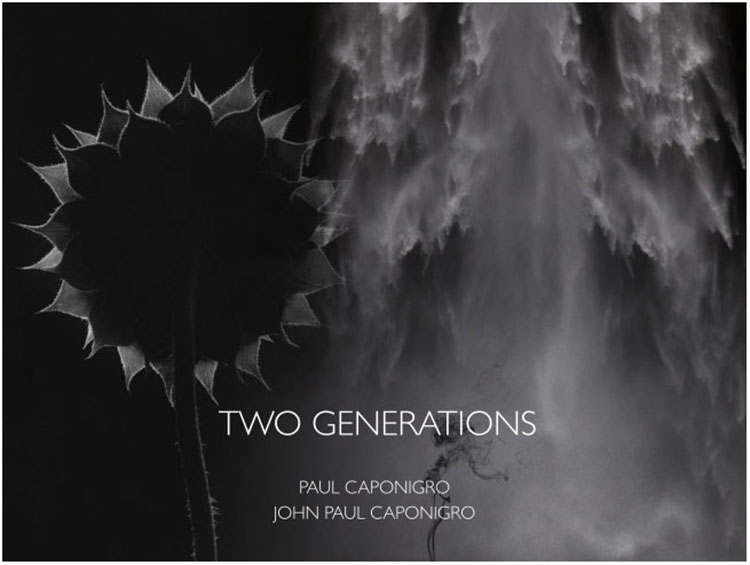
Two Generations Talk : Paul & John Paul Caponigro – Online MMW

Receive this ebook free.       26 images – 26 quotes

.
Recorded May 10, 2022 – 1 PM EST


Two Generations In Conversation, an afternoon with father Paul Caponigro and son John Paul Caponigro cohosted by Maine Media Workshops. During this captivating hour, the Caponigros, after a brief viewing of images, will share their thoughts about the soul of photography, the joys of printing, and how the two are related. Then we’ll finish our program with a lively question and answer session open to all participants.

Enjoy this shorter video as either an appetizer or a dessert.