12 Photographs Celebrated By Huntington Witherill
00107

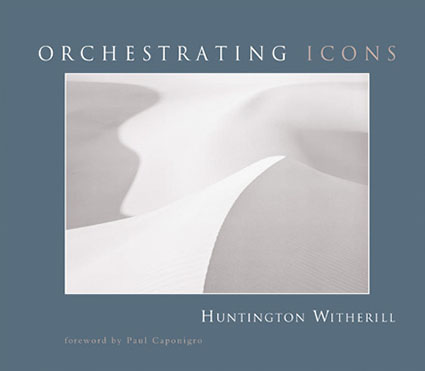
Huntington Witherill’s Orchestrating Icons

Huntington Witherill celebrates twelve photographs by other photographers.
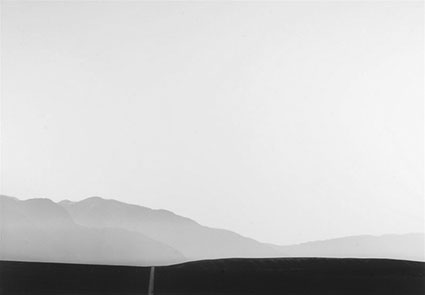
Road to Badwater, 1971

Al Weber, Road to Badwater, 1971

Al Weber’s “Road to Badwater, 1971” demonstrates the effectiveness and power of design simplicity in depicting the immense spaces that characterize Death Valley. The overall sense of atmosphere and distance are communicated through but a few bold blocks of uniform tonal value, each of which help to define the photograph’s unique character.
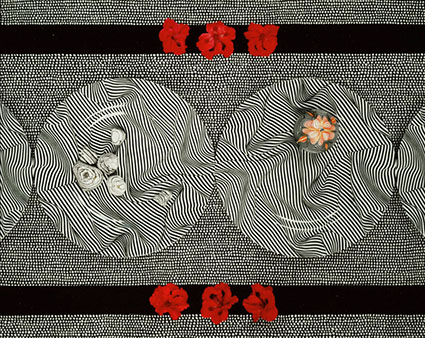
Pelargonium Blossums, Mill Valley, CA 1985

Don Worth, Pelargonium Blossoms, 1985

The visual strength of Don Worth’s “Pelargonium Blossoms, 1985” lies within the tension that exists between the intricate textures and patterns, together with a juxtaposition of accent color placed against a largely monochromatic field. Each time I look at this photograph I am drawn into its hypnotic spell.
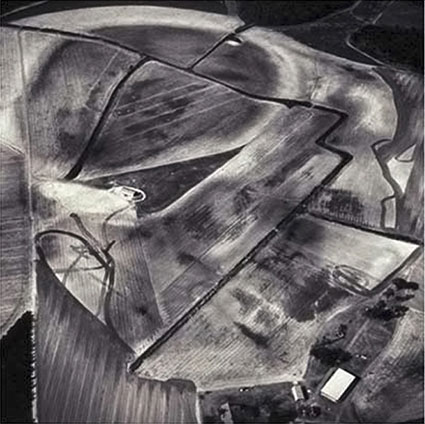
Drainage Ditches in a Low Agricultural Field, Savannah River Nuc

Emmett Gowin

Emmett Gowin’s photographs from his series: “Changing the Earth” exhibit a remarkable juxtaposition of visual beauty in the midst of perceived destruction. It’s not that the subject matter he has chosen to photograph is so often thought of as being of a more or less unseemly nature. It is that he has presented this particular subject – in its perceived negativity – with such an abundance of visual beauty and grace that he seduces the viewer into an irreconcilable dichotomy.
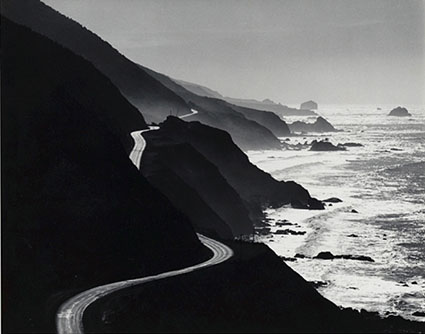
US Highway Route 1, 1965

Henry Gilpin’s, US Highway Route 1, 1965

Clearly one of the most iconic images of the Big Sur Coastline, Henry Gilpin’s “US Highway Route 1, 1965” celebrates the wild and austere essence of the Big Sur Coast. The serpentine highway glowing white hot against the dark and foreboding shoreline cliffs projects a scene of exceptional strength and amplitude.
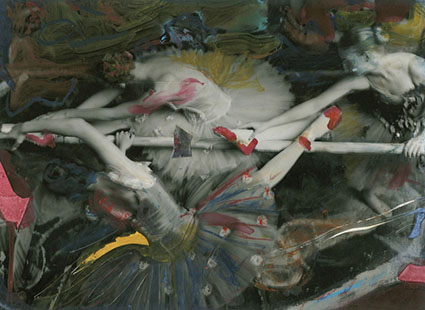
Untitled, No Date

Kim Weston

Kim Weston’s hand-painted photograph of ballerinas features a marvelous sense of movement and grace that is punctuated by the introduction of sparse color. The color, itself, seems to further abstract the image, thereby helping to focus the viewer’s attention on the dynamic and symbiotic relationship between the figures, themselves.
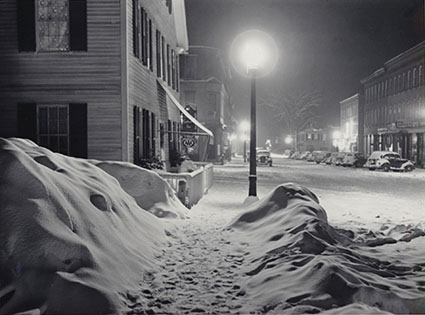
Center of Town After Blizzard, Woodstock, VT- 1940

Marion Post Wolcott, Blizzard, Woodstock, VT, 1940

Marion Post Wolcott’s “Blizzard, Woodstock, VT, 1940” portrays a quiet yet bitter cold winter evening. The glimmering street lights serve as an effective and warm counterpoint to what, otherwise, seems a penetratingly cold environment. This photograph makes me want to put on another coat!
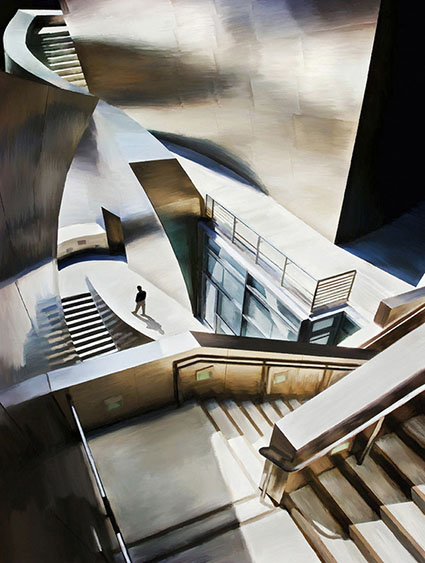
Stairway #60, Los Angeles

Mark Wainer, Stairway #60, Los Angeles

Suggestive of an M.C. Escher drawing, Mark Wainer’s “Stairway #60, Los Angeles” evokes a whimsical maze of mystery and apprehension. Is the figure hoplessly trapped? Or, has he managed to find the hidden escape?
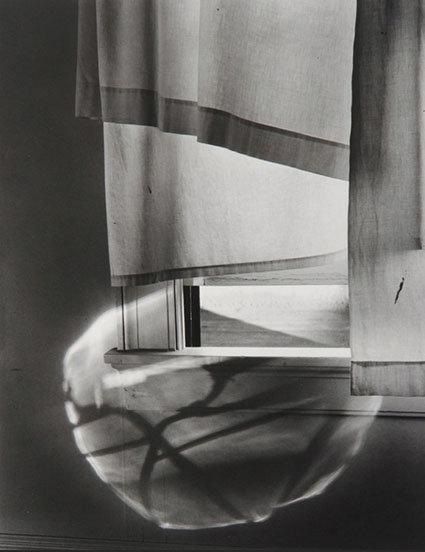
Windowsill Daydreaming, Rochester, New York, 1958

Minor White, Windowsill Daydreaming

Windowsill Daydreaming, by Minor White, is one of those quintessential photographs in which the light, itself, is the predominate subject. The seductive nature of the subject, in this case, is both highly mysterious, and positively alluring.
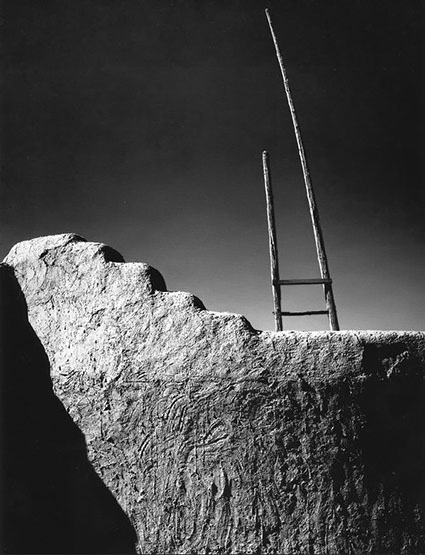
Kiva Ladder, San Ildefonse Pueblo, 1973

Morley Baer, Kiva Ladder, 1973

Morley Baer’s “Kiva Ladder, 1973” appears as a graphically rich visual Icon symbolizing the American Southwest and its native cultures. The immense power of graphic simplicity, achieved through the exquisite and economical use of simple line and texture, help to contribute to the photograph’s near universal appeal.
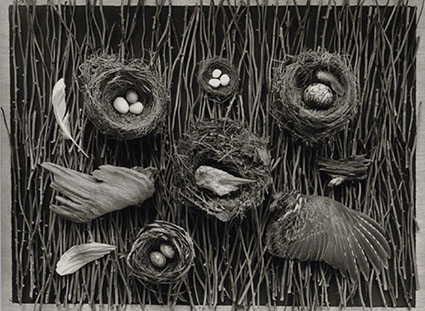
Nascent Flight

Paul Caponigro, Nascent Flight

The temptation to reach out and touch the surface of Paul Caponigro’s “Nascent Flight” is quite strong. The overall combination of line, texture, and impeccable detail that comprise this complex yet visually concise still life projects a near miraculous display of inherent strength in the presence of underlying fragility.
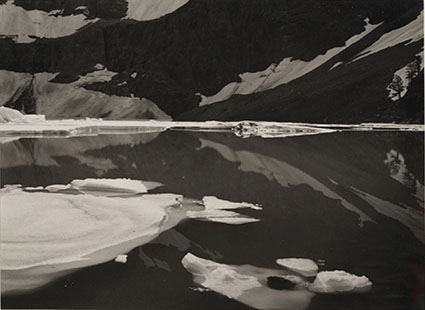
Iceberg Lake, Glacier National Park, Montana, 1978

Philip Hyde, Iceberg Lake

Philip Hyde’s “Iceberg Lake” demonstrates a marvelous sense of asymmetrical balance. While the ice forms seem randomly placed within the composition, the organization of forms within the overall frame are not only solidly connected, but also perfectly well balanced.
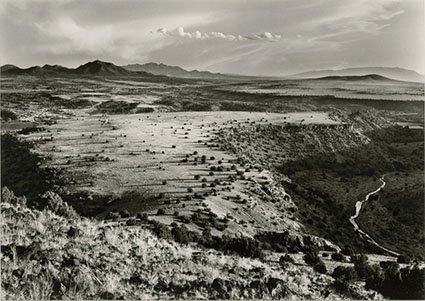
La Mesita, New Mexico, 1978

William Clift, La Mesita, New Mexico, 1978

William Clift’s “La Mesita, New Mexico, 1978” portrays the open desert with uncommon elegance and aplomb. There is undeniable magic in the light that Clift has captured, here. And taken together with an exquisite sense of detail and overall delicacy, I am compelled to step into the frame and go exploring!

Learn more about Huntington Witherill here.
View 12 Great Photographs By Huntington Witherill here.
Read our Quick Q&A here.
View video with Huntington Witherill here.
Read our conversation with Huntington Witherill.
View more Photographers Celebrate Photography here.
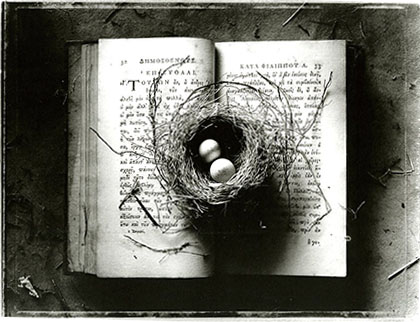
15 Great Quotes By Photographer Sean Kernan

nestwitheggs_000
Enjoy this collection of quotes by photographer Sean Kernan.
“Somehow the pictures that work out just the way I wanted them to are the ones I lose interest in soonest. The expectation has become the limit. And I think that the way to take something beyond your own expectations is to leave what you see unnamed and beyond concept for as long as you can. I want to work as far beyond what I know as I can get, and the gate to that beyond lies exactly between seeing and naming.” – Sean Kernan
“I have to say that what is revealed to me lies beyond any ideas I had for the pictures.” – Sean Kernan
“I think that I began by wanting to see what kind of pictures this intense way of working might produce, and honestly I didn’t have any idea beyond that. There was no planned outcome, none of what I recently heard a composer call “The Fallacy of Intention.” – Sean Kernan
“The benefits of chance are enormous, but you have to watch out for them too. Chance gets me beyond whatever I had in mind when I started to work. It comes into play when I let things happen and then chase alongside them and grasp them on the fly. It’s like two acrobats, one of whom doesn’t know that he’s an acrobat. But the artist is responsible to what chance gives him, and just setting it down without taking it in and manifesting it again in the heuristic process is not enough. Maybe it’s that chance is happening all the damn time, and it’s the artist’s intentional work with it that strains artworks out of the soup.” – Sean Kernan
“I’d love to say something more intelligent about this, but I don’t know that the process had much intelligence in it.” – Sean Kernan
“I’m inclining toward the idea that the working process of art is a lot more thoughtless than I once imagined – thoughtless but not stupid.” – Sean Kernan
The process is in the elimination of conceptions and cleansing the mind, then in claiming the awareness and manifesting it in a work.” – Sean Kernan
“So you want to float in that space of awareness as long as you can, keeping all possibilities alive so they can become clearer, then you pull down one that is BOTH unexpected and makes perfect sense.” – Sean Kernan
“It is the unexpectedness of the image that wakes us up so we really see something, and the rightness of the image that affirms what we have seen in the mind’s eye.” – Sean Kernan
“So if every thing looks right and it still feels wrong, or lacks resonance, or if it refers mainly to other photography and not to seeing, to awareness itself, you should sniff elsewhere.
“The first question I tell students to ask in the first critique of a class is not is the work good, but is it alive ?” – Sean Kernan
“You can see it in a great actors work – look at De Niro, or Streep, or Arkin. They can just stare into the air and you’ll sit and watch them, watch their intensity. And I realized that some of the best photographers I know have that same kind of intensity. It shows in their work. Their intense staring generates its own power, and we respond by staring with them.” – Sean Kernan
“I have a real appreciation these days for work that abrades me into awareness.” – Sean Kernan
Learn more about Sean Kernan here.

View 12 Great Photographs By Sean Kernan here.

Read our Quick Q&A here.

Read our Conversation here.

View video by Sean Kernan here.

View 12 Photographs Celebrated By Sean Kernan here.

Read more Great Quotes By Photographers here.


12 Photographs Celebrated By Sean Kernan

71DMCEV76DL._SY354_BO1,204,203,200_

Sean Kernan’s The Secret Books

Sean Kernan makes insightful comments on twelve photographs.
“At this point I most respond to things that stir me to a kind of seeing that I didn’t think I could do. They make me want to try, even though I have no idea where or how to begin. This group contains work from major artists and workshop students, proving that anyone can break through.” – Sean Kernan
Anselm Keifer
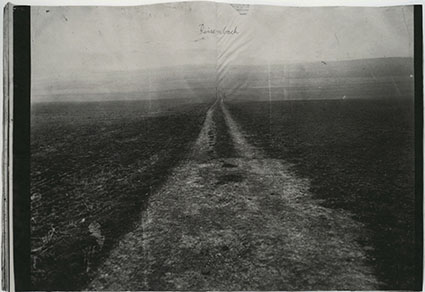
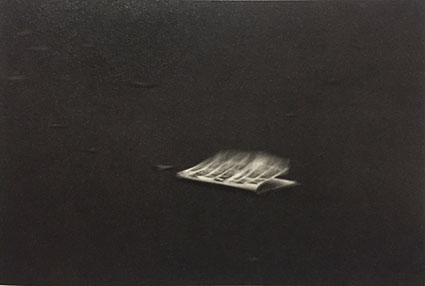
Anselm Keifer. I love this artist’s work, and in particular his books, of which this is one. The distressing of the photographic image and its inclusion in a book makes me think it’s a history of the end of the world…that has been left out in the atomic rain.
Arno Minkinnen
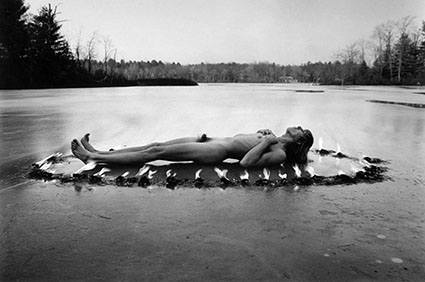
Arno Minkinnen. Arno’s “subject” has been his body for so long that he has found the deepest caves of the mind. They are not only what he thinks but of what they make me think. In this case I see some Finnish shamanistic ritual that takes place at the threshold of life/death, with passage going either way.
Diane Arbus
Diane Arbus. This seems to sum up all the mystery of her seeing. The more you think and say about this image, the further afield you drift. Just look at it and shut up.
Duane Michals
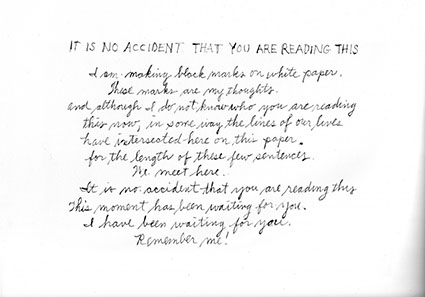
Duane Michals. So often we look at a photograph. Here we start to read it and realize that we are being drawn in as a player, as a subject of the…picture. And so is anyone else who looks at it. Fantastic!
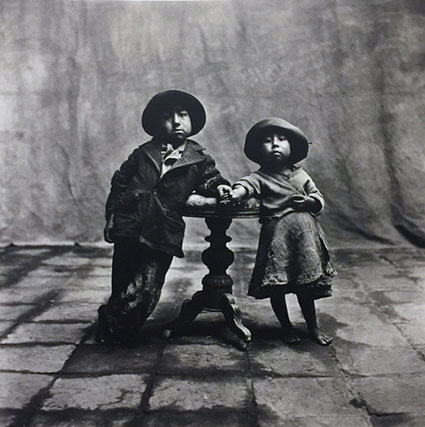
Irving Penn
Irving Penn. This photo knocked me out when I saw it. It is not documentary. Instead Penn has bridged the world of the highland Quechuan Indians of Peru and the formality of Brozino, the great Rennaisance portraitist.
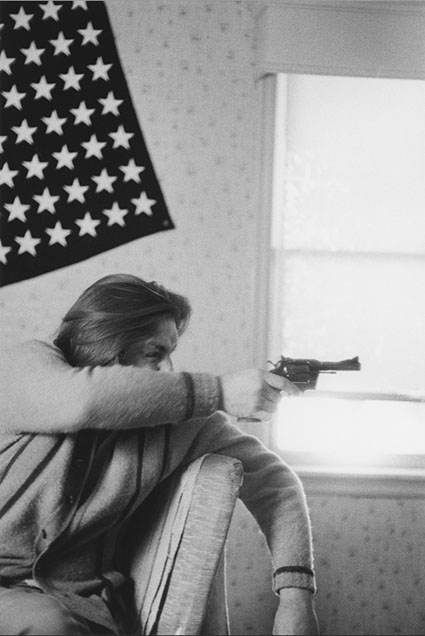
Larry Clark
Larry Clark. Photographers love to visit other worlds (see Penn, above), but Larry lived in the drug world and he had a camera. Tough, tough pictures. To learn more, read Dennis Johnson’s book, Jesus’ Son.
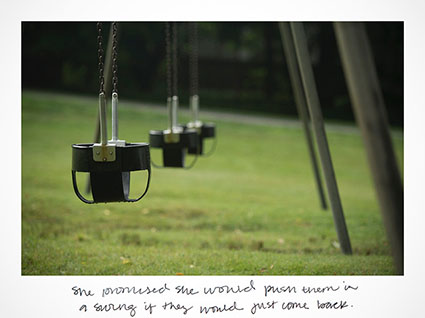
MichelleElloway
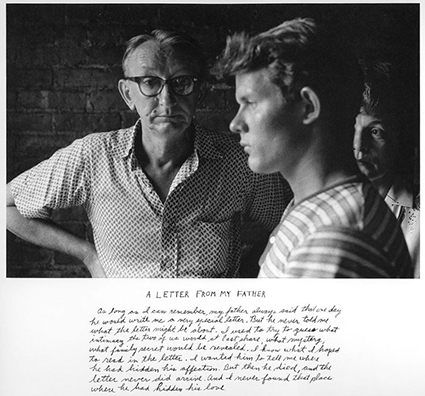
Michelle Elloway. This picture started as a workshop assignment to photograph a place where something had happened. I said nothing about writing down what it was that had happened, but the photographer blew the class away by writing the results of the event, turning the whole thing into a chilling Shirley-Jackson moment. (If you don’t know Shirley Jackson, read The Lottery.
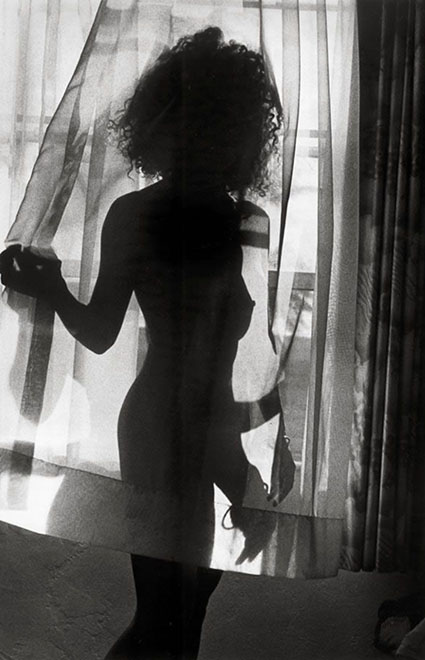
Ralph Gibson
Ralph Gibson. Ralph’s work is sui generis, very simple, graphic and pregnant. This photo isn’t really like that, thanks to that wavering curtain, I think.
Rebecca biddle Mossman
Rebecca Biddle Mossman. I love pictures that get beyond thinking. I am sure that the photographer just started off the situation, then saw something and pushed it, then just let it happen. (That’s my guess.) It’s the best way of working, and it leads to photos that you can’t believe you took.
Saul leiter 1
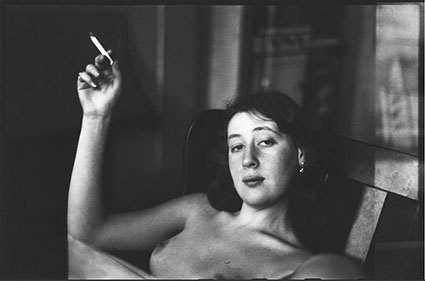
Saul Leiter. I’m giving him three, because he is new to me and because he has a freedom that I wish I had! The first is just saucy, impudent, sexy and innocent. I look at this woman and I just want to give her a shirt and take her out for coffee. She’s young in the picture, but I’d still love to meet her and say “So, tell me about your life.”
Or maybe not. Maybe it’s better to just suspend in the moment.
Saul Leiter 2
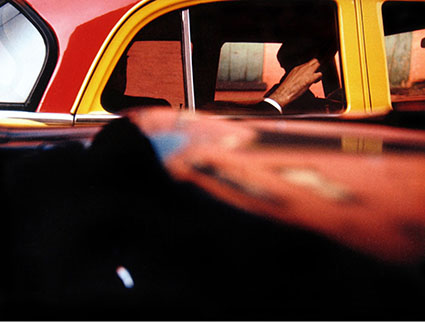
Saul Leiter. The second Leiter is just…ah…like watching a juggler make a perfect catch from completely off center.
Saul Leiter 3
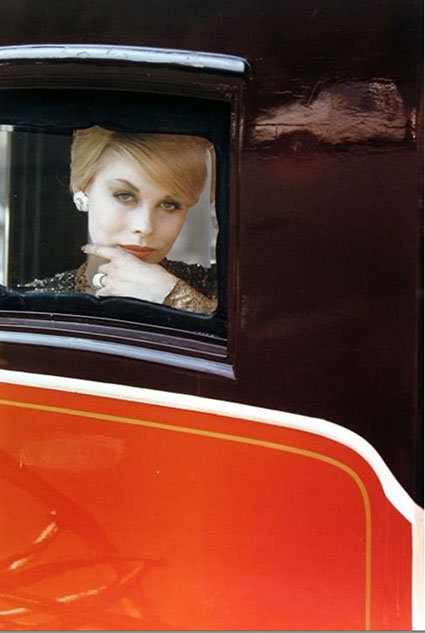
Saul Leiter. The third Leiter brings together three entirely different kind of images and resolves them while somehow leaving them intact.
Learn more about Sean Kernan here.

View 12 Great Photographs By Sean Kernan here.

Read our Quick Q&A here.

Read our Conversation here.

View video by Sean Kernan here.

View more Photographers Celebrate Photography here.

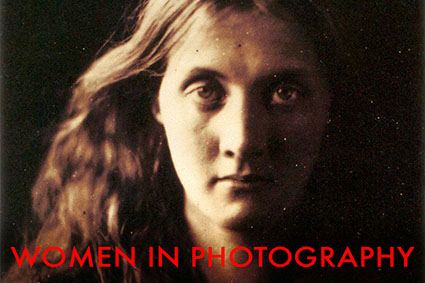
Celebrating Women In Photography

Photography_Women
To celebrate Women’s History Month,  here’s a selection of the many documentaries on women photographers I’ve collected and shared over the years.
Plus, you’ll find links to quotes and image collections at the end.

Diane Arbus| View

Ruth Bernhard View

Laura Gilpin | View

Nan Goldin | View

Lauren Greenfield | View

Lois Greenfield | View

Annie Leibovitz | View 1 View 2

Sally Mann | View 1 | View 2 | View 3

Mary Ellen Mark | View

Cristina Mittermeier | View

Tina Modotti | View

Sarah Moon | View

Elizabeth Opalenik | View

Cindy Sherman | View

Joyce Tenneson | View 1 | View 2

View more on B&H’s Women Of Influence.

Find quotes by great women photographers here.

Find collections of 12 Great Photographs by women here.

24 Great Quotes By Photographer Chris Rainier

001_AncientMarksFreeWind-web
Enjoy this collection of quotes by photographer Chris Rainier.
“I am a storyteller who uses a camera.” – Chris Rainier
“I always knew that I wanted to be involved in seeing and understanding from seeing around the world. Photography is a perfect way to do that.” – Chris Rainier
“We need to take a moment now and then to trade stories about what it really means to be a human being.”
“I am South African by birth, but because of my father’s job, our family traveled a lot. While living in places like Africa and Australia, we visited indigenous peoples. From the beginning, I carried a camera to document the beauty and wonder of these far-flung countries. I also realized many of these cultures were faced with issues I could not ignore. I understood at a very early age, things were not like they were represented in travel magazines.” – Chris Rainier
“Working with Ansel (Adams), what happened there for me was, “Oh, I could use photography as a social tool.” His use of photography for environmental issues was phenomenal.” – Chris Rainier
“We consider biological diversity of these different flora and fauna crucial to our survival, but don’t think about intellectual diversity — in fact, we kind of look at it in a global market level, wouldn’t it be great to have one language? Well, if all we’re doing is communicating about commerce, perfect. But what about diversity that comes up in a language. Each language has its own unique way of looking at things.”
“We are at a crucial crossroads of human history. We are losing traditional cultures with their ancient ways of life and spiritual beliefs at catastrophic rates … With my photography of the First Peoples of our fragile planet, I hope to show spiritual traditions from our past in the present, and become part of the process in some small way of helping prefer life for future generations. I believe photography plays a crucial role in helping sustain and revitalize cultures on the edge.” – Chris Rainier
“With my photographs, I hope to show the past in the present and become part of the process of pressuring life for the future. As our television sets carry us boldly about the world, and as the chainsaws fell the last trees that hide the lost peoples, we lose an essential mystery, and with it, the wisdom which may lie there. If we would be citizens of that world, then we must do all we can to ensure the survival of that world. As only one form of life on Earth, we must keep our humility and finally honor life itself. Once the fragile umbilical cord to our primal past has been severed, we will find ourselves truly alone, without purpose, adrift in a vast space with nowhere to go.” – Chris Rainier
“What would happen if you gave a camera to the Afghan girl in Steve McCurry’s iconic photo? How different would those photographs be? Not to replace the Steve McCurry’s, but rather to create another chair at the table of the dialogue of what it means to be human. It’s not an either/or. It’s not a good or a bad. It just simply is.There are voices out there that have incredible vision, and we aren’t accessing them enough.” – Chris Rainier
“There’s so many cultures that are still now not connected and are getting left behind in the digital divide. More and more, this is a world where you don’t exist unless you’re online, and you don’t have access to information to education to empowerment, to women’s issues, to job opportunities, unless you’re connected.” – Chris Rainier
“I have come to realize that the further I evolve as a photographer, regardless of where I point my camera, I am taking a self-portrait — a reflection of my own story, my own beliefs, my own point of view. Nothing more. Nor do I presume that where I point my camera and take a picture is a reflection of the absolute truth. There is no such thing as an absolute truth. All images merely reflect the emotion of the photographer and the opinion of the reviewer. As it is stated in photography, there always exists two individuals in every image, the artist and the observer, and their sets of beliefs and cultural biases.” – Chris Rainier
“We’re always told to be objective. Well there is no such thing as objective. There is no such thing. We all have an opinion. As visual storytellers we must form opinions therefore things become subjective and the more intense they become they become extraordinarily subjective. I think the powerful images in documentary and photojournalism, if not in other areas of our field, are the ones where people have taken a stance and made a subjective opinion.” – Chris Rainier
“It’s presumptuous of me to document this culture and call it a documentation. It isn’t a documentation, it is an interpretation of their culture.” – Chris Rainier
“I’m also really trying to be careful not to deal with stereotypes. I was most concerned that I didn’t perpetuate the myth about the savage cannibal. In part that’s why I didn’t go in the direction of National Geographic. They have a colonial approach to the exotic. I didn’t want to get into that. I wanted to try to be as honest about a culture as possible, which is never entirely possible, we always have our own cultural bias.” – Chris Rainier
“I couldn’t get a straight answer when I was with the indigenous people. So I came back, read about it, and went back again and again. The wrong thing that happens, in my mind, is that you’re so prepped on western scientific explanations for things that you’ll miss the point completely.” – Chris Rainier
“What I’ve learned along the way is you have to ask the right question to get the right answer. Often as westerners we go in asking western questions and maybe that’s not the question to be asked. You need to be asking the question in a New Guinea sense. In a sense of the relevancy of their culture not the relevancy of what we think it is. There’s a big difference.” – Chris Rainier
“What’s going on in contemporary anthropology, trying to empower indigenous people to tell their own stories and get a more accurate story to tell other cultures.” – Chris Rainier
“The minute an indigenous culture becomes aware of its value to other cultures it shifts its tone and its perspective.” – Chris Rainier
“There are many examples of where they’re being overrun. But there’s power in information and there are enough organizations like Cultural Survival, Conservation International, Shaman Pharmaceutical. Shaman Pharmaceutical is actually going into the forest and documenting what the shamans are using but they are also linking up the shamans so they can talk to each other. So there are shamans in Borneo talking to shamans in the Amazon, ‘Hey what kind of leaves do you use?’ I think technology is being used in a constructive way to help people preserve their cultures.” – Chris Rainier
“They’re going to be able to hold onto their land and cultural beliefs. You take them out of that context and they’ve lost their roots, they have lost their sense of being nourished. That’s exactly what we’ve lost.” – Chris Rainier
“There are may be questions that we should never find the answers to. You know, in a world that quantifies everything. And this is what I wrote about in one of those essays in the New Guinea book. I hiked through this valley for a couple of weeks, and went through this valley of leeches, and got to the edge of this community, and this valley where this community lived, and the warriors met me – they knew that I was coming – and they said, ‘No. We are not going to let you in. We’re not allowed to let you in.’ I was upset. I was frustrated. I had spent all that time and energy and money to get there. And then after a day or so of spending time on the outer perimeter of this valley with the warriors who were very kind to show me around on the fringes, I got it. It’s good to know that there are places that are untouched, unmapped, not understood, and not quantified because then it still allows us to have the concept of the mystery of life. Once science takes over it quantifies everything, then we’re done for.” – Chris Rainier
“How do you put a value on art? How do you put a value on a little kid who comes wandering through here, and has a shift in his perspective, and is profoundly affected, and becomes the next Picasso or the next President of the United States. It’s these things you can’t put quantitative values on. You can’t do that with art, you can’t do that with indigenous cultures. It’s my belief that it is indigenous cultures that still have family values and a sense of connection between them, the land, and the spiritual connection of all things. That is the greatest gift they can give to us. There are some gifts that we can give to them – certainly medicine and technology to preserve their culture, video or email or the internet. What they need to give to us is a sense of what we have already lost. I think they are really our last chance to reconnect. I think people are appreciating these kind of cultures more and more because they see the differences – what we don’t have and what they do.” – Chris Rainier
“I’d like to touch upon that thing that completes the circle. That’s the documentation of some of these emotional social issues in the world and how it’s for me an important necessity, as much as doing sacred places. It is the yin and yang, the extreme corners of human experience from the Garden of Eden, still left on the planet, to the Dante’s Inferno of places like Sarajevo, Rwanda, or Chechnya for here lies the mysteries of man’s inner light as well as his inner darkness. This truly makes this work complete. As a photographer I’m curious to go into these extreme corners and put them on film.” – Chris Rainier
“I’m trying to create that sense of the spiritual reason why these places or these masks exist.” – Chris Rainier
Read my conversation with Chris Rainier.
View 12 Great Photographs By Chris Rainier.
Watch Chris Rainier’s TED talk.
Visit Chris Rainier’s website.