Photographers On Photography – Q&A

.

Photographers answer 20 questions.
10 Core Questions
10 Optional Questions
Answers are kept short and sweet.

.


Core Questions

What’s the best thing about photography?
What’s the worst thing about photography?

What’s the thing that interests you most about photography?
What’s the thing that interests you most about your own photographs?
What’s the thing that interests you most about other people’s photographs?

Who were your early photographic influences?
Who are your photographic influences now?
Who were your early non-photographic influences?
Who are your non-photographic influences now?
What’s the most inspiring work of art you saw recently?

What’s the best thing about gear?
What’s the worst thing about gear?

How do you know when an image doesn’t work?
How do you know when an image is good?
How do you know when an image is great?

What’s the most useful photographic mantra?

Do you practice another art form? (If so, which?)
What benefits do you get from (this/these) other art form/s?

What was the most significant visual moment in your life?
Which was the most important image to you that got away?
What failure did you learn the most from?

What accomplishment are you most proud of?
What’s the thing you most hope to accomplish?

If you had to do it all over again, what would you change?
If you had another life to live a completely different life, what would you choose to do?

What are the most important questions to you?

Optional Questions

What’s photography really all about?

How did photography change the world?
How did photography change your world?

Who were the most important photographers?
Who are the most important photographers working today?

What’s the best thing about influence?
What’s the worst thing about influence?

What’s the best thing about our times?
What’s the worst thing about our times is?

What keeps you up at night?
What gets you going in the morning?

What’s your favorite movie?
What’s your favorite book?
What’s your favorite piece of music?

What’s your idea of perfect happiness?
What is your greatest fear?
Which historical figure do you most identify with?
Who is your favorite hero in fiction?
Who are your heroes in real life?
Which living person do you most admire?
What is the trait you most deplore in yourself?
What is the trait you most deplore in others?
What is your greatest extravagance?
What is your favorite journey?
On what occasion do you lie?
What do you dislike most about yourself?
What is your most marked characteristic?
Which words or phrases do you most overuse?
What is your greatest regret?
What do you consider your greatest achievement?
What’s your most treasured possession?
What is your favorite occupation / past time?
What do you most value in your friends?
What’s your motto?
What other talent would you most like to have?
If you could change one thing about yourself, what would it be?
What is it that you most dislike?
How would you like to die?


Sign up for Insights to find out about new content.

.
Photographs By Great Photographers


You’ll be inspired by these great photographers and their classic photographs.
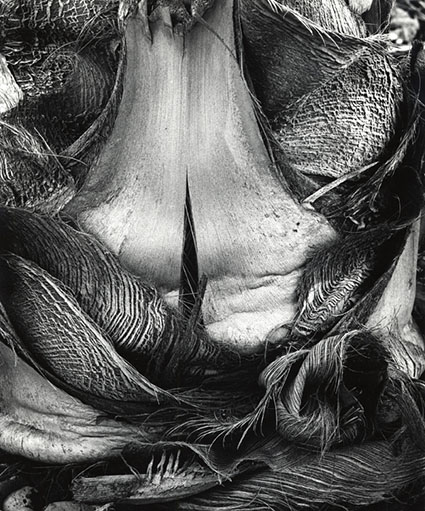
 

Sam Abell

Ansel Adams

Robert Adams

Richard Benson

Christopher Burkett

John Paul Caponigro

Paul Caponigro

Harry Callahan

Julia Margaret Cameron

Keith Carter

Edward Curtis

David DuChemin

Elliot Erwitt

Walker Evans

Rober Frank

Lee Friedlander 1 & 2

Adam Fuss

Emmet Gowin

Lois Greenfield

Gregory Heisler

Kenro Izu

Stephen Johnson

Michael Kenna

Sean Kernan

Josef Koudelka

Jay Maisel

Eric Meola

Joel Meyerowitz

Arthur Meyerson

Duane Michals

Richard Misrach

James Nachtwey

Arnold Newman

Olivia Parker

Irving Penn

John Pfahl

Eliot Porter

Chris Rainier

Sebastiao Salgado

John Sexton

Charles Sheeler

Aaron Siskind

Fredrick Sommer

Edward Steichen

Alfred Steiglitz

Paul Strand

Jock Sturges

Hiroshi Sugimoto

Joyce Tenneson

George Tice

Peter Turner

Jerry Uelsmann

Brett Weston

Edward Weston

Gary Winogrand

Huntington Witherill

Minor White


Sign up for Insights to find out when new content becomes available.

The Difference Between Painters’ and Photographers’ Color Wheels

ColorWheel_Apple_425

The photographers’ color wheel rendered by Apple.

ColorWheel_Itten_425

The painters’ color wheel painted by Johannes Itten.


In color theory, one of the primary uses of color wheels is to plot complementary colors.

Painters and photographers use this information to create neutral colors. Painters mix complementary colors to get more neutral hues. Photographers add complementary colors to remove color casts, making neutral colors appear more neutral.

But photographers and painters apply different complements. Photographers identify three primaries and complements; red and cyan, green and magenta, blue and yellow. Painters identify three primaries and complements; red and green, blue and orange, yellow and purple. Why do they use different complements? Painters have to address the impurities in the pigments they’re mixing.

Photographers deal with pure light.

From a practical standpoint, both types of artists learn to achieve the effects they want to achieve. From a conceptual or theoretical standpoint, the difference is significant – and they share the same theories but their application of those theories differs. Photographers and painters should talk to each other more.

Photographers can enrich their understanding of color if they become familiar with the longer richer history painters have had with color, and at the same time painters can refine their theories and produce stronger effects by using photographic complements.
Physically and biologically our eyes do specific things. By using maximum hue contrast, complementary colors in close proximity to one another create optical effects: they make each other look more intense; any lines between them becomes more pronounced, often producing a light line, which can appear to flash if the eye moves back and forth across it; if made very small (like scanned pixels or printed halftone dots) they average to a neutral color. Artists use these effects to make more powerful visual statements.

Optically photographic complements are correct. You can test and prove this yourself. To do this, take advantage of the retinal after images your eyes produce. Simply stare at a solid patch of color for more than twenty seconds and then shift your gaze to a neutral field of color, like a white wall. The color you’ll see will be the photographic complement. So, if you want to take maximum advantage of the optical effects generated by complementary colors, choose photographic complements.

Finally, color theory can be very useful. Artists frequently create consistent color structures (some call them color harmonies), much like the tonal structures or scales musicians. They often use color wheels to plot these relationships (not unlike a musician plots a circle of fifths to identify musical harmonies). They draw geometric figures inside a circle of color to identify regular intervals between the colors chosen; straight lines for pairs, triangles for trios, rectangles for quartets, etc. There’s no ideal structure. Different structures generate different effects, both optical and psychological – and it’s useful to know what those are. What matters most is that a color structure is created, rather than color chaos. The colors identified as complements define a color wheel. Once again, because of the impurities in pigments, painters distort their color wheels (expanding the oranges and reducing the cool blues) to help them identify which colors to mix to make neutral or more neutral colors, but the unintended consequence of doing this is that they plot color structures on a distorted color wheel. Their ideal theories are skewed by physical imperfections.

Long after his death, it was noted that pointillist painter Seurat, who started a whole school of painters who used broken bits of complementary colors rather than blended less intense colors, could have achieved even richer visual effects if he had adjusted his color choices. Viewers experience visual effects with their eyes. And the photographer’s color wheel is aligned with our eyes.


Learn more about Color Theory here.

Learn more in my digital printing and digital photography workshops.

7 Great Quotes By Photographer Pete Turner

 
Enjoy this collection of quotes by photographer Pete Turner.
“If photography has developed a special language it should be welcomed as an extension of our senses and seen for what it is – the first faulting steps of an infant medium towards maturity.” – Pete Turner
“It has been said a thousand times that photography is a universal language. To accept this notion is to ignore the fact that its meanings cannot be translated in anything other than a woolly and imprecise manner.” – Pete Turner
“What have I done wrong?” -he said later.” Nothing, I think. I am steadily surprised that there are so many photographers that reject manipulating reality, as if that was wrong. Change reality! If you don’t find it, invent it!” – Pete Turner
“Looking at photographs, like taking them, can be joyful, sensuous pleasure. Looking at photographs of quality can only increase that pleasure.” – Pete Turner
“Color takes my work into another dimension. It’s the way I see. I’ve always been drawn to the colors of nature, and nature is a wonderful teacher.” – Pete Turner
“Ultimately, simplicity is the goal – in every art, and achieving simplicity is one of the hardest things to do. Yet it’s easily the most essential.” – Pete Turner
“A photographers work is given shape and style by his personal vision. It is not simply technique, but the way he looks at life and the world around him.” – Pete Turner
Find out more about Pete Turner here.
Explore 12 Great Photographs By Great Photographers
Explore The Essential Collection Of Quotes By Photographers.
Explore The Essential Collection Of Documentaries On Photographers.

17 Great Quotes By Photographer David DuChemin

Istanbul, Turkey

Enjoy this collection of quotes by photographer David DuChemin.

“The cliché comes not in what you shoot but in how you shoot it.”  – David DuChemin

“Learning to see is not about having open eyes; it’s about having an open mind.” – David DuChemin

“The more curious we are the more creative we become.” – David DuChemin

“Creativity is about two things; the way we think, and the way we turn those thoughts into reality.” – David DuChemin

“It is we show put the humanity, the vision, and the poetry into our photographs.” – David DuChemin

“When we look at our photographs and find not the slightest reflection of ourselves, it is a good sign that our images have lost their souls.” – David DuChemin

“The idea of authenticity carries such value because we know how difficult it is to be fully ourselves.” – David DuChemin

“Anyone can take a picture of poverty; it’s easy to focus on the dirt and hurt of the poor. It’s much harder—and much more needful—to pry under that dirt and reveal the beauty and dignity of people that, but for their birth into a place and circumstance different from our own, are just like ourselves. I want my images to tell the story of those people and to move us beyond pity to justice and mercy.”  – David DuChemin

“A representational photograph says, ‘This is what Vienna looked like.’ An interpretational photograph goes one better and says, ‘This is what Vienna was like. This is how I felt about it.”  – David DuChemin

“‘What is it about?’ is not the same as ‘What happened?’” – David DuChemin

“It’s the difference between your wife’s passport photograph and the portraits you took when you got engaged. Both may have been created with similar technology, but what stands in that great gulf between them are the passion you have for your wife, the knowledge you have of her personality, and your willingness to use your craft, time, and energy to express that. One says, “She looks like this.” The other says, “This is who she is to me. It’s how I feel about her. See how amazing she is.” – David DuChemin

“Perfection is overrate, and not to be confused with mastery.” – David DuChemin

“Photographers, like few other kinds of artists I can imagine, have an insanely personal relationship with their gear.”  – David DuChemin

“Knowing failure is part of our process, and leads to new ideas, stronger work, and more honest questions, liberates us to peer, a little less frightened, into the unknown.”  – David DuChemin

“You yourself are unique–you have ways of seeing your world that are unlike those of anyone else–so find ways to more faithfully express that, and your style will emerge.” – David DuChemin 

“The real failure is to rob this world of the contribution only you can make, and to fail to make work that truly gives you that ‘this is what I was created to do’ feeling that has no equal.” – David DuChemin

“I  will never reach the end of this journey. I’ll never arrive at a point where others have nothing to teach me.” – David DuChemin

Find out more about David DuChemin here.

Read David DuChemin’s Q&A here.

Read David DuChemin’s Favorite Quotes here.

Preview his new online course The Compelling Frame now.

Photographer Charles Sheeler – American Precisionist – Video


“Charles Sheeler was a key figure in the American Precisionist Movement in the early 20th Century. He had careers as both a successful painter and as a photographer.” – Ted Forbes

Manhatta a short movie by Charles Sheeler and Paul Strand.
Explore 12 Great Photographs By Great Photographers
Explore The Essential Collection Of Quotes By Photographers.
Explore The Essential Collection Of Documentaries On Photographers.

12 Photographs Celebrated By Huntington Witherill

00107

Huntington Witherill’s Orchestrating Icons

Huntington Witherill celebrates twelve photographs by other photographers.

Road to Badwater, 1971

Al Weber, Road to Badwater, 1971

Al Weber’s “Road to Badwater, 1971” demonstrates the effectiveness and power of design simplicity in depicting the immense spaces that characterize Death Valley. The overall sense of atmosphere and distance are communicated through but a few bold blocks of uniform tonal value, each of which help to define the photograph’s unique character.

Pelargonium Blossums, Mill Valley, CA 1985

Don Worth, Pelargonium Blossoms, 1985

The visual strength of Don Worth’s “Pelargonium Blossoms, 1985” lies within the tension that exists between the intricate textures and patterns, together with a juxtaposition of accent color placed against a largely monochromatic field. Each time I look at this photograph I am drawn into its hypnotic spell.

Drainage Ditches in a Low Agricultural Field, Savannah River Nuc

Emmett Gowin

Emmett Gowin’s photographs from his series: “Changing the Earth” exhibit a remarkable juxtaposition of visual beauty in the midst of perceived destruction. It’s not that the subject matter he has chosen to photograph is so often thought of as being of a more or less unseemly nature. It is that he has presented this particular subject – in its perceived negativity – with such an abundance of visual beauty and grace that he seduces the viewer into an irreconcilable dichotomy.

US Highway Route 1, 1965

Henry Gilpin’s, US Highway Route 1, 1965

Clearly one of the most iconic images of the Big Sur Coastline, Henry Gilpin’s “US Highway Route 1, 1965” celebrates the wild and austere essence of the Big Sur Coast. The serpentine highway glowing white hot against the dark and foreboding shoreline cliffs projects a scene of exceptional strength and amplitude.

Untitled, No Date

Kim Weston

Kim Weston’s hand-painted photograph of ballerinas features a marvelous sense of movement and grace that is punctuated by the introduction of sparse color. The color, itself, seems to further abstract the image, thereby helping to focus the viewer’s attention on the dynamic and symbiotic relationship between the figures, themselves.

Center of Town After Blizzard, Woodstock, VT- 1940

Marion Post Wolcott, Blizzard, Woodstock, VT, 1940

Marion Post Wolcott’s “Blizzard, Woodstock, VT, 1940” portrays a quiet yet bitter cold winter evening. The glimmering street lights serve as an effective and warm counterpoint to what, otherwise, seems a penetratingly cold environment. This photograph makes me want to put on another coat!

Stairway #60, Los Angeles

Mark Wainer, Stairway #60, Los Angeles

Suggestive of an M.C. Escher drawing, Mark Wainer’s “Stairway #60, Los Angeles” evokes a whimsical maze of mystery and apprehension. Is the figure hoplessly trapped? Or, has he managed to find the hidden escape?

Windowsill Daydreaming, Rochester, New York, 1958

Minor White, Windowsill Daydreaming

Windowsill Daydreaming, by Minor White, is one of those quintessential photographs in which the light, itself, is the predominate subject. The seductive nature of the subject, in this case, is both highly mysterious, and positively alluring.

Kiva Ladder, San Ildefonse Pueblo, 1973

Morley Baer, Kiva Ladder, 1973

Morley Baer’s “Kiva Ladder, 1973” appears as a graphically rich visual Icon symbolizing the American Southwest and its native cultures. The immense power of graphic simplicity, achieved through the exquisite and economical use of simple line and texture, help to contribute to the photograph’s near universal appeal.

Nascent Flight

Paul Caponigro, Nascent Flight

The temptation to reach out and touch the surface of Paul Caponigro’s “Nascent Flight” is quite strong. The overall combination of line, texture, and impeccable detail that comprise this complex yet visually concise still life projects a near miraculous display of inherent strength in the presence of underlying fragility.

Iceberg Lake, Glacier National Park, Montana, 1978

Philip Hyde, Iceberg Lake

Philip Hyde’s “Iceberg Lake” demonstrates a marvelous sense of asymmetrical balance. While the ice forms seem randomly placed within the composition, the organization of forms within the overall frame are not only solidly connected, but also perfectly well balanced.

La Mesita, New Mexico, 1978

William Clift, La Mesita, New Mexico, 1978

William Clift’s “La Mesita, New Mexico, 1978” portrays the open desert with uncommon elegance and aplomb. There is undeniable magic in the light that Clift has captured, here. And taken together with an exquisite sense of detail and overall delicacy, I am compelled to step into the frame and go exploring!

Learn more about Huntington Witherill here.
View 12 Great Photographs By Huntington Witherill here.
Read our Quick Q&A here.
View video with Huntington Witherill here.
Read our conversation with Huntington Witherill.
View more Photographers Celebrate Photography here.