Master Photographer Ansel Adams In His Darkroom
These two videos offer an excellent view into Ansel Adams’ working methods.
View more on Ansel Adams here.
View The Essential Collection Of Documentaries on Photographers here.


These two videos offer an excellent view into Ansel Adams’ working methods.
View more on Ansel Adams here.
View The Essential Collection Of Documentaries on Photographers here.
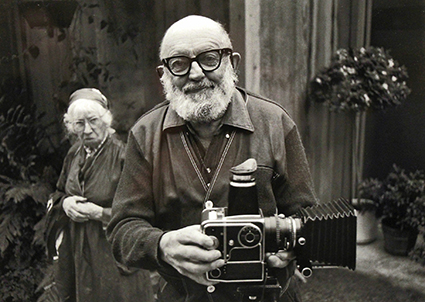
Ansel Adams and Imogene Cunningham by Alan Ross
Check your inboxes!
My newsletter collects great resources on photographer Ansel Adams.
Sign up here.
Ansel Adams offers sage advice on visualizing photographs.
View more on Ansel Adams here.
View The Essential Collection Of Documentaries on Photographers here.
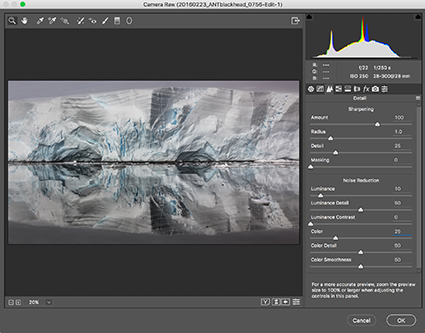
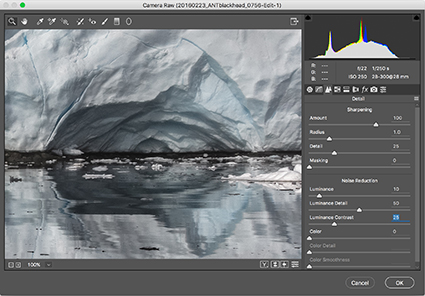
Adobe Camera Raw's Detail panel
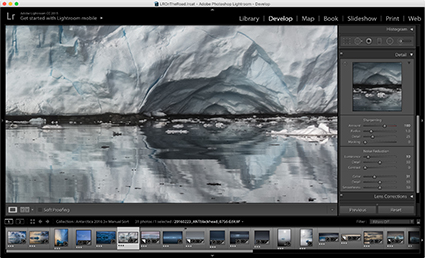
Optimal image sharpening is best done in three stages – capture (Do it during Raw conversion.), creative (Do it in Photoshop.), and output (Automate it.).
This article covers the first stage of sharpening – capture sharpening.
Capture sharpening benefits all images. Capture sharpening compensates for inherent deficiencies in optical and capture systems. All lenses and sensors have specific characteristics and deficiencies. They do not all have the same characteristics or deficiencies.
To speed your workflow, default settings for the best starting point for capture sharpening can be determined for all images created with the same lens/chip combination and saved for subsequent use. To optimally sharpen an image, you’ll need to modify these settings to factor in additional considerations – variances in noise (ISO, exposure duration, temperature), noise reduction settings, and the frequencies of detail (low/smooth to high/fine texture) in an image.
“OPTIC 2016 is four days of presentations, events, live demonstrations, portfolio reviews, gallery exhibitions, cocktail parties, sunset cruises and a Central Park photo expedition along with a giant two day long trade show. Please see each day for a complete schedule of the many activities that OPTIC offers that you can choose from, to customize your experience. The main stage on day one and day two will be live streamed. All lectures will be available to view at a later time, so you can relive OPTIC and not miss a single exciting presentation!”
I’ll be presenting two sessions …
1 Black & White Mastery – Sunday June 5 at 4:30
2 Two Generations Of Master Artists – Monday June 6 at 2 pm
In this second session, I’ll be sharing the stage with my father.
Find out more here!
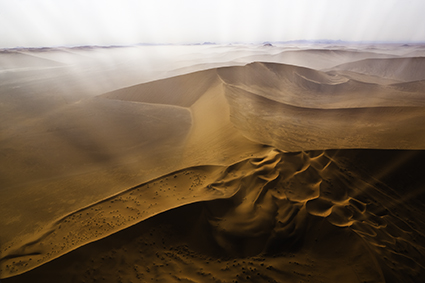
No sharpening.
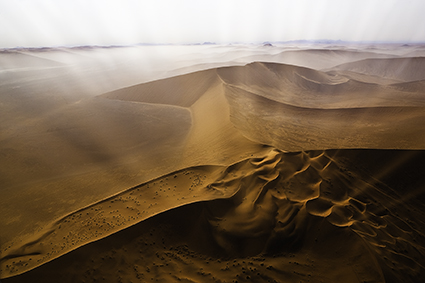
Double pass Unsharp Mask sharpening.
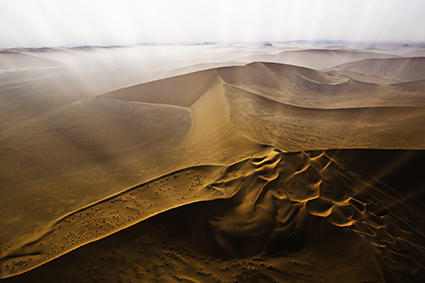
Hybrid Unsharp Mask and High Pass sharpening.
Different sharpening techniques make the world look different. A world of difference can be seen between the thin hard line of Unsharp Mask and the broad feathered line of High Pass Sharpening.
Can you choose a combination of both? Yes you can! You can choose the texture of one, the halo of another, and the line of yet another, applying them either globally or selectively. You can customize the look and feel of detail in any image or image area with astonishing precision and flexibility.
“Marc Silber’s Advancing Your Photography Show is in Monterey, California with former “Artist of the Year” photographer Huntington Witherill to bring you photography composition tips. Witherill’s unique photographic style will be sure to spark your imagination!”
Read my conversation with Huntington Witherill.
View more on Huntington Witherill here.
Visit Huntington Witherill’s website here.
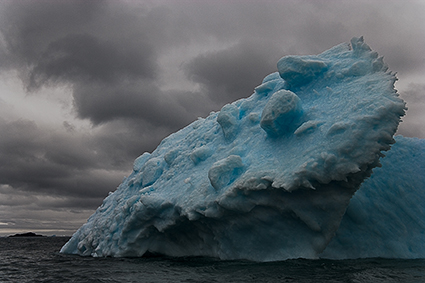
A low High Pass filter setting.
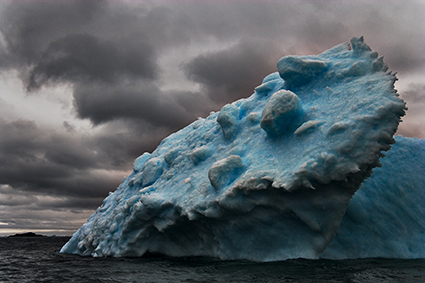
A high High Pass filter setting.
There are three methods of sharpening in Photoshop that we should all be aware of – luminance, edge, and High Pass sharpening. In this order, the three methods become progressively more complex and go to greater lengths to reduce the accentuation of noise.
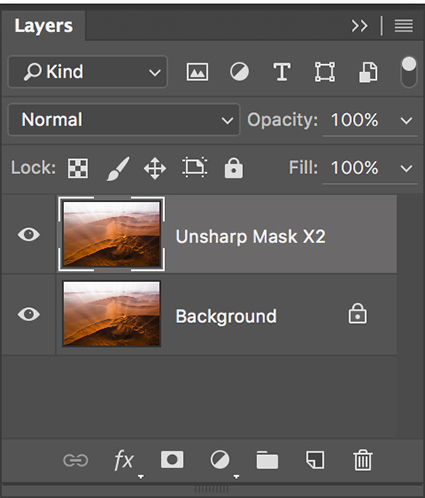
To minimize the accentuation of noise, luminance sharpening requires that the filter Unsharp Mask’s Threshold setting be set precisely. When this is not enough, edge sharpening adds a mask that targets the contours of an image, allowing more aggressive sharpening with fewer side effects. Like, edge sharpening, High Pass sharpening (named after the filter used to produce the effect) targets contours in an image, but it does so without the need for a mask; a mask which is more complex to produce. Unlike edge sharpening, the contour accentuation it produces is soft, feathered, and wide. The effect is substantially different and can be used for many creative effects. High Pass sharpening is very similar to the effects of ACR and Lightroom’s Clarity slider, but it offers more control and more varied effects.
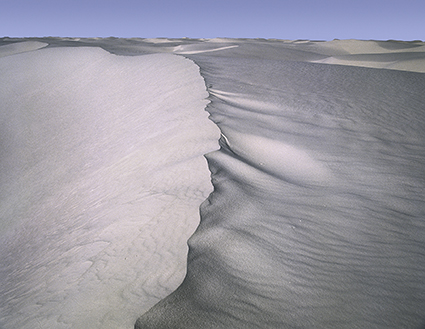
Precise sharpening can improve almost any image. It helps to know when to apply it, what type of sharpening to apply, how to apply it, and where to apply it.
Forget the filters Sharpen, Sharpen More, and Sharpen Edges. They’re just default settings of Unsharp Mask. Even Smart Sharpen offers few advantages over Unsharp Mask; it’s particularly useful for compensating for trace, but not substantial, amounts of motion blur. My advice? Start with the classic and master it.
Why is a filter that makes images appear sharper called Unsharp Mask? In analog chemical photography, unsharp masks are made with out-of-focus negatives that are registered with an original positive image. During exposure, the blurring adds contrast around contours, making images appear sharper. Digital unsharp mask works the same way, it uses blurring algorithms to add contrast to contours, again making images appear sharper.
What are the ideal settings for Photoshop’s Unsharp Mask filter? There are no ideal settings that will accommodate all images – or image-makers. Settings will be influenced by resolution, ISO, subject, and practitioner. As creative sharpening is primarily an aesthetic decision, individuals are likely to prefer different amounts and types of image sharpness. When it comes to the effects Unsharp Mask generates, there is a general range of believability most viewers share, but whether you play it safe or push the envelope is entirely up to you. You can craft your own sharpening style. To do this, you have to know how the tool works and what to look for.
What are the controls Unsharp Mask offers? Unsharp Mask offers only three controls – Amount, Radius, and Threshold.
What do they do? Amount controls contrast; a higher setting will create a brighter halo, darker line, and contrastier texture. Radius controls how thick halos and lines get. Threshold suppresses the effect in adjacent pixels, base on their relative luminosity; with a very low setting only adjacent pixels that are very close in color will be affected; with a very high setting, many more color values will be affected.
Regularly $450 – it’s now 89% off.
You save $400.
This offer ends May 24.
Every year, In Focus assembles valuable landscape photograph training videos and ebooks from leading experts into one fabulous bundle offered for a limited time only at a very special price.
Improve your craft and bring your creative artistic vision to new heights with eBooks from Ian Plant
Accelerate your Photography with eBooks from Anne McKinnell
Histogram Exposed Course by Jay & Varina Patel
Adobe Camera RAW Processing tutorials by Joshua Cripps
Includes post processing for Histogram Exposed Video Course case studies
Includes post processing for Essential Filters Course case studies
Focus Stacking/Blending Made Easy by Mark Metternich
10 Pro Tips: To Take Your Photos to the Next Level by Ryan Dyar
Start-To-Finish Series: Grand Tetons Winter by Chip Phillips
The Complete Photo Workflow: Image Organization & Backup Solutions by Colby Brown
Bonus Offers
In addition, there are many free bonus offers – including Colin Smith’s DJI Phantom 3 – Quick Start Kit.
Plus you can enter to win additional Free Prizes.