What Printing Can Do For You
May 23, 2013 | Leave a Comment |
Making prints does many things for you. To make a print you have to answer many questions. You learn a lot when you make a print. Realizing your vision in print means more than just making it real, it also means you’ll make many realizations about your vision along the way.
The new opportunities making prints presents challenge you to clarify and declare your intentions. What do you want to accomplish with your images? If your goal is to make an historic record you may be content with making a few, perhaps only one, possibly quite small, highly durable print that is stored and preserved very carefully for the future appreciation of only a few. On the other hand, if your goal is to expose the largest number of people possible to your imagery, you may want to consider creating an international billboard campaign now. How do you want people to interact with your images? Do you want to present your images as casual, everyday, highly accessible, utilitarian artifacts or scarce, highly refined, collectibles? The way you choose to print (or not to print) your images will get people to look at, interact with, share, and value them in entirely different ways. When you choose one thing you often have to let another go. If you choose many things simultaneously take steps to make the comparisons meaningful or you run the risk of creating confusing mixed messages. The things you make your images into will guide the viewer on a reenactment of your journey of discovery – and part of that journey of discovery lies in making and appreciating prints.
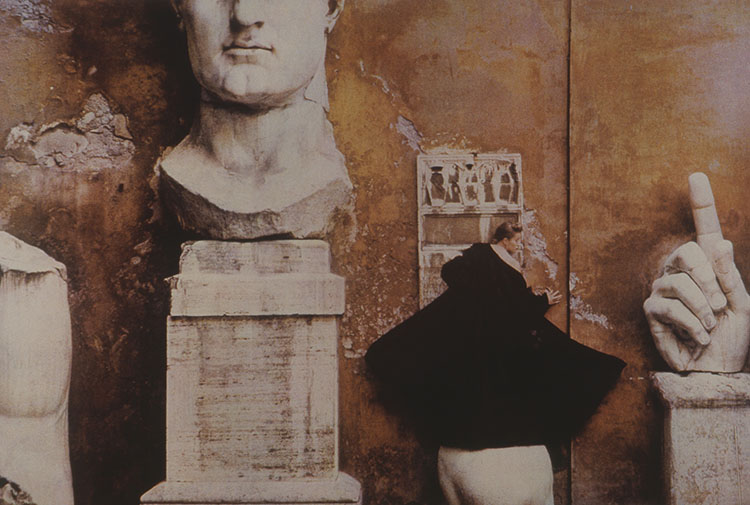
Printing your images also challenges you to clarify and declare your sensibilities. How do you prefer your images to look? What is the appropriate scale for an image – miniature, life-sized, or larger-than-life? Scale changes the physical and psychological reactions people have to images. They draw close to small prints and sometimes hold them or even carry them with them wherever they go; large prints immerse people in images that may fill their entire visual field until they pull back to view them from a distance. You can change a space or even create new space with prints. How will materials enhance your visual statements? Synthetic or organic? Smooth or textured? Uniform or irregular? Sharp or soft? Reflective or non-reflective? White, cream, or another colored base? All of these factors will have not just a technical impact on detail and color in your image but also on the psychological reactions their associations produce within the viewer. Inevitably, when making a print some things are gained and others are sacrificed. The sacrifices you are willing to make offer an opportunity to clarify your priorities. What do you want people to appreciate most about your images? Let this question be your guide as you first explore possibilities and later make decisions about how to present your images.
To answer the many questions making prints raises you have to pay attention to many details. When you make prints you are called to carefully consider your images and what you want to say and do with them. Prints also offer invitations for others to carefully consider not only your images but also your vision. Once you’ve made prints, you’ll not only understand your vision better, by extension you’ll understand other people’s vision better too.
Sure you can let others make prints for you. But you’ll be missing out on the opportunities they present to further clarify and resolve your vision. Even if you do it, really do it, just once, you’ll learn a lot.
Find out about my prints here.
Learn more in my digital photography and digital printing workshops.
What Printing Can Do For Your Images
May 23, 2013 | Leave a Comment |
Making prints does many things for your images.
Prints make your images tangible. They can be displayed and stored. Prints take up physical space and why would you let something do that if it wasn’t important? Because they occupy space, prints are rarer as well as less accessible. Of all the images you look at in a day, how many of them are prints? No one makes millions of prints. No one carries thousands of prints in their pockets or cell phones. Because they’re physical, prints can be bought and sold. It’s harder to command a higher price for intangible things and harder still for them to hold their value.
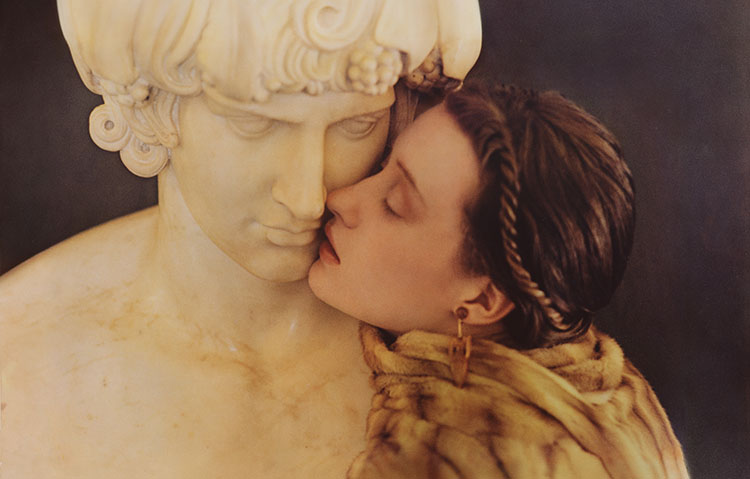
Prints enhance your images with material qualities and associations. Synthetic or organic? Smooth or textured? Uniform or irregular? Reflective or non-reflective? White, cream, or another colored base? Your choices have an impact on the technical quality in your images (detail, gradation, color) and on the associative reactions they produce within the viewer (it feels like or reminds me of …).
Prints define the scale of your images. What is the appropriate scale for an image – miniature, life-sized, or larger-than-life? Scale changes the physical and psychological reactions people have to images. They draw close to small prints and sometimes hold them or even carry them with them wherever they go; large prints immerse people in images that may fill their entire visual field until they pull back to view them from a distance. You can change a space or even create new space with prints.
Printing your images may make them durable. Historically, it’s the images that were printed that survived. New technology disaster stories aside, there’s never been a precedent to help us determine how long digital files will last if properly cared for. In theory, they should never degrade and can be copied indefinitely without reducing their quality. Whether people will perform the required maintenance to ensure this is the real question. One day in the future, media and format migration may become automated, but it’s not now. Though they can deteriorate on their own, if properly produced and stored, prints need little or no additional care and no know how to retrieve and use them.
Prints enable images to be viewed in different ways. Traditionally, photographs needed to be printed to be viewed. (Slides were a brief but possible exception. Or were they really tiny prints?) Today, that’s no longer true. But we do look at things that are printed differently than images that are not.
Do you look more frequently at images that have been printed or images that haven’t? Prints persist. They remain in our environment consistently and require little or no conscious effort for us to consider and reconsider them. If you’re like most people, only the most important images to you have been printed and only a few of those are displayed at one time or for long periods of time. Making and using prints can become a part of the decision making process to focus more attention on a select few images. When images are printed they are no longer lost amid too many other less important images. When printed your images become more significant.
In short, printing your images can work wonders for them.
Find out about my prints here.
Learn more in my digital photography and digital printing workshops.
Terry White’s Top 5 New Features In Photoshop CC
May 22, 2013 | Leave a Comment |
Terry White shares his favorite five new features in Photoshop CC.
View more Photoshop videos here.
Learn more in my digital photography and digital printing workshops.
Russell Brown’s Top 5 New Features in Photoshop CC
May 21, 2013 | Leave a Comment |
Russell Brown demonstrates his favorite five new features in Photoshop CC.
View more Photoshop videos here.
Learn more in my digital photography and digital printing workshops.
Julieanne Kost’s Top 5 New Features in Photoshop CC
May 20, 2013 | Leave a Comment |
Julianne Kost details her favorite five new features in Photoshop CC.
View more Photoshop videos here.
Learn more in my digital photography and digital printing workshops.
New eBook – Atmospheric FX
May 16, 2013 | Leave a Comment |
My ebook Atmospheric FX will help you take control of the weather in your images. Weather can alter the mood of any image. Sometimes weather makes the image. Photographers learn many ways to make the most of the weather. Now, you no longer have to wait for the perfect weather, you can create it using Adobe Photoshop. Learn to do this and you will dramatically expand your creative possibilities. Add an accent or transform an entire image. The choice is yours. Think of the possibilities!
Table of Contents
1 Skies 2 Atmospheric Perspective 3 The Language Of Night 4 Atmosphere 5 Smoke 6 Snow / Rain 7 Illumination 8 Rays Of Light 9 Stars 10 Lightning 11 Rainbows 12 Reflectiion 13 Shadows 136 pages fully illustrated. Updated from my book Adobe Photoshop Master Class. Compatible with all versions of Adobe Photoshop. $9.99 Buy the PDF here Download a free preview here.38 Quotes On Abstraction
May 15, 2013 | Leave a Comment |
Here’s a collection of my favorite quotes on abstraction.
“Abstraction forces you to reach the highest level of the basics.” – Alan Soffer
“Abstraction is a mental process we use when trying to discern what is essential or relevant to a problem; it does not require a belief in abstract entities.” – Tom G. Palmer
“Abstract literally means to draw from or separate. In this sense every artist is abstract… a realistic or non-objective approach makes no difference. The result is what counts.” – Richard Diebenkorn
“To abstract is to draw out the essence of a matter. To abstract in art is to separate certain fundamentals from irrelevant material which surrounds them.” – Ben Shahn
“One of the most striking of abstract art’s appearances is her nakedness, an art stripped bare.” – Robert Motherwell
“It was only since the turn of the century that one returned to the immense role that abstraction plays in the human mind by its power of concentration upon absolute essentials.” – S. Giedion
“I understand abstract art as an attempt to feed imagination with a world built through the basic sensations of the eyes.” – Jean Helion
“Painting, like music, has nothing to do with the reproduction of nature, nor interpretation of intellectual meanings. Whoever is able to feel the beauty of colors and forms has understood non-objective painting.” – Hilla Rebay
“What does that represent? There was never any question in plastic art, in poetry, in music, of representing anything. It is a matter of making something beautiful, moving, or dramatic – this is by no means the same thing.” – Fernand Leger
“An abstract painting is exactly what it purports to be, whether it be paint splatters or stripes, while a representational painting has to give the illusion of the paint being air, or flesh, or flowers… therefore abstract paintings are rather concrete while representational paintings are rather abstract.” – David Leffel
“The abstract painter considers the realist painter to be the abstract painter and himself the realist because he deals realistically with the paint and does not try to transform it into something that it is not.” – Jimmy Leuders
“Abstract art has helped us to experience the emotional power inherent in pure form.” – Anton Ehrenzweig
“I expect of abstraction as much as what imagery does for me… to carry meaning.” – Kay WalkingStick
“The goal of abstract art is to communicate the intangible, that which eludes the photograph and normal seeing.” – Curtis Verdun
Less Is More
May 14, 2013 | Leave a Comment |
Condensation II, Rockland, Maine, 2001
Were it not for the massive stones of the breakwater that cuts into the ocean for fully one mile before ending at a lighthouse that guards the entrance to the harbor of Rockland, Maine, you’d feel like you were walking on water as you make your way across it. At sunrise and sunset, you’re surrounded on all sides by aqueous color, unless there’s fog and then you can hardly see. Then, as you walk the stones out into the sea, there comes a point when you can’t see where you’ve come from or where you’re going to. It’s disorienting – and magical. You could be anywhere. You could be nowhere. You could end up in either place.
Sometimes the less you can see, the more interesting it becomes. Then, imagination takes over. It’s clinically proven that when people are subjected to minimal sensory input (such as floating in an isolation chamber) for long periods of time, they begin hallucinating – the inside comes out. Creatives often ask how they can leave room for the viewer, encouraging interactivity and participation, rather than spelling it all out, breeding passivity and detachment, knowing that doing so often creates more powerful and personal experiences for them. There is such a thing as ‘too much’. You want to give people enough to enchant them, but not enough to dispel the magic. This leads to the question, “How much room can you leave for the viewer without losing your message?”
Simplicity works for so many reasons. With fewer elements in play attention is concentrated on what remains. There’s more is riding on what’s left. There are no distractions. Ordinarily, this leaves fewer doubts as to what to focus on. Here, in this image, as there is only vapor and water and the suggestion of a horizon, what is taken for granted and often goes unseen comes forward – light and how it fills the air. Strip things down far enough and you can see what ordinarily is invisible.
This image takes my impulse to strip things down to their essentials to its extreme. It presents an experience of space and light, simultaneously empty and full, that is profoundly simple but not simplistic. It asks more questions than it answers. It takes questions like, “How much can you do with how little?” and “How distilled can you make an experience?” and goes further to “How little does it take to make a representational image?” and “What are the foundations for our understanding of reality?” A chain reaction is started and more questions arise.
In so many ways, not just because of the frames they put on the world, images are always leaving things out. They work best when they do this with purpose. They work best when they leave only the essentials and leave out the rest. Sometimes, more can be said with less. Sometimes some things can only be said with less.
Questions
When is more less?
When is less more?
How can you do the most with the least?
When does simple become simplistic?
Find out more about this image here.
View more related images here.
Read more The Stories Behind The Images here.
Satellite Timelapses Powered By Google
May 13, 2013 | Leave a Comment |
See and learn more about these awesome timelapse videos here.
“Spacecraft and telescopes are not built by people interested in what’s going on at home. Rockets fly in one direction: up. Telescopes point in one direction: out. Of all the cosmic bodies studied in the long history of astronomy and space travel, the one that got the least attention was the one that ought to matter most to us—Earth.
That changed when NASA created the Landsat program, a series of satellites that would perpetually orbit our planet, looking not out but down. Surveillance spacecraft had done that before, of course, but they paid attention only to military or tactical sites. Landsat was a notable exception, built not for spycraft but for public monitoring of how the human species was altering the surface of the planet. Two generations, eight satellites and millions of pictures later, the space agency, along with the U.S. Geological Survey (USGS), has accumulated a stunning catalog of images that, when riffled through and stitched together, create a high-definition slide show of our rapidly changing Earth. TIME is proud to host the public unveiling of these images from orbit, which for the first time date all the way back to 1984.
It took the folks at Google to upgrade these choppy visual sequences from crude flip-book quality to true video footage. With the help of massive amounts of computer muscle, they have scrubbed away cloud cover, filled in missing pixels, digitally stitched puzzle-piece pictures together, until the growing, thriving, sometimes dying planet is revealed in all its dynamic churn. The images are striking not just because of their vast sweep of geography and time but also because of their staggering detail. Consider: a standard TV image uses about one-third of a million pixels per frame, while a high-definition image uses 2 million. The Landsat images, by contrast, weigh in at 1.8 trillion pixels per frame, the equivalent of 900,000 high-def TVs assembled into a single mosaic.
These Timelapse pictures tell the pretty and not-so-pretty story of a finite planet and how its residents are treating it — razing even as we build, destroying even as we preserve. It takes a certain amount of courage to look at the videos, but once you start, it’s impossible to look away.”
How To Get Started With Adobe Creative Cloud
May 10, 2013 | 1 Comment |
Terry White demonstrates how to get started with Adobe Creative Cloud outlining 10 Things Beginners Want To Know How To Do.
Find out about the latest Adobe Photoshop CC features here.
keep looking »
Subscribe
Get the RSS Feed-
- Adventures
- Alumni
- Antarctica
- Antarctica 2009
- Apps
- Audio
- Books
- Business
- Calendar
- Canon Cameras
- Causes
- Cell Phone
- climate change
- Collected
- Color
- Composition
- Contests
- Conversations
- Creativity
- Destination
- Disclosure
- Discount
- Drawing
- DVDs
- eBooks
- Editing
- Environment
- Epson Print Academy
- Equipment
- Event
- Exercises
- Exhibit
- Experiment
- Exposure
- Green Actions
- Greenland
- Guest Blog
- Huffington Post
- iceland
- Images
- Influences
- Inspiration
- Interviewed
- iPad
- iPhone
- Lecture
- Lighting
- Lightroom
- Magazine
- Map
- Masterworks In My Collection
- Media
- Meditation
- Multimedia
- Namibia
- News
- Optical Illusions
- Packing
- People
- Photographer's Favorite Quotes
- Photographers
- Photographers – Q&A
- Photographers On Photography
- Photographers Video Conversation
- photography
- Photoshop
- Postcards
- Printing
- Published
- Q&A
- Quotes
- R/Evolution
- Radio
- Reading
- Requests
- Review
- Reviewing
- Science
- Screensaver
- Sculpture
- Seminar
- Sharpening
- Slideshow
- Social Causes
- Social Networks
- Software
- Special Guest
- Special Offer
- Statements
- Storytelling
- Technique
- Technology
- The Making Of The Print
- The Stories Behind The Images
- Travel
- Uncategorized
- Video
- Video – Artists
- Video – Creativity
- Video – Lightroom
- Video – Photographers
- Video – Photography
- Video – Photoshop
- Video – Quick Tips
- Website
- Winners Of The Day
- Workshop Giveaways
- Workshops
- Writing
- X-Rite i1Photo Pro
Archives
-
- May 2013
- April 2013
- March 2013
- February 2013
- January 2013
- December 2012
- November 2012
- October 2012
- September 2012
- August 2012
- July 2012
- June 2012
- May 2012
- April 2012
- March 2012
- February 2012
- January 2012
- December 2011
- November 2011
- October 2011
- September 2011
- August 2011
- July 2011
- June 2011
- May 2011
- April 2011
- March 2011
- February 2011
- January 2011
- December 2010
- November 2010
- October 2010
- September 2010
- August 2010
- July 2010
- June 2010
- May 2010
- April 2010
- March 2010
- February 2010
- January 2010
- December 2009
- November 2009
- October 2009
- September 2009
- August 2009
- July 2009
- June 2009
- May 2009
- April 2009
- March 2009
- February 2009
- January 2009
- December 2008
- November 2008
- October 2008
- September 2008
- August 2008
- July 2008
- June 2008
- May 2008
- April 2008
- March 2008
- February 2008
- December 2007
- September 2007
- April 2007
- March 2007
- February 2007
- December 2006
- November 2006
- October 2006
- August 2006
Categories
Blogroll
Topics & Friends
WP Cumulus Flash tag cloud by Roy Tanck requires Flash Player 9 or better.