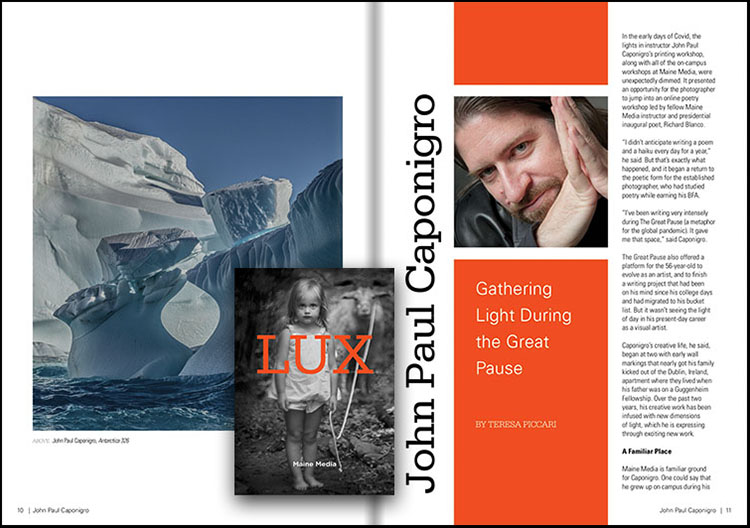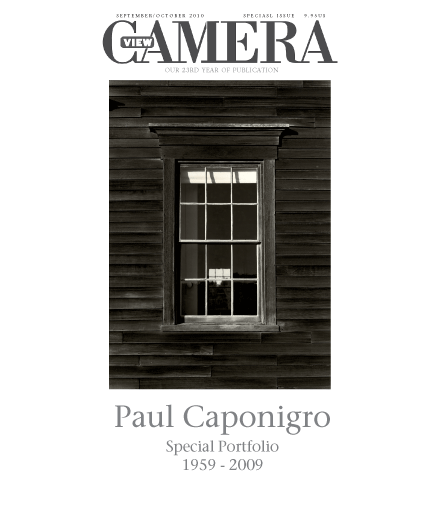
The latest issue of View Camera Magazine features my father, Paul Caponigro with a special portfolio of unpublished work from 1959-2009.

64 pages of images with inspiring and insightful text.

“The eminent designer Eleanor Morris Caponigro has established a pace and rhythm here that allows each picture to breathe.  See how each refers to the one before it and sets up the next. A record of an amazing life – an astonishing achievement – climbs to elusive harmonious heights. ” – Michael Moore

Find more at View Camera

Read our father son conversation

Read over 40 conversations with photographers

noise-capture

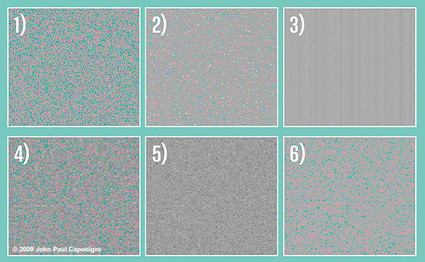
Noise comes in three types or patterns:
1) Random noise 2) Fixed-pattern noise 3) Banding noise

Noise often has two components—brightness and color:
4) Image noise 5) Luminance noise 6) Chrominance noise

Knowing the type and kind of noise produced will help guide you to solutions to reduce it. There are three types of noise: random noise, fixed-pattern noise and banding noise.

Random noise appears as both luminance (light and dark) and chrominance (hue/saturation) variations not native to an image, but produced by the electrical operation of a capture device. The electrical signal produced in response to photons is commingled with electrical variations in the operation of the capture device. Random noise patterns always change, even if exposure conditions are identical. Random noise is most sensitive to ISO setting. Again, digital cameras have one native ISO setting; higher ISO settings artificially boost the signal produced by the sensor and the noise accompanying it. The results? You get a brighter picture from less light and exaggerated noise. Since the pattern is random, it’s challenging to separate the noise from the image, especially texture, and even the best software used to reduce it through blurring may compromise image sharpness; how much depends on the level of reduction.

Fixed-pattern noise (“hot pixels”) is a consistent pattern specific to an individual sensor. Fixed-pattern noise becomes more pronounced with longer exposures. Higher temperatures also intensify it. Since the pattern is consistent, it easily can be mapped and reduced or eliminated.

Banding noise is introduced when the camera reads the data produced by the sensor; it’s camera-dependent. Banding noise is most visible at high ISOs, in shadows and when an image has been dramatically brightened. This type of noise is obvious and objectionable; the regular row and column patterns from the sensor quickly call attention to the presence of banding noise, and it’s challenging to reduce without severely compromising image sharpness …

Read the rest of the article in the current issue of Digital Photo Pro.

Learn more with my free Lessons.

Learn even more in my Workshops.

Combination

July 20, 2009 | Leave a Comment

You can create synergy between existing elements in your images and generate something new. How? Takes these steps.

Step one. Identify all the elements in your best images.
Step two. List all the possible combinations.
Step Three. Put what you’ve discovered into words.
Step four. Select the most promising combinations to pursue.
Step five. Generate a lot of variations on a single combination before committing to a final solution.
Step six. Execute.

This is an extreme distillation of my article Combination, now in the current issue of AfterCapture magazine.

Read more in my Creativity ebooks.

Learn more in my workshops.

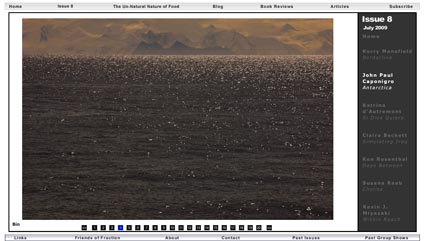
The latest issue of Fraction, an online photographic magazine features a preview of my new work from Antarctica.
See it here.


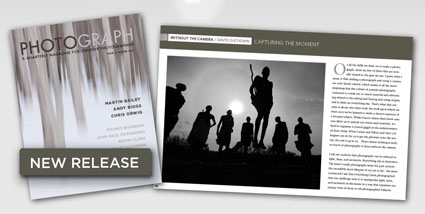
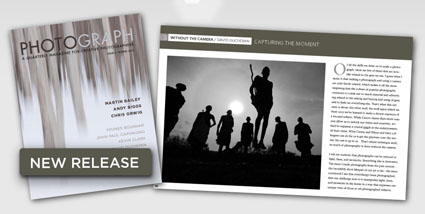
Here’s an excerpt from my column in the current issue of Digital Photo Pro.

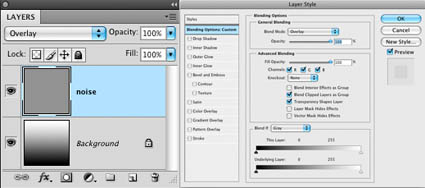
“When adding noise to digital files, keep noise separate from the image so you can control both independently of one another. This way you’ve got extraordinary control and flexibility. When noise is placed on its own layer you can eliminate or change it at any time in the future, reduce its opacity, localize it, desaturate it, target it into specific channels, move it, scale it, blur it and much more …”

Read more in the current issue of Digital Photo Pro.
Learn out more in my digital printing workshops.

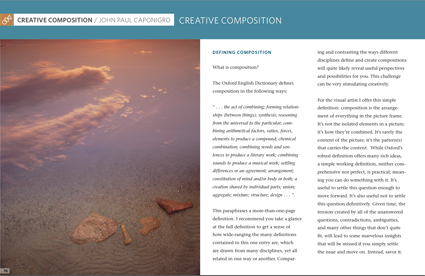
“How do you define something? One classic strategy is to let the dictionary define it for you. The Oxford English Dictionary defines composition in the following ways …

… the act of combining; forming relationships (between things); synthesis; reasoning from the universal to the particular; combining arithmetical factors, ratios, forces, elements to produce a compound; chemical combination; combining words and sentences to produce a literary work; combining sounds to produce a musical work; settling differences or an agreement; arrangement; constitution of mind and/or body or both; a creation shared by individual parts; union; aggregate; mixture; structure; design …

This paraphrases a more than one page definition. Reproducing the full version would be tedious. But I recommend you take a glance at the full definition to get a sense of how wide ranging the many definitions contained in this one entry are, which are used by many disciplines yet still related.

For the visual artist we could settle on a working definition, a simple statement that could be useful. Composition is the act of combining graphic elements to create a visual structure or it’s the product generated by this act. That suffices. That’s useful. But, while it’s useful to settle this, it would also be useful not to settle this issue definitively. The tension set up by continuing to consider all of the ambiguities, contradictions, connections, and unanswered questions will lead to some marvelous insights. For this very reason, I recommend you settle on your own working definition. And then continue to refine it. Because, rather than settling it definitively, by continuing to work with the question you’ll benefit even more …”

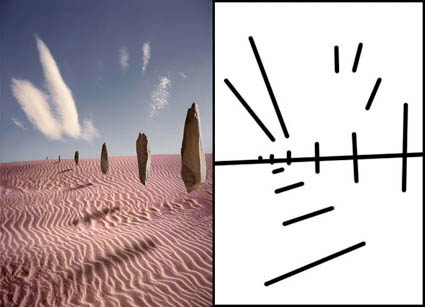
“You can see the fundamental structures present and visual dynamics at work in your images by reducing the wealth of information found in photographs. You can use Photoshop to do this in countless ways. Here are a few …”

Read more on Luminous Landscape. Click here.

Learn more about composition in my field workshops.

6/12-15 – Along the Waterline

8/9-15 – Iceland

10/16-19 – Fall Foliage

Variations

May 5, 2009 | Leave a Comment

Here’s an excerpt from my article in the current issue of After Capture magazine.

“Once you’ve identified the core concerns, strengths, and weaknesses a body of work your path becomes clearer. Stick to your strong points; repeat them. Eliminate or minimize weaknesses. Introduce small variations of less essential items to add life, complexity, and nuances to the work. Enrich text with subtext. Make a list of possible variations upon the elements that you’ve identified. Consider, different points of view and different combinations of elements. Keep adding to your list as time goes on. It’s likely you’ll generate many more ideas than you can accomplish in a short time. With these options in mind you’ll never run out of ideas to pursue. Pursue only the very best ideas; let the lesser ideas pass you by. How do you evaluate new ideas? Ask yourself some questions. How much repetition leads to saturation (adding more information without adding anything new)? How much variation can you support without losing track of the essential idea and starting a new one? Does including a variation reinforce or distract from the entire body of work and its theme? If it reinforces it, include it. If it distracts from it, set it aside for another use. Quite often these images can start new bodies of work. They can even serve as bridges between related bodies of work. Engaging this process consciously increases the likelihood that you will produce the more significant results both now and in the future. You’ll know what to move forward on and when to move forward. You’ll know what to defer and when to defer it so you don’t get sidetracked …”

Find my PDFs on Creativity here.

Learn these and other core concepts in my workshops.

Should you limit your editions? It depends. It depends on you. It depends on your level of productivity. It depends on your age. It depends on the kind of work you produce. It depends on the market you’re targeting. It depends on your representatives and how long you expect to be working with them. It depends on how quickly you’d like to see results. It depends on many things.

There’s no clear consensus or set of practices on whether and how you should limit your editions. Ultimately, it’s a personal choice. Make it an informed one. Think long and hard about it. Then act. Undecided? Wait. Keep your editions open. You can always limit later, when you develop a clear desire or identify a clear need to do so.

An edition structure is considered part of the terms of sale. Honor it. If you limit your editions, don’t widen the edition number after initial sales. You may even further limit an edition after it’s issued but while this would increase the value of previous sales it is rarely done, largely because of the complexity of accurate labeling and record keeping. You can adopt different edition structures for different images or at different points in your career; this makes describing edition structures more complex and may confuse consumers leading to loss of sales. You can always raise prices after issuing an edition; how quickly and how much is unclear as it’s determined by increasing demand for an artist’s work; but it’s hoped for by artist, dealer, and collector alike.

The bottom line is that whatever you do, do it with an eye to protecting and increasing the value of your collectors’ purchases. If you do this, the value and market for your work will increase.

There are many pros to limiting editions. It quickly escalates price. It generates broad-based interest in an artist’s entire body of work, directing attention away from top sellers to other works and to new works. It limits the amount of time spent producing the same image, directing the attention of the artist and their representatives alike to the production of new work. (More prolific artist’s benefit more from limiting their editions than less prolific ones.) It appeals to customers who will only buy art in limited editions.

There are many cons to limiting editions. It limits the audience who may appreciate an image. It prevents an artist from enjoying sales of an image at escalated prices as their career matures. (These benefits are enjoyed only on the secondary market. Though higher secondary market prices may help escalate the value of new work.) It prevents the improvement of print quality as an artist’s vision matures or as technology advances. (This can include producing prints with greater longevity or items that can hold their value for a longer time.) It restricts the artist’s ability to gift or trade their work, perhaps to a colleague or a significant collection. For better and for worse, limiting editions limits future options.

Read more in the current issue of Photoshop User magazine.
Learn more in my seminars.
Learn more in my workshops.

HDR Aesthetics

March 18, 2009 | 1 Comment

HDR imagery is expanding today’s photographic aesthetics. Identifying the characteristics of contemporary HDR images will help classicists and pioneers alike. The basic ingredients are desirable for both sensibilities, but in varying combinations and to different degrees. As with solving any problem, it’s easier if you break it down into it’s component pieces and then learn what each one does and how they interact with one another. First know what to look for. Second, know what a tool can do. Third, know how to apply a tool. Once you’ve done this, you’ll be well along the way to crafting a unique style that’s all your own.

Pronounced Shadow and Highlight Detail
Accentuated Edge Contrast
Accentuated Texture
Increased Noise
Smoothed Texture
Saturation Distortions

Read more in the current issue of Digital Photo Pro.

Learn these and other techniques in my workshops.

LDR

Half HDR

HDR Simulated

HDR Simulated With Photomatix

The Art of Arranging

September 17, 2008 | 1 Comment

Proximity and sequencing matter. The first sequence suggests an approaching storm, while the second suggests clearing skies.

How you present your work may be almost as important as what work you present. It’s the art of arranging. And it is an art, which involves specific techniques that can be learned. What are some of the guiding principles involved? Here are a few.

Sequence matters. Start strong. Finish strong. Make getting there interesting. Whether it’s a symphony, a novel, or an exhibit. It’s good advice for arranging any creative product.

To sequence a project, you can use the metaphor of building a fence. The strongest pieces can be thought of as posts. The less strong pieces can be thought of as rails. You want to start and end with very strongest pieces to create a strong structure. You want to periodically reinforce runs of less strong units with one or more stronger units. You don’t want long runs of rails without posts or the structure may fail. A fence made only of posts becomes something else entirely, a wall with no variation or grace. The number of strong pieces you include determines how long a fence will be, though the number of other images you include may modify length somewhat …

What tips do you have for sequencing? How have you used this potential for your work? Comment here!

Check out the rest of this article in my column Illuminating Creativity in this month’s AfterCapture magazine.
Check out AfterCapture.com here.
Find 6 related PDFs here.
Learn these and other techniques in my Fine Digital Print Expert workshop here.

Subscribe

Get the RSS Feed  

Subscribe by Email


    Categories

  • Archives

  • Blogroll

    Topics & Friends