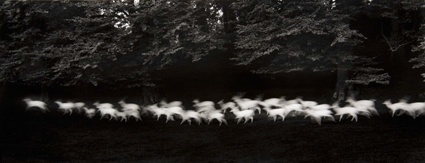
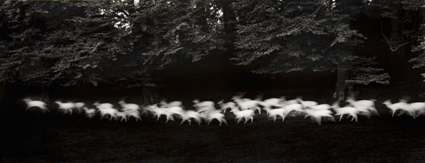
21 Quotes By Photographer Paul Caponigro
PaulCaponigro_RunningWhiteDeer425
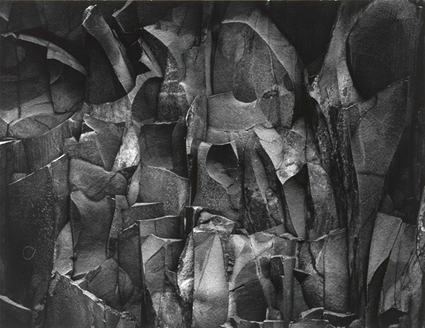
PaulCaponigro_RockWall
Here’s a selection of my favorite quotes by photographer Paul Caponigro.
(My father has a lot to say about the creative process!)

“Photography is a medium, a language, through which I might come to experience directly, live more closely with, the interaction between myself and nature.” – Paul Caponigro

“I often see the materials of photography as being a type of terrain. Emulsions, liquid developers, silver salts, and fixers interact, and I construct a landscape that I need to first explore in my mind’s eye if I am to make it manifest as an artful image in silver.” – Paul Caponigro

“Photography’s potential as a great image-maker and communicator is really no different from the same potential in the best poetry where familiar, everyday words, placed within a special context, can soar above the intellect and touch subtle reality in a unique way.” – Paul Caponigro

“The key is to not let the camera, which depicts nature in so much detail, reveal just what the eye picks up, but what the heart picks up as well.” – Paul Caponigro

“Some of my photographs have always been a mystery to me in terms of how I arrived at them. Even with the technical ability to produce fine prints, I am hard put to know how it happens, yet unless technique and materials are seriously investigated and experienced, I see that moving statements are seldom made. The process of photography ever invites me. I hope never to lose this feeling. At times I make photographs for the sheer magic of its process, and the good feeling about the very stuff needed: light, chemical combinations, some imperceptible forces at work behind the scene. I am part of the drama which takes the guise of photography.” – Paul Caponigro

“The influence of mystery is the greatest influence.” – Paul Caponigro

“Keep alive the fact that a mystery has come into existence and that a physical being serves as a house for this mystery.” – Paul Caponigro

“At the root of creativity is an impulse to understand, to make sense of random and often unrelated details. For me, photography provides an intersection of time, space, light, and emotional stance. One needs to be still enough, observant enough, and aware enough to recognize the life of the materials, to be able to ‘hear through the eyes.” – Paul Caponigro

“… the effort, diligence, and care required in practicing must be quickly suspended when pressure coming from anxiety or a desire for fast results causes them to degenerate.”  – Paul Caponigro

“Under all of the factors that make up the art world, it’s up to the individual artist to discern which of those influences are present and at what time and what really serves the deeper process that is constantly running like a stream underground. Influence is incessant. Influence is a fact. But, carry a big shovel and dig constantly to clear away all the unessentials so that the origins of mystery and the poetic force of life can get into and inspire the work.” – Paul Caponigro

“Photography attracted me before I ever knew that it was a part of a structured world. I saw a camera which my grandmother wielded. I thought it was fascinating. I didn’t know about famous artists and museums and magazines. I innocently met that process. And I excitedly engaged it to the best of my ability. Later, because my excitement was so strong, I realized that this could be a medium through which I could work. Then I had to meet the whole world of photography; manufacturers, materials, hype, galleries, dealers, critics, etc. Somehow I did not lose sight of that initial innocence. I realized that unless I could stay free, unidentified, unless I could keep my personality from going crazy with the adulation or the lack of it I was not going to maintain that innocence. I realized that the innocence was the important state that called forth the inspiration into the process.” – Paul Caponigro

“The only way a work of art can become great is for one to acknowledge that it doesn’t belong to anybody. The greatness is in constantly giving back, coming to an acknowledgment of the source. Look back to the source of any individual, any process, any set of materials. If the individual personality can relinquish its insistence on concepts like “this is mine”, “I did it”, “this is original”, “nobody else has done it”, it goes straight for greatness or the essential spirit.” – Paul Caponigro

“If you are engaging rationality, you are already engaging a place that makes you unavailable. Only when I recognize that inspiration has announced itself to my availability will I then say I need to use my mind to calculate exposure, my emotions to position myself and arrange a configuration of shapes that need to come into being, my body to put it all in place because we have been given a message and it has come through inspiration through being available.’ – Paul Caponigro

“Being available is very important. I’ve spent a lot of time working in the British Isles at so called pre-historic sacred sites. I quickly realized that I wasn’t going to go there and force a composition or extract any kind of typicality to make pictures which were expected by the audience within the world of photography. I could have been quite clever and made very pleasing pictures. But I was affected by being available to those sites a few times. When I dropped all those concerns, mentally, emotionally, physically, I was available. I was free in those areas. I didn’t think, “I’ve got to get the ultimate in composition today.” or “I’ve got to get the ultimate in light, I’ll stay here until it appears.” I was not making any demands. I went purely to see what would come, what might be there. I didn’t have to be archaeologist or historian or tourist, I just needed to be available.” – Paul Caponigro

“As far as my experience goes one is automatically in touch with the higher spiritual, it is connected to a certain level that interpenetrates our total physical and psychic existence. We are always in touch with it.” – Paul Caponigro

“Can you keep your balance? Can you see what and where you are at any given moment?” – Paul Caponigro

“I use my music to tune myself.” – Paul Caponigro

“Seek freedom within action.” – Paul Caponigro

“Work incessantly, cultivate discrimination, gather freedom from your own hard-earned results. Disregard successes but go back for help in an immediate problem. The possibility of discovery is everywhere. Freedom from your own work allows for intuition that draws from all your experience and perception but goes beyond it.” – Paul Caponigro

“Recording the light of the outer subject can be linked with gaining access to one’s inner light.” – Paul Caponigro

“All that I have achieved are these dreams locked in silver.” – Paul Caponigro

Read more photographer’s quotes here.
View photographer’s favorite quotes here.
Read our father/son conversation here.
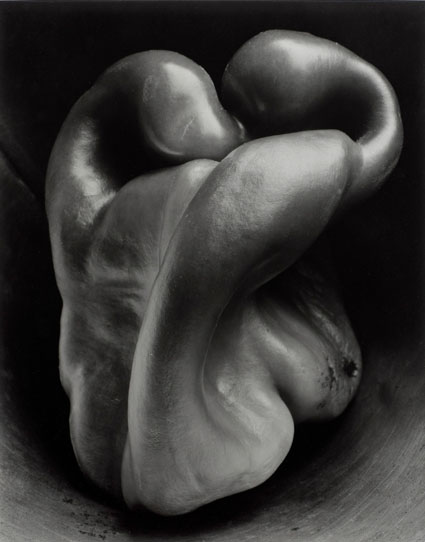
23 Quotes By Photographer Edward Weston

 
Here’s a selection of my favorite quotes by photographer Edward Weston.
“Photography suits the temper of this age – of active bodies and minds. It is a perfect medium for one whose mind is teeming with ideas, imagery, for a prolific worker who would be slowed down by painting or sculpting, for one who sees quickly and acts decisively, accurately.” – Edward Weston
“I would say to any artist: ‘Don’t be repressed in your work, dare to experiment, consider any urge, if in a new direction all the better.” – Edward Weston
“My own eyes are no more than scouts on a preliminary search, for the camera’s eye may entirely change my idea.” – Edward Weston
“The camera sees more than the eye, so why not make use of it?” – Edward Weston
“Anything that excites me for any reason, I will photograph; not searching for unusual subject matter, but making the commonplace unusual.” – Edward Weston
“Anything more than 500 yards from the car just isn’t photogenic.”  – Edward Weston
“I see no reason for recording the obvious.” – Edward Weston
“I want the stark beauty that a lens can so exactly render presented without interference of artistic effect.” – Edward Weston
“My true program is summed up in one word: life. I expect to photograph anything suggested by that word which appeals to me.” – Edward Weston
“The camera should be used for a recording of life,for rendering the very substance and quintessence of the thing itself, whether it be polished steel or palpitating flesh.” – Edward Weston
“This then: to photograph a rock, have it look like a rock, but be more than a rock.” – Edward Weston
“To compose a subject well means no more than to see and present it in the strongest manner possible.” – Edward Weston
“Now to consult the rules of composition before making a picture is a little like consulting the law of gravitation before going for a walk. Such rules and laws are deduced from the accomplished fact; they are the products of reflection.” – Edward Weston
“When subject matter is forced to fit into preconceived patterns, there can be no freshness of vision. Following rules of composition can only lead to a tedious repetition of pictorial cliches.” – Edward Weston
“One does not think during creative work, any more than one thinks when driving a car. But one has a background of years – learning, unlearning, success, failure, dreaming, thinking, experience, all this – then the moment of creation, the focusing of all into the moment. So I can make ‘without thought,’ fifteen carefully considered negatives, one every fifteen minutes, given material with as many possibilities. But there is all the eyes have seen in this life to influence me.” – Edward Weston
“I start with no preconceived idea – discovery excites me to focus – then rediscovery through the lens – final form of presentation seen on ground glass, the finished print previsioned completely in every detail of texture, movement, proportion, before exposure – the shutter’s release automatically and finally fixes my conception, allowing no after manipulation – the ultimate end, the print, is but a duplication of all that I saw and felt through my camera.” – Edward Weston
“I find myself every so often looking at my ground glass as though the unrecorded image might escape me!” – Edward Weston
“Photography to the amateur is recreation, to the professional it is work, and hard work too, no matter how pleasurable it my be.” – Edward Weston
“The fact is that relatively few photographers ever master their medium. Instead they allow the medium to master them and go on an endless squirrel cage chase from new lens to new paper to new developer to new gadget, never staying with one piece of equipment long enough to learn its full capacities, becoming lost in a maze of technical information that is of little or no use since they don’t know what to do with it.” – Edward Weston
“The photographer’s most important and likewise most difficult task is not learning to manage his camera, or to develop, or to print. It is learning to see photographically – that is, learning to see his subject matter in terms of the capacities of his tools and processes, so that he can instantaneously translate the elements and values in a scene before him into the photograph he wants to make.” – Edward Weston
“The photograph isolates and perpetuates a moment of time: an important and revealing moment, or an unimportant and meaningless one, depending upon the photographer’s understanding of his subject and mastery of his process.” – Edward Weston
“If I have any ‘message’ worth giving to a beginner it is that there are no short cuts in photography.” – Edward Weston
“…through this photographic eye you will be able to look out on a new light-world, a world for the most part uncharted and unexplored, a world that lies waiting to be discovered and revealed.” – Edward Weston
Read more photographer’s quotes here.
View photographer’s favorite quotes here.

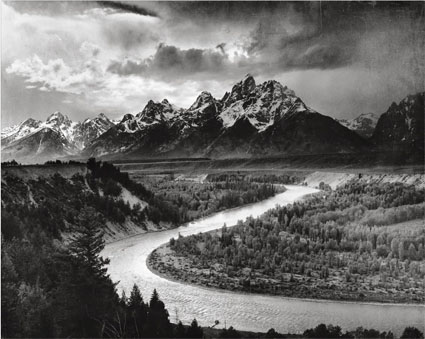
22 Quotes By Photographer Ansel Adams

 
Here’s a collection of my favorite quotes by photographer Ansel Adams.
“The single most important component of a camera is the twelve inches behind it.” – Ansel Adams
“You don’t take a photograph, you make it.” – Ansel Adams
“There are always two people in every picture:  the photographer and the viewer.” – Ansel Adams
“To photograph truthfully and effectively is to see beneath the surfaces.” – Ansel Adams
“A great photograph is a full expression of what one feels about what is being photographed in the deepest sense, and is, thereby, a true expression of what one feels about life in its entirety.” – Ansel Adams
“A photograph is usually looked at – seldom looked into.” – Ansel Adams
“Photography is more than a medium for factual communication of ideas. It is a creative art.” – Ansel Adams
“No man has the right to dictate what other men should perceive, create or produce, but all should be encouraged to reveal themselves, their perceptions and emotions, and to build confidence in the creative spirit.” – Ansel Adams
“We must remember that a photograph can hold just as much as we put into it, and no one has ever approached the full possibilities of the medium.” – Ansel Adams
“Photography, as a powerful medium…offers an infinite variety of perception, interpretation and execution.” – Ansel Adams
“There’s nothing worse than a sharp image of a fuzzy concept.” – Ansel Adams
“The sheer ease with which we can produce a superficial image often leads to creative disaster.” – Ansel Adams
“Twelve significant photographs in any one year is a good crop.” – Ansel Adams
“Landscape photography is the supreme test of the photographer, and often the supreme disappointment.” – Ansel Adams
“Sometimes I do get to places just when God’s ready to have somebody click the shutter.” – Ansel Adams
“Notebook. No photographer should be without one.” – Ansel Adams
“…one sees differently with color photography than black-and-white… in short, visualization must be modified by the specific nature of the equipment and materials being used.” – Ansel Adams
“The negative is the equivalent of the composer’s score, and the print the performance.” – Ansel Adams
“Dodging and burning are steps to take care of mistakes God made in establishing tonal relationships.” – Ansel Adams
“A true photograph need not be explained, nor can it be contained in words.” – Ansel Adam
“When words become unclear, I shall focus with photographs.  When images become inadequate, I shall be content with silence.” – Ansel Adams
“I am sure the next step will be the electronic image, and I hope I shall live to see it. I trust that the creative eye will continue to function, whatever technological innovations may develop.” – Ansel Adams
Find more photographer’s quotes here.
View photographer’s favorite quotes here.

20 Questions With David duChemin

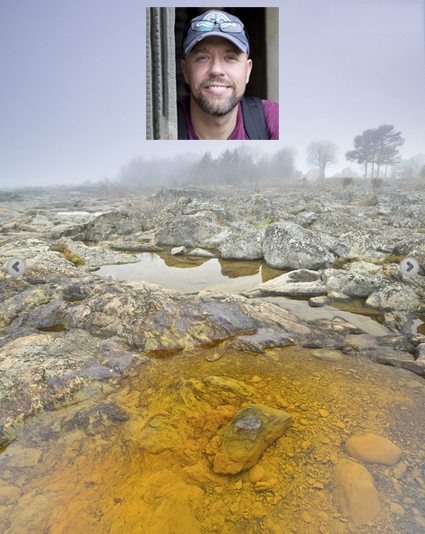
DavidDuchemin_Quotes425
David duChemin provides quick candid answers to a 20 questions.
What’s the best thing about photography?

The best thing about photography is the gift of seeing – really seeing – the moments in life that otherwise pass so quickly. It’s the elevation of what we normally see as mundane, or perhaps not the elevation of it so much as the recognition that it was beautiful to begin with.
What’s the worst thing about photography?

Like any storytelling medium or art, it’s easy to fall more in love with how we tell the stories than the stories themselves. I think photographers have an unusual relationship with their gear, one that can be beautifully collaborative or strangely incestuous.
What’s the thing that interests you most about other people’s photographs?

I like to see through the eyes of others, to see what I have not. I’m a very curious person and this gives me a glimpse into a world in ways I’ve not considered it.
Who were your early photographic influences? 
My earliest were portraitists, like …
Read the rest of David duChemin’s Q&A here.
Read other Q&A’s by other top photographers here.
Read a selection of David duChemin’s favorite quotes here.
Read other top photographers favorite quotes here.
Preview his new online course The Compelling Frame now.

John Paul Caponigro & Seth Resnick – Share Experience & Share Vision

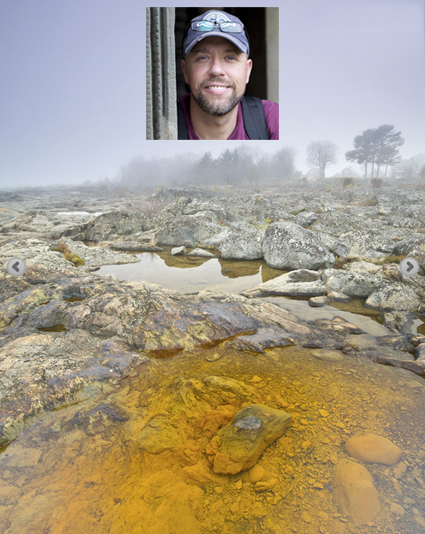
jp
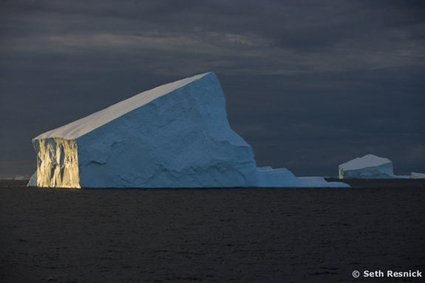
20051207_bransfield Straits
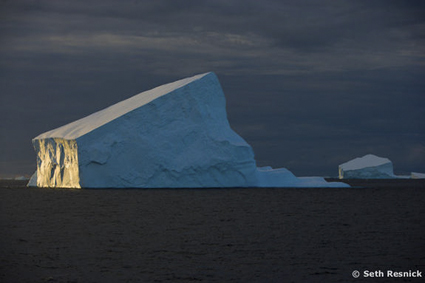
Read the story behind these two photographs made by two very different photographers here.
When Seth Resnick and I started Digital Photo Destinations workshops, many people thought we were an unlikely combination. His mode of photography is active and mine’s contemplative. He photographs everything; I focus on specific things. He’s all about workflow and releases thousands of images a year for stock agencies. I’m all about print quality and release fewer than a hundred images a year for exhibition. We find our differences extremely stimulating. We encourage each other to try new things and our contrasts provide new clarity about our individual natures. Our collaborations are fueling new personal growth for both of us – and for our participants. Our adventures take us to amazing places – Antarctica, Argentina, Greenland, Iceland, Namibia and more – to do some amazing things; glacier walks in ice caves before watching auroras, helicopter rides over volcanoes, zodiac rides through ice fields, hiking the world’s largest dunes … what will be next? On the personal front, we laugh (and so do others) because we’re so similar we can often finish each other’s sentences. The most stimulating relationships are born when there’s something shared and something different. This combination stimulates growth in both individuals. Imagine who that person could be for you.
We just wrote a piece for B&H on the many benefits of sharing photographic experiences.
Read it here – you’ll enjoy it!
Find out more about Digital Photo Destinations workshops here.