Color! – A Conversation With Eric Meola – Dec 10 @ 8 pm EST

Wednesday, Dec 10 @ 8pm EST

Register Now

Creativity Continues at Santa Fe Workshops with a conversation about Color!
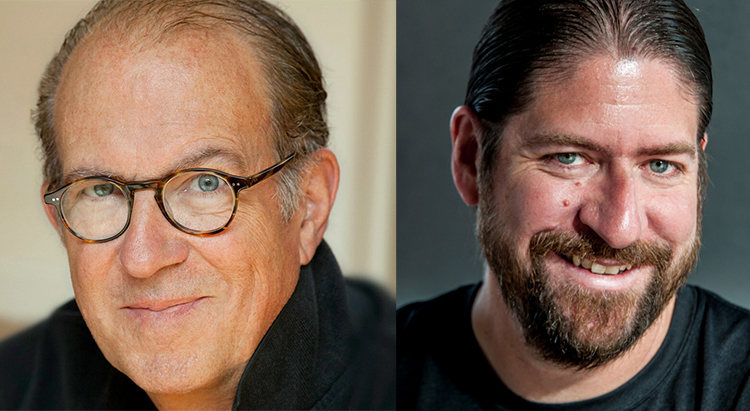
Savor a deep dive with two photographic masters, Eric Meola and John Paul Caponigro.

Our hour of inspiration will begin with a short presentation of images.

Next, Eric and John Paul will share and discuss their insights about color. After hearing their insights about how other artists use color and how they use color, you’ll leave inspired to explore how you use color (even if you’re a black and white photographer).

Finally, we’ll finish with a lively question-and-answer session open to all participants.

Color is such a deep subject, and these artists’ passion for color is so strong, it’s sure to run long.

Join Santa Fe Workshops’ worldwide community of photographers and writers as Creativity Continues.
_

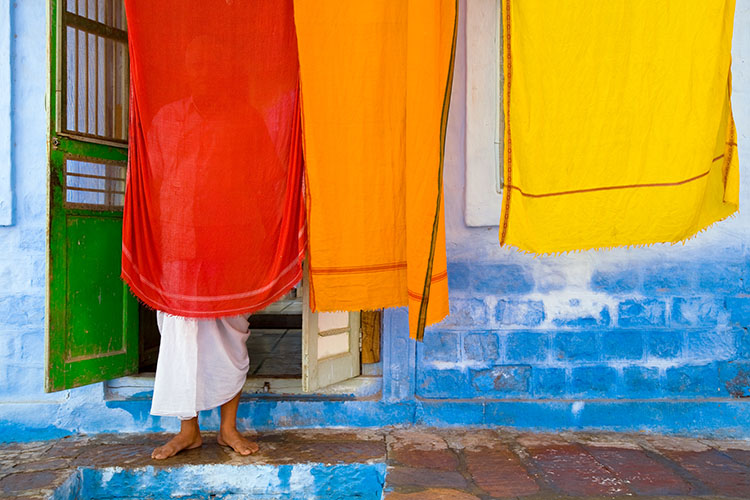
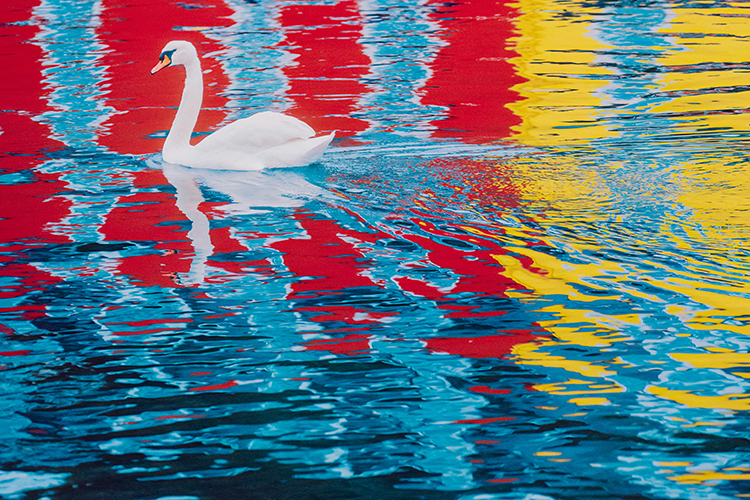
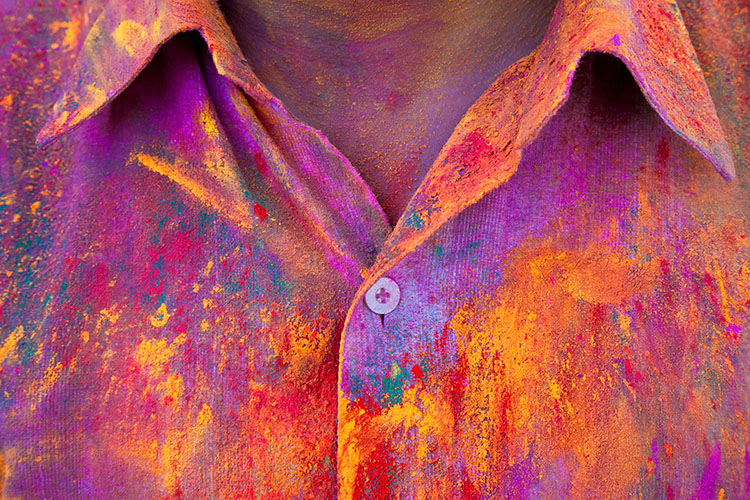
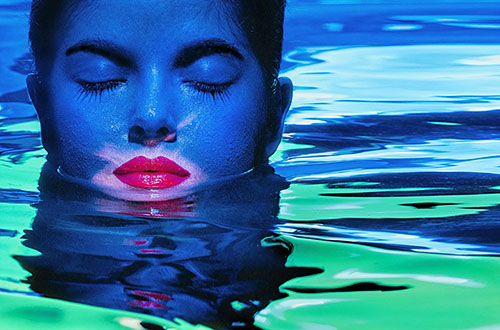
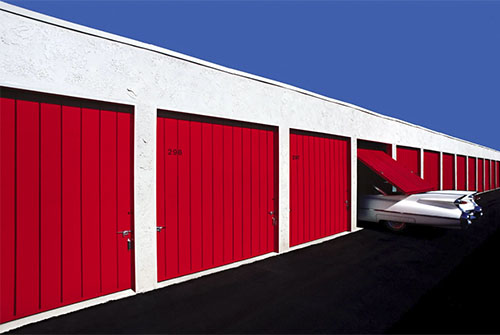
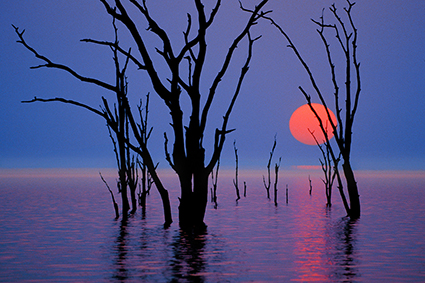
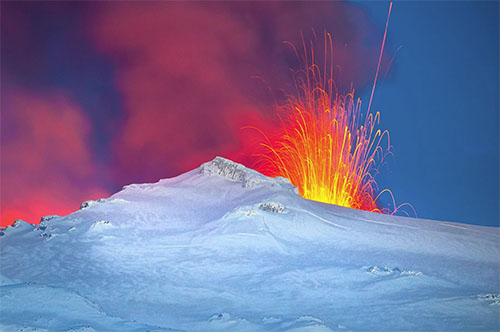
Photographer Eric Meola’s new book, BENDING LIGHT: The Moods of Color, showcases his use of light and color throughout his career. In a five-decade career that defines the use of color as art, Meola examines the history of color and redefines it in the medium of photography. In dozens of stories and anecdotes, he recounts his journey using color, its symbolism, and how it affects our moods. “Light and color are my subject as much as the subject itself. They resonate with our moods, reflect our emotions, and define the way we see.”

Eric Meola studied photography at the Newhouse School of Journalism at Syracuse University and graduated with a B.A. in English Literature. Meola’s photographs are included in the archive of the American Society of Media Photographers, the National Portrait Gallery in Washington, D.C., the International Center of Photography in New York, and the George Eastman Museum. His previous books include Last Places on Earth (GRAPHIS, 2004), Born to Run: The Unseen Photos (Insight Editions, 2006), INDIA: In Word & Image (Welcome Books, 2008), and FIERCE BEAUTY: Storms of the Great Plains (IMAGES Publishing, 2019). He has received numerous awards, including “Advertising Photographer of the Year” in 1986 from the American Society of Media Photographers, a “Power of the Image” George Eastman award in 2014, and, in 2023, he received a Lifetime Achievement Award from the Professional Photographers of America.

Register Now


View 12 Great Photographs by Eric Meola

Read 14 Great Quotes By Photographer Eric Meola.

Read our short Q&A

Read our extended conversation.
Discover more by Eric Meola.


20 Questions With Photographer Eric Meola

© Eric Meola

Enjoy our video Conversation Color!

View 12 Great Photographs by Eric Meola

Read 14 Great Quotes By Photographer Eric Meola.

Read our short Q&A

Read our extended conversation.
Discover more by Eric Meola.

Eric Meola provides quick, candid answers to 20 questions.

As an undergraduate at Syracuse University, he studied color printing and color theory at the Newhouse School of Journalism before graduating in 1968 with a B.A. in English Literature and then moving to NYC in 1969 to work with Pete Turner as his studio manager. A Canon “Explorer of Light,” he has lectured extensively, including at Syracuse University, Rochester Institute of Technology, Brooks (Santa Barbara), the Art Center at Pasadena, Parsons, the Academy of Art College (San Francisco), the George Eastman House, and venues including PPA., WPPI, and A.S.M.P.

What’s the most useful photographic mantra?
Never stop looking.

What’s the best thing about photography?
Mistakes.

What’s the worst thing about photography?
Mistakes.

Read More

14 Great Quotes By Photographer Eric Meola

Enjoy these quotes by photographer Eric Meola.

“Photography for me is a passion, not a job. Once it becomes just a job you’ve lost sight of why you originally became a photographer.”

“Very early in your career you need to shoot things that you believe in, things that you really want to shoot. You need to take risks. Don’t wait for the phone to ring. Success is only going to happen if you are out there really working to make it happen.”

“I believe strongly that a photograph should stand on its own with a story, and without a caption.”

“I had to see what it looked like. I had to shoot whether there was light or whether there wasn’t light.”

There are literally hundreds of songs, poems, paintings, books, that influence us. Edward Hopper’s “Nighthawks” comes to mind, and Ernst Haas’s photograph “Route 66, Albuquerque.” It’s impossible to delineate how they have influenced me, other than to state they have been imprinted in my mind — the light, the sound, the composition, the color. Out of this “soup” comes something new that may not be directly related to a particular influence, but certainly contains the ingredients of many different influences.

“I’m not out to make photographs in color; my photographs are about the color.”

“Color is my subject as much as the apparent subject.”

“Playing with color is my way to escape the chaos of the world, and to express it.”

“I have no favorite color, but if I did, it would be gray – the perfect neutral that acts in contrast to the colors around it and lets them stand on their own.”

“My work with color and light has become more and more abstract over the past five decades. I’ve explored the way light is used in architecture, and how artists, such as Rothko, use color, both contrasting and complementary, to elicit strong emotional responses; they create a deeply spiritual resonance on a two-dimensional canvas.”

“When I stare at Mark Rothko’s color field paintings, I am transformed as well as transfixed.”

“We ‘see red,’ but how we see it is subjective. We see it in our mind’s eye, as I did this morning, when I heard a cardinal.”

“What is important to me is not what my eye sees but what my mind’s eye sees; it’s that third eye that has blessed me with intention and demanded invention.”

“A print is the photographer’s statement about the light, the mood, the space, the spirit and being of the image, and that interpretation may change with time, with technology, and with the photographer’s own interpretation of the image. A print is the completion of a photograph; without it, the image is suspended in time, without interpretation.” – Eric Meola


View 12 Great Photographs by Eric Meola

Read 14 Great Quotes By Photographer Eric Meola.

Read our short Q&A

Read our extended conversation.
Discover more by Eric Meola.

Unlocking The Secrets Of The Creative Process – A Conversation Between Eric Meola & John Paul Caponigro

August, 2017

Eric Meola

What is the process of creativity? Where does it come from, and how does it evolve? Recently, photographer and PPD contributor Eric Meola raised those questions in an interview with photographer and educator John Paul Caponigro, whose work will soon be featured along with his father’s in a major new exhibition at the Taubman Museum in Roanoke VA, “Paul Caponigro and John Paul Caponigro: Generations.” Today we publish part one of the interview, in which Caponigro and Meola talk about chaos, self-doubt, reflection, serendipity, failure, discipline, and the myriad facets of interaction that lead to creativity and art. Look for the rest of the interview in upcoming editions of PPD.

At a recent workshop in Maine, the noted National Geographic photographer Sam Abell asked his students to photograph a poem—to illustrate the words with images. Abell wanted the students to think about the relationship between two methods of describing imagery, and the challenges posed by interpreting words and images in our minds through photography. The dichotomy between words and images has haunted me throughout my career, and then a few months ago, a nearly 200-page PDF attachment of an e-book called Process arrived in my email as a gift from photographer-lecturer-educator John Paul Caponigro —or JP, as his friends call him. I glanced at a few pages, then put it aside on my computer’s desktop to look at later. I had met JP on several occasions—first in California before we were both scheduled to do lectures, and then again in Iceland, Antarctica, and the Atacama desert while participating in Digital Photo Destinations workshops (www.digitalphotodestinations.com). I had only a few sketchy things to go on—that JP had graduated from Yale, that his father was the photographer Paul Caponigro, that he had grown up in New Mexico, and that he took a few weeks off to go to Italy every year.

So one day, when I got a call from my somewhat inebriated photographer-friend Arthur Meyerson and an equally inebriated JP as they joyfully celebrated the close of a Maine Photo Workshop, I told JP that I had not only read Process but that I wanted to interview him about it. I had a lot of questions: How was his famous father? Did his mother really design Ernst Haas’s book The Creation? And most importantly, what the hell was Process really about? After all, we live in the age of iPhone photography, when nearly 300 million photographs are uploaded to Facebook every 24 hours.

In the book Invisible Republic: Bob Dylan’s Basement Tapes, critic Greil Marcus describes the process that led to Dylan’s collection of more than 100 mostly unreleased songs; the music evolved from—in Marcus’s words—“a laboratory where, for a few months, certain bedrock strains of American cultural language were retrieved and reinvented.” Few photography workshops explore the creative aspects of photography as a constantly evolving set of inputs—reading, writing, sketching—that manifest themselves in the way we make images. I recognized that many of my inputs had much in common with what JP was discussing, but I wanted to know more about him and why he always seemed to be “looking away” from the image in front of us. Or was he?

Our conversation, which begins below, took place over an extended period via email, while JP was with his family in Italy.

EM: I’m fascinated by your approach to seeing, to “living” photography, which you refer to as “process.”   

JP: Art arises out of a life lived—it’s an extension of ourselves, our creative process grows and changes as we do. Art is not something separate from life. Art intensifies life.  Some cultures don’t have a word for art, considering the items/events produced that we might call art to be an overflowing of life. Seen from that perspective, everyone is an artist. So the follow-up questions would be: What kind of artist and how well do they do it?

EM: Your father is Paul Caponigro, a master landscape and still-life photographer. He once said, “It’s one thing to make a picture of what a person looks like; it’s another thing to make a portrait of who they are.” That applies to all photography, doesn’t it—from landscapes to journalistic images to portraits?

JP: Exactly. Representation is not reproduction. We make portraits of people by recording light reflecting on their bodies—often only a portion of their bodies, usually from one angle and at one moment in time. Does such an image record their changing state through time, their history, their web of relationships, their ideas, their feelings, etc? It’s important to recognize the limited nature of our creations. In representation. it’s important to recognize the gap between what we create and what’s referenced. This doesn’t make these types of images less valuable; for many people they’re the most valuable. Perhaps those limitations can be used for effect?

Read More

“Unlocking The Secrets Of The Creative Process – Part 3” A Conversation With Photographer Eric Meola

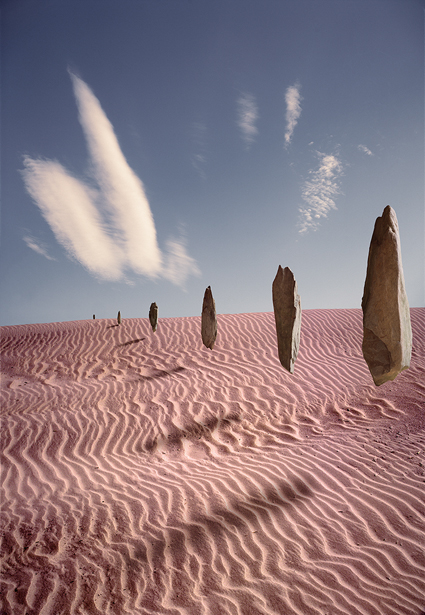
ProcessionII_1999_425

Photographer Eric Meola and I share our insights on the creative process in this three-part conversation. In the third installment we discuss the role of chance and surprise in creativity.

EM: In describing how he wrote “Like a Rolling Stone,” Bob Dylan said that he found himself writing what he called “this long piece of vomit, 20 pages long.”

“And out of it,” he recalled, “I took ‘Like a Rolling Stone’ and made it as a single. And I’d never written anything like that before and it suddenly came to me.”

If nothing else, Dylan has always been incredibly prolific. “Practice, practice, practice,” says Bruce Springsteen. And then one day there’s your father’s image “Galaxy Apple.” Is that part of what process is about … the yin and yang between chaos and discipline?

JP: Process is how you get there. It doesn’t just happen. And it unfolds through time. The final results may have come quickly, but it took a long time for Dylan to get into the specific state of flow that would produce his song. The same is true for everyone, including photographers.

This reminds me of a time when I introduced a friend of mine to my father. He said, “Oh, you’re that photographer. Gosh I’d like to have your career. All those 1/125ths of a second. What’s that add up to? A 20-minute career?”

Dylan’s statement, “I was so much older then, I’m younger than that now,” seems related to Picasso’s “It takes a long time to grow young.”

EM: And Dylan as a teenager in Hibbing, Minnesota, used to listen all night to Hank Williams and Little Richard on the radio—it was all part of the “process” of gearing up for “Bringin’ It All Back Home.”

You mention using a Spirograph as a child to make circles, ellipses and various radiating designs. And some of these patterns continue to show up in your latest imagery. How important is a sense of wonder to photography, or any art form?

JP: How important is a sense of wonder to a life well lived? I think it’s essential. Keeping our sense of wonder alive and well increases our openness, curiosity, sensitivity, perception, playfulness, passion, pleasure, and many other positive benefits. This is related to keeping our inner child or the childlike (not childish) aspects of ourselves active and vibrant.

EM: We’ve discussed chaos versus discipline in art. What about a happy accident—serendipity? What role does “chance” play in process? In the film Pollock, Ed Harris shows Jackson Pollock stumbling onto the process for his drip paintings. Do you ever look at something you’ve done or have been thinking about and suddenly make a leap to a concept that had not occurred to you before? I’m also thinking of Kubrick’s famous visual metaphor early in 2001: A Space Odyssey, where the ape throws a bone that morphs into a rotating space station.

JP: There are two questions here. My answer to both is yes …

Read the rest of Part 3 here.

Read Part 2 here.

Read Part 1 here.

Read my conversation with Eric Meola about Eric Meola here.

Preview my ebook Process here.

Find out about my exhibit Process here.

“Unlocking The Secrets Of The Creative Process – Part 2” A Conversation With Photographer Eric Meola

refraction_lxxiv_5inch_1
Photographer Eric Meola and I share our insights on the creative process in this three-part conversation. In the second installment, we share our influences from photography to poetry. I also discuss my fascination with and the influence of quotes.
EM: How long have you collected quotes? You seem to have hundreds if not thousands at your site.
JP: At an early age, I started noticing that most of us use quotes in our daily conversation and even in our internal dialogs. I really want to know what’s influencing my thinking and why. Sometimes we know who to attribute them to, sometimes we don’t, and sometimes they really are unattributable or anonymous. Often we paraphrase them, less frequently we use them precisely. I still marvel at people who can quote paragraphs and even pages, word for word. I haven’t learned that skill. Currently, I’m limited to a few phrases. But that’s OK. I prefer quotes that are short and sweet. Like haiku poetry, short quotes can almost instantaneously create a powerful impression with just a few words. These highly distilled packets are both impactful and memorable.
Often the idea behind the quote is linked with its author. Proper attribution is important. It’s good form to give credit where credit is due. It helps you understand what, when, and why something has been said. It helps you clarify sources, including yourself.
Sometimes these ideas become so common that sources are forgotten and we hear them paraphrased. Have ideas like this been repeated so frequently that they’ve become a part of the fabric of our minds? More recently, I’ve also become interested in how these ideas echo through the ages. Here’s one example. “We don’t see things as they are. We see things as we are.” Is this Confucius, The Talmud, or Anais Nin? Do we default to the earliest source? Or are there some ideas that are pan-cultural or even inevitable?
There are so many great books to read that I figure no book is worth reading if I’m not interested in making marks in the margins; one mark indicates a quote I want to be able to retrieve.
I used to collect my favorite quotes in folders filled with photocopies. Now I collect them digitally. Sharing quotes in social networks has further stimulated my activity—it’s interesting to see who reacts to what and how, and even what people don’t react to. You can find more quotes, almost daily, in my Twitter and Facebook feeds.
I wish I had a photographic memory. I’d love to remember them all—precisely.
EM: What are some of your favorite quotes?
JP: “The only real voyage of discovery consists not in seeking new landscapes but in having new eyes.” That’s from Marcel Proust.
“Let the beauty we love be what we do.” — Rumi
“Be the change you want to see in the world.” — Mahatma Gandhi
Here’s a link to a fuller set of my favorite quotes.
And here’s a link to a set of your favorite quotes.
Also, here’s a link to sets of other photographer’s favorite quotes.
A Japanese proverb says, “When the character of a man is not clear to you, look at his friends.” I think of the quotes we remember as the mental company we keep.
Read more of Part 2 here.
Read Part 1 here.
Read my interview of Eric here.

 “Unlocking The Secrets Of The Creative Process – Part 1" A Conversation With Photographer Eric Meola

Incubation II
Photographer Eric Meola and I share our insights on the creative process in this three-part conversation. In the first installment, I share the influences of my parents and meetings with many remarkable men and women including Eliot Porter, Ansel Adams, and Georgia O’Keeffe. Then we discuss the power of words.

“Words can be powerful tools. Think of all the things you can do with words. Generate ideas. Clarify a response. Determine a goal. Frame a question. Evaluate strengths and weaknesses. Make comparisons and contrasts. Identify an influence. Select an approach. Test a theory. Explore alternatives. Identify what’s missing. Solve a problem. Advocate. Motivate. Evaluate. Find a new direction.

No matter what discipline you’re in, why wouldn’t you use these powerful tools we call words? Try not using them! Can you? So why not use them well and unlock as much of their power as you can?

Many linguists have explored how language influences thought, going almost as far as saying language is thought. Benjamin Whorf said, “Language is not simply a reporting device for experience but a framework for it.” If a culture has a lot of words for something, it indicates those people have a highly developed relationship with it. If a culture doesn’t have a word for something, it indicates either a very different relationship to a subject or a blind spot. Certain tribes in the Amazon jungle have many words for green, but none for blue. The Inuit have dozens of words for snow. We currently have too few words for photography. (At best, we amend the word photography with other words—photojournalism and photo illustration.) Look at all the words we have for various kinds of writing: fiction, non-fiction, poetry, prose, journalism, journaling, interview, biography, autobiography, screenplay, short story, novel, trilogy, epic, lyric, etc, etc, etc. The photographic community and culture at large would do well to repurpose many words drawn from our literary traditions and use them in our visual traditions.

The question is not, “Should I manipulate a photograph?” Since the invention of photography, all kinds of things have been done to photographs. The question is, “What happens when I do or don’t manipulate a photograph?”

Limited language wastes time and results in less productive debates and diverts attention away from more productive discussions. One of the fundamental things I’m trying to address through my work is complicated by limited language. Our culture often talks about people versus nature; we use words like “us” and “it.” We draw lines and take sides. Our current use of language psychologically distances us. This makes it harder to describe people as parts of nature. If we enter that mindset, we think about ourselves and act in our world differently.”

Read the rest of Part I here.
Read Part II here.
Read my interview of Eric here.

We're Still Dreaming Of Antarctica


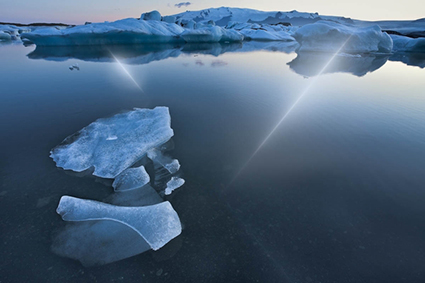
After a whirlwind tour of Los Glaciares National Park, Argentina and Torres Del Paine, Chile, Seth Resnick, Eric Meola, Arthur Meyerson and I are finally on our way home from our recent Antarctica voyage. (Check my Google+ , Twitter, or Facebook streams for a collection of quotes on travel and home.)
We’re all still dreaming of Antarctica. Whether for the first time (Arthur and Eric) or for the fourth time (Seth and I) Antarctica touched us all very deeply. We all had unique experiences. We all made compelling images in our own unique ways. And we were able to share the experience together. And yet, no matter how hard we try to put those experiences into words, something about the place defies description. Antarctica is a profoundly mysterious place. Antarctica is so exotic that when you’re there you often feels like you’ve visited another planet.
Here are a few quick thoughts from each of us.
“I saw deeper shades of blue than I’ve ever seen before. And I was able to get closer to it and find more dramatic angles than ever before. Every time we go back there are new surprises to discover.”  – Seth Resnick
“Antarctica was the fulfillment of a life time dream … the magical mystery tour. The light, the landscape, the color blue – otherworldly. I have never experienced anything like this before. I felt as though I was on another planet.” – Arthur Meyerson
“What impressed me most about Antarctica was the silence. I’ve never been anywhere as spiritual. Most places are spiritual because of their religion. This was a place that is spiritual because of its natural beauty. I sensed that everyone around me felt the same way. Although photographers become mesmerized by their subjects, for the first time I sensed that the spirituality of the place affected them very deeply. All of us were absorbing the beauty around us.” – Eric Meola
“Antarctica is never the same twice. It’s like a mirage that never fades. It seems simultaneously eternal and ephemeral. It’s as if spirit took shape – and when you got there you get to touch it, immerse yourself in it, and take it into you. You cannot go to Antarctica and return unchanged.” – John Paul Caponigro
Digital Photo Destinations is planning a new Antarctica workshop voyage for 2013.
Sign up for our pre announce list to be among the first to hear about it.
Email jpc@digitalphotodestinations.
Find out more about Antarctica here.